

I had an Uncle Bart who had a lovely little cottage by the sea, and on the grounds of that lovely little cottage was a beautiful garden. Huge flowers and luxurious plants climbing to the sky and hummingbirds, seemingly thousands of hummingbirds, enough hummingbirds to hum a pretty decent version of Kaikhosru Shapurji Sorabji’s Opus clavicembalisticum, and that’s some serious humming.
Bart tended this garden year-round, and yet he never bragged or showed it off. People came by, said what a beautiful garden and he simply said, “Thanks, I’m just giving nature a place to do what she does best.” Other gardeners that I have met in my years take great pride, as well they should, in breaking down all that went into the growing: the seeding, the beds, the thought that goes into where and what flowers. Bart simply gave props to nature, and that was it.
Two blocks up the street from Bart’s cottage was the St. Anne’s by the Sea, a Catholic church. To the average churcher, they would notice the lovely flower garden that ran along the parking lot side of the church. Oh, how nice. To anyone who took the time to really see, the garden was as full and well-tended as Bart’s a few blocks down. Not many people put two and two together, and Bart certainly didn’t say anything, but truth be told, Bart maintained this garden as well. Maintained is such a clinical-sounding term for what Bart did. He loved the garden and cared for it as you would a child, a puppy, or a good brisket sandwich you’re saving for the weekend. There was an emotional connection between Bart and the flowers.
What wasn’t there was any sign, notice, or proclamation stating who Bart was or what he did. He did it, and that was that. But after Bart passed away, people going to church at St. Anne’s noticed the garden had begun to show signs of wear, and they could see life ebbing from the petals and stalks of the garden’s beauty.
One day, an older nun came to the parish, remarked on the fading garden, took up a spade and a hoe, and brought it back to life. On a Sunday, during an impassioned sermon about taking love thy neighbor too literally, the priest finished off by having the congregation thank Sister Batina for the work she did on the lovely garden. The church erupted in applause; the good sister smiled, nodded, and, after the service, stood by her garden to answer questions, offer tips, and soak up the praise. I strolled down the street and stood in front of Bart’s old place and noticed that the garden was now a concrete patio strewn with beer cans and a smoldering BBQ grill. No applause, no thanks from God and man.
I wanted to go back to the church and tell the priest that he missed it; he missed the chance to sing the praises of my Uncle Bart for all he did, but I didn’t. And the reason I didn’t was that that’s not who Bart was. The garden got the attention; that was Bart’s plan. He wanted lovely gardens all over town, and he created them, and he died unsung. But he knew what was important, what was supposed to be center stage, and Bart was happy to be the supporting actor in the story of the gardens in that little town by the sea.
Hustle Culture
Hustle culture, also known as grind culture, is a lifestyle and mindset that glorifies, and I use that word specifically, nonstop work and constant productivity, often at the expense of rest, relationships, and having anything resembling a personal life. Companies have certainly benefited from this kind of thinking. Give everything you have to the work. Stay late. Come in early. Answer the email at 10:30 at night. Be available on vacation. Don’t just work hard; make work the organizing principle of your existence.
Somewhere along the way, working hard, which is a perfectly reasonable and admirable thing to do, became something else. Work became a measure of worth. Being tired meant you were committed. Being busy meant you were important. Rest required justification because apparently sitting on your porch for an hour doing absolutely nothing is now an act of rebellion. Even hobbies weren’t safe. Enjoy baking bread? Start a bread business. Like woodworking? Open an Etsy store. Paint because it makes you happy? Wonderful. Have you considered monetizing that happiness?
The roots of the modern version of hustle culture are often associated with the tech and startup world, where founders celebrated enormous workweeks and stories of sleeping under desks became part of entrepreneurial mythology. Then social media got hold of it, which is roughly what happens when you hand a can of gasoline to a person standing beside a campfire. Suddenly, we could all watch other people hustle. The 5:00 AM alarm clock. The predawn workout. The laptop open before sunrise beside a cup of coffee and some inspirational nonsense about wanting success more than you want sleep.
It even changed the way we answer a simple question. Ask someone how they’re doing, and there’s a decent chance they’ll say, “Busy.” Not good, bad, happy, miserable, confused, horny, hungry, or worried that the mole on their shoulder looks different. Busy. It became a status report and, for a while there, almost a boast. I’m busy because things are happening. People need me. I have places to be. My calendar is a nightmare; therefore I matter.
Of course, human beings aren’t particularly well designed for endless productivity. Eventually, exhaustion wins. Creativity suffers, relationships get whatever scraps of attention remain, and the work itself can become worse because the brain you’re demanding more from would really like you to shut the hell up and go to bed. Yet hustle culture found a clever way around even that problem. Burnout became part of the mythology. If you’re exhausted, overwhelmed, and running on four hours of sleep, you must really be going somewhere.
And that’s where hustle culture begins to bump into another curious idea we’ve developed: Main Character Syndrome. Because once being busy becomes evidence that your life matters, it’s a very short walk from working hard to imagining that all this work must be leading somewhere extraordinary.
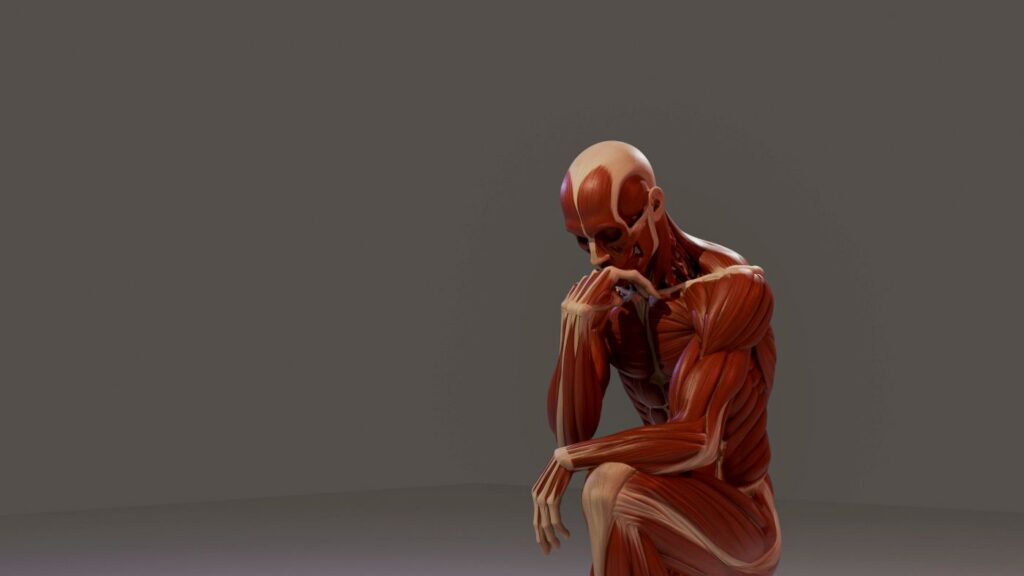
Main Character Syndrome Meets Hustle Culture
Hustle culture and Main Character Syndrome may seem like two different things. One is about work, ambition, getting up at five in the morning, crushing your goals, and apparently never eating breakfast unless it contains enough protein to stun a horse. The other is about seeing yourself as the star of your own movie, with everyone else relegated to supporting roles, background players, or extras who have wandered inconveniently into your shot. Underneath it all, though, I think they come from remarkably similar places because both begin with the idea that you are a project.
You aren’t simply a person wandering around trying to make a living, have a few friends, fall in love, eat something delicious, and get through Thursday. You’re something that must be developed, improved, and marketed. There’s a better version of you out there somewhere, and apparently it is your responsibility to hunt that bastard down. Hustle culture tells you that version of yourself works harder. Main Character Syndrome tells you that version is more interesting. Put the two together and suddenly your life isn’t something you’re living anymore. It’s something you’re producing.
That changes the way you look at even the most ordinary parts of your day. Getting up early isn’t just getting up early because you have work to do. It becomes part of the story. There you are at 5:00 AM, coffee steaming beside the laptop while the rest of the world sleeps. You go to the gym before sunrise and work through the weekend because this is the montage, damn it. This is the part of the movie where the hero puts in the work nobody else was willing to do, and if there happens to be an Instagram post documenting it, all the better.
Both hustle culture and Main Character Syndrome need an audience. It’s difficult to be the hero of the story if nobody knows there’s a story. Accomplishment can begin to feel strangely incomplete until someone sees it, and eventually you risk measuring your life not by how it feels to live it, but by how well it plays when you show it to somebody else. That’s when things get particularly strange because even misery can become content. Exhaustion stops being a warning and becomes evidence. Burnout proves you’re committed. What might once have made you wonder whether you should slow down can instead become proof that the plot is moving forward. Every hero has to struggle before Act Three.
Main Character Syndrome feeds the machine from the other direction. Once you begin thinking of yourself as the protagonist, ordinary life can start feeling suspiciously inadequate. The protagonist isn’t supposed to spend six years becoming reasonably competent at something and then quietly enjoy doing it. There needs to be an arc and eventually some kind of triumph, preferably involving wealth, recognition, a dramatic before-and-after photograph, and perhaps a podcast.
So you keep pushing because you’ve been told you’re destined for something extraordinary, and extraordinary people certainly don’t spend Saturday afternoon sitting on the couch reading a book and then taking a nap. At least not unless the book is about becoming extraordinary and the nap is somehow part of a carefully researched optimization protocol. Maybe that’s the real connection between the two. They both struggle to let a human life simply be a human life.
Not everything needs to advance the plot, and not every hour has to produce something. You don’t have to turn yourself into a brand or perform your existence for an imaginary audience waiting to see what happens next. Sometimes the coffee is just coffee. You go to the gym because you want your knees to keep working. You work late because something needs to get finished, and on another night you stop working because there’s a friend across town who wants to have dinner with you. There’s nothing particularly cinematic about any of that, but there might be something wonderfully human about it.
The Unsung Supporting Characters
My Uncle Bart was a supporting character. He served the story: nature is wonderful when it’s given the space to do what it does. He was a supporting character in the life of the gardens he created. He didn’t stand out front and absorb praise; he stepped aside when people said, “What a lovely garden,” and let the garden soak up the praise.
I have never been a leading man. Take one look at me, and you’ll think that seems right. By nature and by nurture, I’m a supporting character. I say that when I’m an actor, but I’m also that way in life. I tend to see what needs to be done, who needs to shine, and do what I can to support them. Being a supporting character isn’t easy. You have to understand the entire story, what the lead characters are doing, and how they are approaching their role, and adjust to support their choices without worrying about how people see you or whether you’re getting recognition and praise. You support, like the beams of a ceiling; everyone knows they’re there, but they are all looking at the lovely paintings on the ceiling and not thinking about what holds them up.
What all the main characters and hustlers don’t understand is that without supporting characters, the story doesn’t progress. And, if you’re a main character and you treat the supporting cast like shit, they will soon stop supporting you. And a main character without a supporting cast is a guy standing alone, talking to no one, and getting nothing done.
Main characters, leading men and women, we need them to move the story and set the terms, and there are people who are born to do that, and some of us were not. There’s nothing wrong with that. If you’re not a rise-and-grind kinda person, that’s fine; be the one who comes in after the brouhaha and puts everything straight, crosses the t’s, dots the i’s, and makes things perfect while the main character gets the handshakes, the back slaps, and the praise. You don’t need that. That’s not why you do this. You step aside and let the garden have the spotlight.
But I will tell you this from a professional supporting character: someone sees you. That doesn’t matter, I know, and you’re happy to support and make sure the needs of the many, the message of the campaign, the rise of the brand take priority over recognition. You tell yourself that recognition isn’t important, but somewhere deep inside, it is. And employers need to know this, and they need to be aware that the leading man does better when his supporting characters are with him. Employers need to watch their supporting cast and make sure they know they are seen, heard, and appreciated. Yes, the squeaky wheel gets the grease, but you need to keep an eye on the pressure of all the wheels, or they may sag and give up at the worst time.
As I said, someone sees you. Someone will say, “Hey, I know you did this on the scope of work; it really pushed us over the line.” Or maybe someone will say, “Nice work, I saw what you did.” Someone who appreciates the little details will see you. It’s not why you do what you do, and it doesn’t matter; still, it feels good when someone says, “That bit you did in scene three, that was brilliant,” as you pass by the star signing autographs and you go home to your dog and a nice glass of really good bourbon that you bought with the money you made being a supporting character.
The Takeaway
There’s nothing wrong with wanting to succeed. There’s nothing wrong with being ambitious, working hard, wanting the promotion, building the company, or hoping somebody notices that you’re pretty damn good at what you do. The problem starts when we confuse visibility with value. The loudest person in the room isn’t necessarily the one holding the room together, and the employee whose name appears on the presentation may not be the one who made it worth seeing.
Companies need main characters. They need people willing to step forward, make decisions, take risks, and occasionally drag everyone else toward something they can’t quite see yet. But those people need supporting characters, and the good ones know it. They know who caught the mistake before the client saw it, who stayed twenty minutes late to make something better, and who quietly solved the problem that would have become tomorrow morning’s emergency. Those contributions rarely make good LinkedIn posts, but they make good companies.
The same is true in branding. At ThoughtLab, we spend a lot of time thinking about what deserves the spotlight, because putting everything center stage means nothing is actually center stage. Sometimes the brand needs to lead. Sometimes the product does. Sometimes the customer should own the entire scene and the smartest thing the company can do is get the hell out of the shot. Knowing the difference requires understanding the whole story rather than constantly worrying about your place in it.
My Uncle Bart understood that without ever attending a branding meeting in his life. Nobody knew he tended the garden at St. Anne’s. There was no plaque with his name on it, no applause on Sunday morning, and certainly no photograph of Bart standing beside a hydrangea with #RiseAndGrind underneath it. He knew what he wanted people to notice, and it wasn’t him.
It was the garden.
Maybe we could all stand to be a little more like Bart.