
I was not popular growing up. Oh, who am I kidding? I’m not popular now either. The thing is, now, at my age, I don’t give a crap about being popular. I think of all the farts I held in during my short campaign to be popular, to be accepted. Now, I just fart freely, and I don’t care. I just don’t. Popular lasts for the length of a burp, and then it’s gone. The popular kids in high school are rarely the popular kinds as we grow older. They peaked in high school, and now, we’re all on the same level. Now we’re just trying to live, raise our kids, not cause too much mayhem, and die happy. Popularity contests that once flooded the high school halls are now reserved for political elections and contests for the best baked goods at county fairs.
In school, the popular kids had a clique; they had a pack to travel in, fight for, and be a part of. They belonged; that was the major draw of being popular: they belonged. The rest of us, geeks, spazzes, nerds, dorks, whatever you were labeled if you weren’t popular, well, we didn’t belong. Not to the clique, not to the crowd, and not in any group or committee. We were outsiders. In fact, my yearbook quote was from The Outsiders, by S.E. Hinton. Kinda meta before meta was meta, and it was just coincidence. It was a weird time, and as I moved through high school, I discovered that I was a real outsider. I wasn’t accepted by the popular kids, nor by the other half. And yet, I moved easily between all of them. By the time I was a senior, most of the kids knew me and begrudgingly accepted me; even the jocks had no problem with me. I have no idea how that happened, but it did.
One of the things that helped me survive and move in and out of the ranks was that I was shy and listened much, much more than I talked. I sat back, observed, and made sure no one paid attention to me. I got to hear a lot and see a lot. That helped me understand and identify outcasts after I left school. I’ve carried that ability with me throughout my life. Outcasts in the high school halls retain some of that outcast feeling and mindset as they grow older. I’m not saying once an outcast, always an outcast; that’s not true. But the feelings you endure as an outcast stay with you throughout life. And, depending on how you deal with them, they will influence how you move forward. Those feelings are deep, and sometimes the scars stay. Lighter now than when they were first cut, but you can still see them, pale and small, like the time you clipped your finger on the table saw in woodshop class. It bled like mad, but three months later, the scar is barely noticeable. But it’s there, and the outcasts—we know it’s there.
Outcast Brands
If you’re in marketing or branding, a copywriter or an account manager, then you know this business thinks of brands as people. We think about brand personality and brand quirks. Wants and needs. All the human qualities we often attach to brands. So, I was wondering about a brand’s time in high school. Do they get bullied, do they get pantsed? If brands are people, then we can assume that some brands are outcasts. Some brands are freaks and geeks and dweebs. How did they face these categories and the popular kids as they grew as a brand? And what can we do to help brands through this awkward period?
So let’s make something clear: An outcast brand isn’t necessarily unsuccessful or obscure. It’s a brand that doesn’t quite behave according to its category’s expectations. Maybe it looks wrong, talks wrong, appeals to the “wrong” people, refuses an industry convention, or simply has an oddness that makes competitors uncomfortable. Here’s an important distinction: an outcast brand isn’t the same as trying to be weird. What we’re looking at here is brands that genuinely didn’t fit comfortably into their category. Instead of correcting that, they turned that difference, that outcasting, into part of their identity. For example: Volkswagen. This might be one of the purest examples for your argument.
When Volkswagen was trying to sell the Beetle in America, American automobiles were enormous, flashy, chrome-covered declarations of prosperity. The Beetle was tiny, oddly shaped, foreign, and carried the rather substantial baggage of having originated in Nazi Germany. That’s a lot of baggage, and certainly enough to keep the car in the back of the class with the other outcasts. However, that’s not what happened.
Along came the groundbreaking advertising company, Doyle Dane Bernbach. They essentially said: Fine. Let’s stop pretending this thing is something it isn’t. “Think Small.” “Lemon.” The advertising acknowledged the car’s peculiarities rather than hiding them. The Beetle didn’t try to become one of the popular kids. Its outsider status became part of its appeal. DD&B didn’t bother trying to become one of the popular kids; they waved their freak flag high, and that became part of the appeal.
Let’s look at one of my favorite companies, Patagonia. Patagonia has repeatedly behaved in ways that seem strange under conventional retail logic. Its famous “Don’t Buy This Jacket” campaign asked consumers to consider whether they actually needed another jacket. Repair your existing clothes. Keep things longer. Consume less. That’s an unusual message when your business depends on selling clothing.
Patagonia’s outsider quality isn’t visual weirdness; it’s ideological stubbornness. The company has been willing to make decisions that don’t always resemble what conventional retail wisdom says a company ought to do. Sometimes, the outcast isn’t just being weird; sometimes they just refuse to behave properly, meaning they don’t follow what the rest of the category is doing. This “bad behavior” has kept Patagonia on top and in the hearts and minds of their customers for a long time. And those customers are the geeks, the popular kids, and their pets. All of them loyal and behaving improperly.
Our third outsider example is Liquid Death. Liquid Death is interesting because the product couldn’t be more ordinary: water. But it behaves like a heavy-metal or death-metal band.
Tall cans. Skulls. “Murder Your Thirst.” Aggressive humor. Everything about the identity violates the traditional visual vocabulary of bottled water, where you’re supposed to show mountains, waterfalls, purity, serenity, and perhaps a glacier that’s been minding its own business for 40,000 years.
Liquid Death saw the category meeting happening, kicked the door in, and walked into that category wearing combat boots. The company recognized that fitting into the water category would make it practically invisible. Being the freak was strategically useful.
That gives us three different outsiders, and we just scratched the surface. What you have is: Volkswagen as the physical outcast: the product itself looked wrong compared with everything around it. Patagonia is the philosophical outcast: it sometimes refuses to behave the way companies are supposedly meant to behave. And Liquid Death is the cultural outcast: it deliberately adopted the language and appearance of a completely different tribe.
Remember, outcast brands aren’t outcasts for the same reason. They simply share a willingness not to correct whatever makes them one. That comes with time, age, and understanding that who you are is authentic, and if you remain true to yourself, even if that truth is being an outcast, you don’t have to do a lot of extra work; show up as you, be you, remain you, and trust that your outcast vibe is working. The three examples I just gave certainly did.
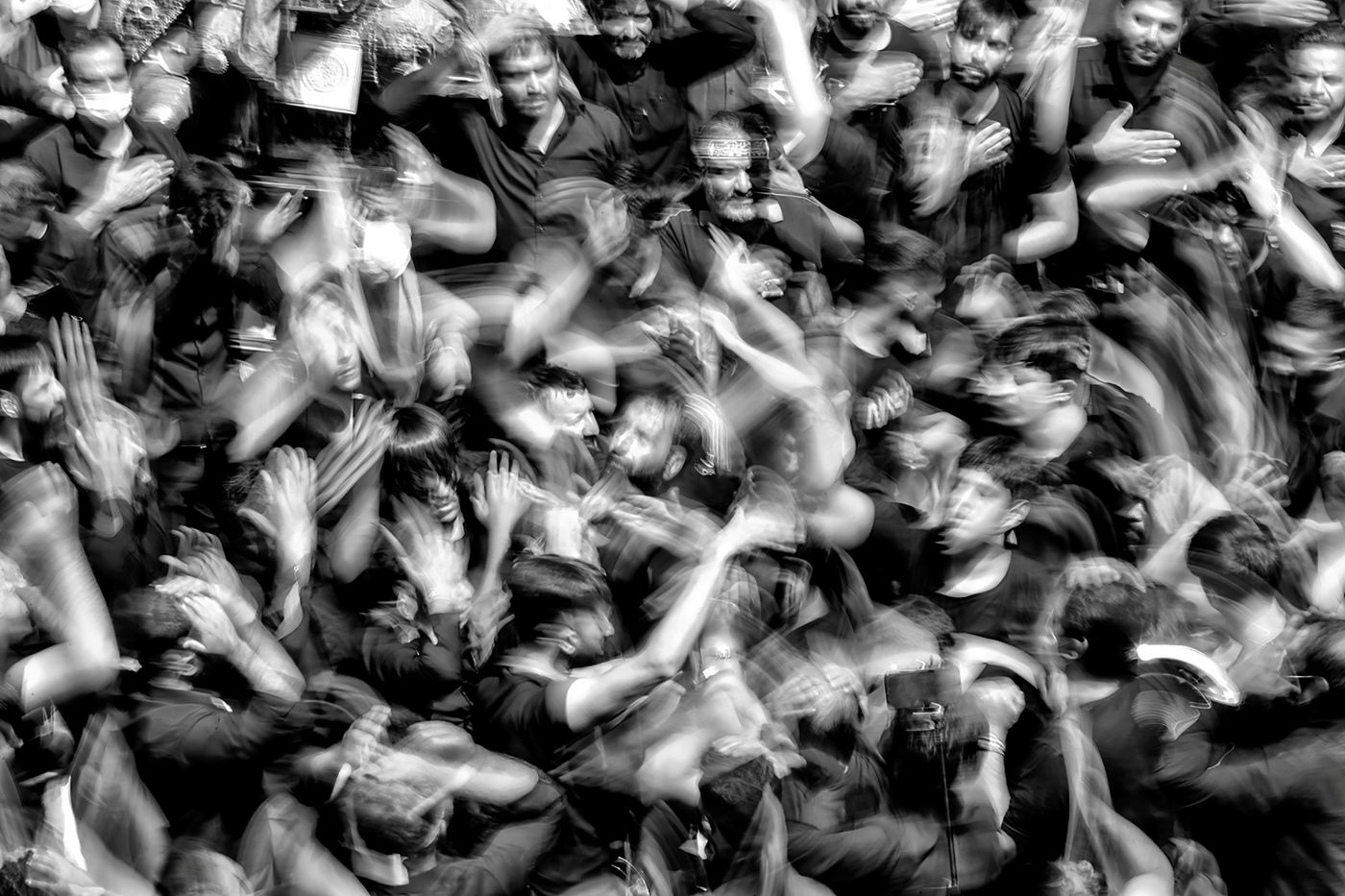
The Popular Table Is a Terrible Place to Build a Brand
My outcast days were unique to me. I was a loner, so I didn’t actually try to be a part of the popular kids. Sure, I moved around the edges, picking up bits and pieces of gossip and information. I was like one of those tiny fish that people pay huge amounts of money to put their feet in a tank of, that eat the dead skin. I was an unassuming presence, and that kept me fed and happy. I didn’t expend the amount of energy some outcasts did to get in good with the popular kids. I didn’t care that much.
Brands spend enormous amounts of energy trying to belong. Trying to be the popular kid. They look at competitors, category conventions, trends, best practices, research, social media, and whatever everyone is talking about this week. They adopt the costume, the language, the lexicon of the popular. Gradually, everyone starts dressing, looking, and sounding alike.
If brands were truly people, you’d start seeing banks wearing their collars flipped up, all SaaS companies sporting the same haircut, and every healthcare company wearing only the soothing shade of blue. Everyone wearing the uniform and talking the talk of their particular group of popular kids. The irony is that the harder brands work to fit in, the harder they become to distinguish.
When you walk into the cafeteria, if you’re paying attention, everyone at the popular kids’ table looks the same. They can all be labeled as well: cheerleader type, jock type, troubled rich kid type, and on and on. They all fall into a category, get absorbed, and lose their distinction.
The outcasts, on the other hand, sit back and observe. They listen and watch, and they come to understand the category’s conventions, but they never surrender their own identity to it. They don’t become another one of the sameness, trying to be like the other sameness at the popular table, a terrible place to build a brand.
The Scar Is the Interesting Part
Brands often try to sand those things away as they grow because they are scars and tell a story that feels unacceptable to the category. They want to look more like others in the category; maybe they think that makes them look more legitimate. That may be exactly the wrong instinct. The scar might be the brand.
Think about what a scar actually is. It’s evidence. Something happened there. There was an accident, a fight, an operation, a moment when you were careless with a table saw in woodshop. Whatever caused it, the scar proves you have a history. Perfect skin tells you nothing. A scar makes you wonder what happened.
Brands have scars too. They’re found in the strange way the company got started, the product nobody thought would work, the customer nobody else wanted, the limitation the founders had to work around, or the industry rule they couldn’t follow because they didn’t have the money, resources, connections, or experience to follow it. Sometimes what begins as a disadvantage forces a company to find another way, and that other way becomes part of what makes the brand interesting.
Then success arrives, and somebody decides it’s time to grow up. This is the same thing that kills creativity: someone says, “act your age,” and it’s out the window. Same with outcast brands: someone says, “Grow up,” and these brands think for a moment and reply, “Nah, that sounds like everyone else.”
The logo gets polished. The language gets cleaned up. The website starts looking suspiciously like the websites of the five biggest competitors. The odd little thing customers always loved gets removed because research says it’s confusing. The story of how the company stumbled into existence gets replaced with something about innovation, solutions, excellence, and a commitment to customer service. Slowly, carefully, professionally, the scar disappears. And with it, sometimes, goes the reason anyone noticed the brand in the first place.
There’s nothing wrong with growing up. Brands should evolve. A company with twenty employees has different needs than one with two thousand. Markets change, customers change, products change, and sometimes the thing that made you interesting twenty years ago really does need to go. Holding onto something simply because it’s old isn’t authenticity; sometimes it’s just stubbornness.
But before you sand down the rough edges, you ought to understand why they’re there. Because legitimacy doesn’t come from looking like everyone else. If anything, looking like everyone else simply proves you know how to dress for the category. The interesting question is what you brought with you that nobody else at the table has.
That weirdness might be your history. That strange voice might be the reason customers trust you. That product everyone originally laughed at might be the foundation of the company. What the industry once saw as a weakness might now be your greatest point of differentiation.
Outcasts understand this eventually. The thing that made you want to disappear in the high school hallway can become the thing you’re perfectly comfortable talking about thirty years later. You stop trying to hide it because you finally understand that it helped make you who you are.
Brands can reach the same realization. Not every scar needs to be displayed proudly on the homepage. Not every piece of company history deserves to become a brand pillar. But before you erase one because it makes you look different from the popular kids, look at it closely. There might be a story there. People might care for a reason. There might even be a brand.

Don’t Give the Outcast a Makeover
Branding can tempt you to see what makes a company different and immediately start fixing it. We compare it to the competition, notice all the places where it doesn’t quite fit, and start smoothing things over. We call it refinement or evolution, and sometimes that’s exactly what a brand needs. Other times, though, we’re simply giving Ally Sheedy a makeover at the end of The Breakfast Club and congratulating ourselves because now she looks more like everyone else. I always thought she was more interesting before the makeover. She had edges and a unique style. After the makeover, she looked like a popular kid.
That’s the danger with an outcast brand. If we assume something is wrong simply because it doesn’t fit, we risk removing the very thing that made it worth noticing. Good branding requires us to understand where that difference came from and why people connected with it before deciding what needs to change. Some of what we find will be baggage, stuff the brand has dragged around for years simply because nobody bothered to question it. Get rid of that. But somewhere in all those peculiarities may be something genuine, something competitors can’t easily copy because it belongs to this company and grew out of its history. Sand that away and you haven’t improved the brand. You’ve erased part of it.
That requires resisting another temptation, one brands share with awkward kids wandering the halls of high school: wanting everybody to like you. I understand the impulse. I spent enough years worrying about whether I belonged that I probably shortened my life expectancy by holding in farts alone. But eventually you discover that universal acceptance isn’t particularly useful, and it probably isn’t possible. You find your people. You stop worrying quite so much about the people who don’t get you. You become more comfortable with yourself, and strangely enough, that confidence often makes you more interesting to everyone else.
Brands don’t need everybody to like them either. They need the right people to understand them, trust them, remember them, and choose them. Trying to remove everything that might turn someone away can also remove everything that might pull someone closer. A point of view means someone can disagree with you. A personality means someone might find you annoying. Being distinctive means some people will inevitably prefer something safer. That isn’t necessarily a branding problem. It may be evidence that you actually have a brand.
At ThoughtLab, our job isn’t to take the outcast, wash its hair, put it in nicer clothes, and send it back into the hallway hoping the popular kids finally wave it over. Our job is to understand why it was standing outside the crowd in the first place. We find the difference that was already there, determine whether it matters, and, when it does, make it clearer, stronger, and harder to accidentally erase. Because the goal was never to become one of the popular kids. It was to become comfortable enough with who you are that you no longer care whether they saved you a seat.
The Takeaway
When I was young, I spent a lot of time trying to figure out where I belonged. I moved between groups, watched from the edges, listened more than I talked, and wondered what everybody else seemed to understand that I didn’t. Looking back, I’m glad I never quite figured it out. Being outside gave me a view I wouldn’t have from the middle of the crowd, and what once made me uncomfortable eventually became useful. The scars faded, but they never completely disappeared. I’m okay with that. They remind me where I’ve been.
Brands have their own versions of those scars, and too often we treat them as flaws to be hidden. We look across the category, see what successful companies are doing, and assume moving closer to them is progress. Sometimes it is. But there’s a difference between becoming better and becoming more alike. Growth doesn’t have to mean sanding away the history, personality, peculiarities, and hard-earned differences that made people notice you in the first place.
That’s something we think about a lot at ThoughtLab. Branding isn’t about manufacturing difference for its own sake, and it certainly isn’t about putting a funny hat on a company and calling it personality. It’s about finding what’s genuinely there, understanding why it matters, and having enough confidence not to erase it simply because it doesn’t look like everything else in the category.
Maybe that’s what the outcasts eventually learn. You can spend years trying to get invited to the popular table only to discover there was never anything particularly special about the table. There were just people sitting around it who had somehow convinced everyone else that there was.
So build your own table. Pull up a chair. Invite the people who get you.
And for God’s sake, if you have to fart, fart.