
An actor on the masks we wear, the audiences that applaud them, and why being liked isn’t the same as being known.
I am socially awkward by nature. I have no idea how to act in public, where to put my hands, or how to hold a conversation with strangers in a group. I spend most of my social interactions with my eyes on the floor, and my hands jammed into my pockets, desperately trying to take up less space or, ideally, just vanish. Poof. Gone. No longer in the room. But I’m not David Copperfield, so I’m generally stuck at these social gatherings, wishing I were somewhere else.
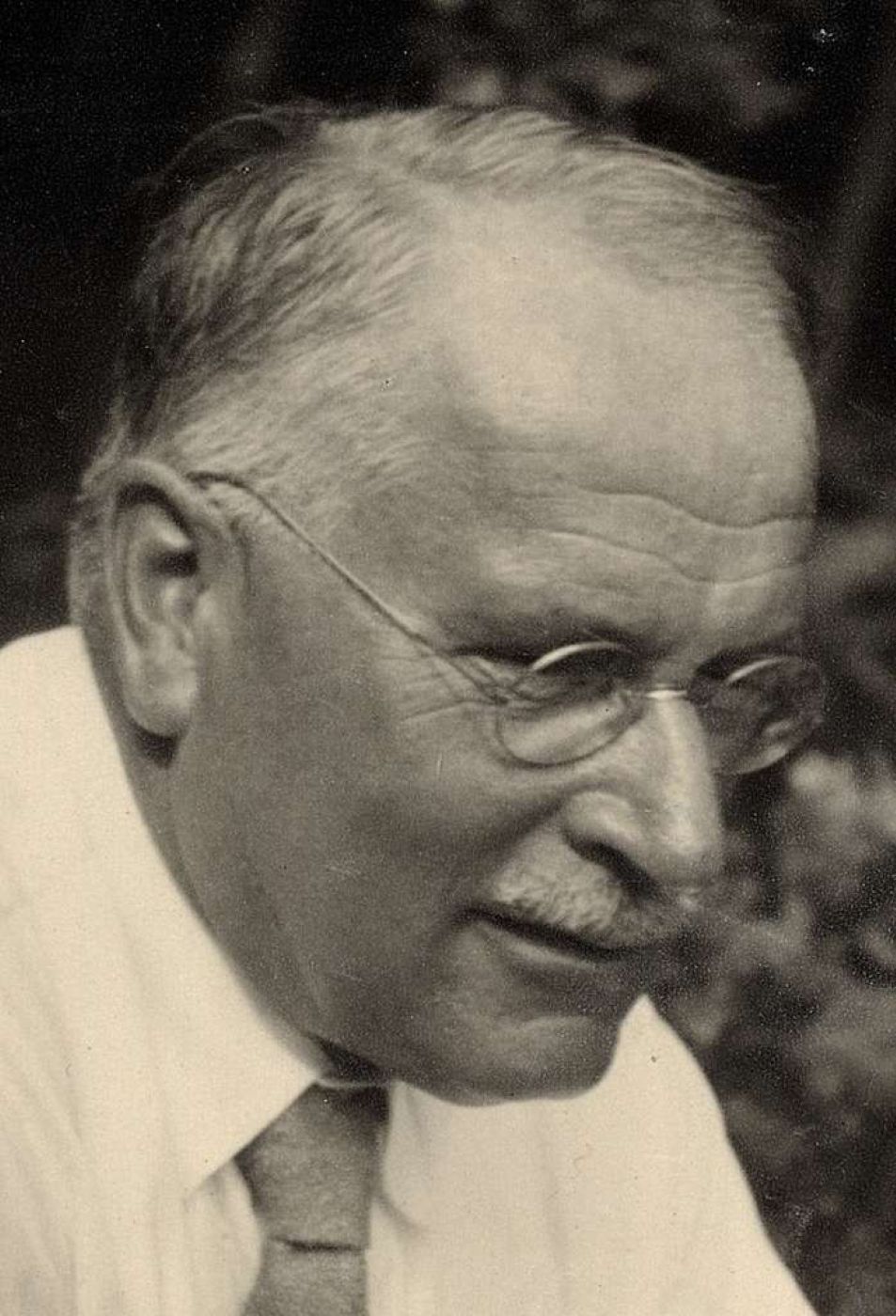
Admittedly, as I’ve gotten older, I’ve gotten better at it. Mostly because I just don’t care any longer. I know who and what I am, and I’ve stopped apologizing for it. My mask, my persona, as Carl Jung would have called it, has slipped almost completely off, and I stand bare and mostly unafraid in social situations. For a certain amount of time, anyway.
There’s an odd dichotomy between my social anxiety and my chosen profession of acting. I’m supposed to be “on,” witty, charming, and entertaining. People hear someone is an actor and immediately imagine a gregarious personality, someone who can command a room and hold everyone’s attention. I’m none of those things, and I never wanted to be.
One of the greatest compliments I ever received came after a party I’d forced myself to attend. A couple of people I’d been chatting with told me the host had just mentioned that I was an actor. “We would never have guessed you were an actor,” they said. I was delighted. Apparently, I’d managed to spend an entire evening being completely unremarkable, which, for me, was something of a triumph.
When I was younger, my social anxiety and general fear were so great that I began constructing what Jung called a persona without even knowing I was doing it. I created a public face, a version of myself that could navigate social situations without revealing how uncomfortable I actually was. It became so natural, so easy to slip into and play, that I thought I had everyone fooled.
I didn’t.
I learned that one summer at a Renaissance faire. I was just starting graduate school, and it was my second season performing there. One afternoon after rehearsal, Tammi, a woman I’d worked with closely during my first season, stopped by the faire for a visit, though I had no idea she was coming. She’d taught me an enormous amount about performing, and I thought of her as something of a mentor.
I was heading back to my housing when I noticed a small group gathered nearby, and there, standing in the middle of it, was Tammi. I was thrilled to see her. I ran over, shouted her name, and wrapped her in a big hug. As I told her how happy I was to see her, I heard another woman in the group say, “Wow, Paul Kiernan is showing real emotion.”
That hit me hard. The words bored into my skull and stayed there.
Weeks later, at a close-of-weekend gathering, I found the woman who’d made the comment and asked her what she’d meant by it. She told me she’d watched me wearing a mask, putting on a persona to survive the social interactions that working and living in a large group demanded of me. She’d recognized my awkwardness and understood that the person I presented to everyone wasn’t necessarily the person underneath.
“I was surprised and really happy,” she told me, “to see that you are capable of real emotion. You’re just not allowing yourself to have it.”
I had spent all that time believing my mask fooled everyone, only to discover at least one person could see through it. Worse, the thing I’d created to protect myself was keeping people from seeing much of me at all.
It was an uncomfortable revelation, especially for someone whose chosen profession involved putting on costumes and pretending to be other people.
But she was right. I’d created a persona to help me survive social situations, and somewhere along the way, I’d begun allowing it to determine how I behaved in them. The mask wasn’t simply hiding my discomfort. It was hiding me.
I decided it was time to take it off. Deciding turned out to be the easy part. Actually doing it took years.
The Mask Was Never the Problem
Carl Jung understood something about human beings that most of us would rather not admit. We are not entirely ourselves when we’re around other people. We adjust our behavior, our language, and even our personalities depending on the circumstances. We do this so naturally that we seldom stop to consider it. The person you are at a job interview is probably quite different from the person you are sitting at home in your underwear, eating peanut butter directly from the jar. At least, I hope so. If you’re doing both at the same time, you may want to reconsider your approach to employment.
Jung called this social identity the persona, borrowing a Latin word associated with the masks worn by actors in ancient theater. The connection to acting matters to me because an actor understands that a mask isn’t necessarily a deception. It’s a way of communicating something to an audience. It allows us to step into a role, behave according to its expectations, and participate in a world that might otherwise be difficult to navigate.
Jung didn’t believe the persona was inherently bad. Quite the opposite. We need it. Society would be a fairly unpleasant place if everyone wandered around expressing every private thought and emotion that passed through their heads. Imagine standing in line at the grocery store while the person ahead of you explains, in considerable detail, everything they dislike about your appearance, your choice of breakfast cereal, and the unfortunate condition of your shoes. Some things are better left unsaid, and the persona helps us understand when to keep our mouths shut.
The trouble begins when we become so comfortable with the persona that we forget there’s a difference between the role we’re playing and the person playing it.
That’s what happened to me. I’d developed a public personality that allowed me to function without revealing how frightened and uncomfortable I often felt. Over time, maintaining that personality became more important than the interactions themselves. I was concentrating so hard on appearing comfortable that I wasn’t allowing myself to become comfortable. I was playing the part of someone who could handle social situations while the actual person underneath was desperately looking for the nearest exit.
And the truly peculiar thing is that I wasn’t consciously lying to anyone. I wasn’t trying to convince people that I was wealthy, brilliant, or irresistible to women. I was simply trying to get through an afternoon without making a fool of myself. The persona had developed out of necessity, and for a while, it served its purpose.
But there was a cost. People were getting to know the version of me I’d constructed rather than the person I was trying to protect. And because I’d become so accustomed to that version, I was beginning to lose sight of the distinction myself.
Jung warned about this kind of identification with the persona. The mask becomes so familiar that we begin to believe it represents the entirety of who we are. We start making decisions based on what the persona requires rather than what we actually want or believe. The role that was supposed to help us participate in the world begins limiting how we experience it.
Now, consider something Jung never had to contend with. What if the mask didn’t come off when you left the party, finished your workday, or went home? What if you carried it everywhere, carefully maintained it, and invited hundreds or thousands of people to examine it?
What if, instead of simply wearing a persona, you could publish one?
Jung died in 1961, long before anyone thought it was necessary to photograph their lunch and share it with four hundred people. I suspect he would have found the whole business fascinating, although I can’t help imagining him staring at a photograph of someone’s avocado toast and wondering what, precisely, had gone wrong with civilization.
But the toast isn’t really the problem. Neither is the photograph.
The interesting thing is what happens when the mask acquires an audience, and that audience begins telling us which version of ourselves it prefers.
That’s where Jung’s idea of the persona becomes so relevant to the world we’ve created with social media.
Jung Never Had an Instagram Account
Social media has done something remarkable. It’s given us the ability to create, manage, and distribute our personas to an audience that would have been unimaginable to Jung. Once upon a time, you had to actually meet someone to form an opinion about them. You had to endure the awkwardness of conversation, perhaps share a meal, and spend enough time together to discover whether the person was interesting, kind, or someone you’d prefer to avoid for the remainder of your natural life. Now you can accomplish all of that while sitting on the toilet.
We’ve become remarkably efficient at presenting ourselves to the world. We select photographs that show us at our best, share opinions that reflect how we’d like to be perceived, and construct little narratives about our lives that suggest we’re considerably more interesting than we probably are. I’m not suggesting that everyone is being deliberately dishonest. Most people are simply choosing what they want others to see, which is something human beings have been doing since we first discovered that standing up straight and sucking in our stomachs made us look more attractive.
The difference is that social media has turned this ordinary human behavior into something we can measure.
We know how many people liked the photograph. We can see how many shared our opinion, and we can count the followers who apparently find our lives interesting enough to keep watching. These numbers begin to tell us something about the persona we’ve created, although what they’re actually telling us is considerably less clear than we’d like to believe.
And we pay attention. Of course we do. We’re human beings, and most of us enjoy approval. If I post a photograph of myself standing in front of the Grand Canyon and receive three likes, but a picture of my cat sitting in a cardboard box receives four hundred, I’ve learned something about my audience. Apparently, the cat has a more compelling personality and a better understanding of visual composition. I may resent this, but I’m also likely to post another photograph of the cat.
There’s nothing particularly sinister about that. The trouble comes when we begin allowing those reactions to influence not merely what we post but how we see ourselves.
A person discovers that their sarcastic observations attract attention, so they become increasingly sarcastic. Someone else receives praise for appearing endlessly positive, so they begin presenting a life in which disappointment, anger, and ordinary human misery apparently don’t exist. Eventually, the audience comes to expect these personalities, and the people behind them may feel obliged to deliver.
The persona is no longer simply helping us navigate society. It’s becoming a product we’re expected to maintain.
And unlike the masks we wear in ordinary social situations, the digital persona doesn’t necessarily disappear when the interaction ends. It remains online, available for inspection, comparison, and judgment. Something we said five years ago can suddenly become relevant again. A photograph taken during an afternoon when we felt particularly attractive may continue representing us long after we’ve developed a second chin and an unfortunate relationship with carbohydrates.
We’re not just presenting ourselves anymore. We’re maintaining a public record of who we’ve told everyone we are.
That matters because it introduces a kind of pressure that Jung’s original concept helps us understand. The more invested we become in the persona, the more difficult it may become to behave in ways that contradict it. If you’ve spent years presenting yourself as fearless, admitting you’re frightened becomes complicated. If everyone knows you as the person who’s always happy, acknowledging that you’re miserable may feel like disappointing an audience that never asked to see the whole of you in the first place.
Of course, social media can also give people the freedom to express parts of themselves they’ve been unable to reveal elsewhere. Someone who feels isolated in their immediate surroundings might discover a community where they can finally be themselves. The same technology that encourages performance can provide opportunities for genuine connection. That’s part of what makes this complicated. The platforms aren’t inherently preventing authenticity, but they can make performing an identity awfully rewarding.
I keep thinking about that woman at the Renaissance faire who was surprised to see me express genuine emotion. She recognized that I’d been hiding behind a persona, but she also recognized something underneath it. Her comment was uncomfortable because it exposed the distance between the person I was presenting and the person I actually was.
Now imagine if, instead of questioning that distance, she’d applauded the mask. Imagine hundreds of people encouraging me to maintain it because they found my carefully constructed personality entertaining. I might have become even more committed to the performance, convinced that the approval proved I was doing something right.
And that brings us to a distinction I think we’ve largely forgotten.
Being liked isn’t the same as being known.
You can attract an enormous audience with a persona that reveals very little about you. You can become recognizable without becoming understood, and you can spend years cultivating a public identity that bears an increasingly uncomfortable relationship to the person living behind it.
For individuals, that raises some difficult questions about authenticity and the price of approval. But there’s another place where this same behavior has become so common that we’ve given it an entire industry, complete with consultants (yes, like us), strategies, and elaborate presentations explaining how to do it.
We call it branding.

When the Brand Becomes the Mask
Companies do precisely what individuals do. They create personas. They decide how they want to appear to the world, what kind of language they’ll use, and what sort of personality they want customers to associate with them. They want to be seen as trustworthy, innovative, approachable, or whatever combination of admirable qualities happens to be fashionable at the moment. And like the rest of us, they generally prefer to show themselves in the most flattering light possible.
There’s nothing wrong with that. A brand needs an identity, and that identity needs to be communicated. The problem begins when the company becomes more invested in maintaining its carefully constructed personality than in understanding what it actually is.
Social media makes that temptation hard to resist. A company posts something funny, gets a tremendous response, and decides that funny is now its personality. Another discovers that taking a particular position generates attention, so it begins taking positions on everything. Before long, the brand is responding to the audience rather than expressing anything meaningful about the business behind it.
The mask has become the strategy.
And just as with individuals, the applause can be misleading. Thousands of likes don’t necessarily mean customers trust you. A million views won’t tell you whether anyone understands what makes your company different. You can become very good at attracting attention without giving people a compelling reason to choose you.
At ThoughtLab, we believe that a brand’s identity has to come from something deeper than the personality it presents to the public. That’s why our approach is Depth-Before-Design & Development. Before we decide what a company should look like, sound like, or say about itself, we need to understand who it is, what it believes, and why anyone should care.
That understanding is what allows us to help create a category-of-one. Not by inventing a more entertaining persona or dressing up the same old promises in prettier clothes, but by discovering what makes a business genuinely distinct and building its identity around that truth.
Because the strongest brands don’t need to pretend to be something they’re not. They need the courage to recognize what they are and the confidence to let people see it.
The Takeaway
I spent a good portion of my younger life hiding behind a persona because I was afraid that the person underneath wouldn’t be particularly welcome. It took an uncomfortable encounter at a Renaissance faire to make me realize that the mask I’d created to protect myself was also keeping people at a distance.
I don’t think companies are all that different. They become attached to the personalities they’ve created, particularly when those personalities attract attention. And the longer the performance continues, the harder it becomes to distinguish the brand from the image it’s been working so hard to maintain.
Jung understood that we need our personas. He also understood the danger of mistaking them for our entire identity. That’s a distinction worth remembering in a world where practically everyone, including the companies trying to sell us something, has an audience waiting to applaud.
At ThoughtLab, we’re not interested in helping businesses become better actors. We’re interested in helping them find the thing competitors can’t imitate by adopting the same voice or borrowing the same visual style.
That requires looking beneath the persona, asking uncomfortable questions, and occasionally discovering that the identity you’ve spent years cultivating isn’t the thing that makes you valuable.
I still get uncomfortable in social situations. I still occasionally find myself staring at the floor, wondering what to do with my hands. But I’m far less interested in pretending to be someone who doesn’t have those problems.
And if you’re standing next to me at a party and discover that I’m an actor, I’d consider it a great personal favor if you didn’t ask me to perform something.
I’m off the clock.