What a failed joke, a wet bar of soap, and two words on a gravestone reveal about the art of knowing when to let go.
Many years ago, I was doing a show. It was so long ago that I’ve forgotten the details, but one feeling lingered and still haunts me to this day. Like a dream where you don’t know exactly where you are or who the people around you are, but you have a feeling you know, something distant and just out of your fingers’ reach.
I recall delivering a line during one performance, and the way I did it got a great laugh. I was so proud of myself. Actually, let’s be honest, I was full of myself and decided that I was the master of comedy and could bend any audience to my will. Keep in mind, I was young, had very few shows under my belt, and had about three lines in the show.
The next night, I was ready to bring the house down. I stood watching the other actors onstage, following the action like a cat follows a bouncing ball. As the dialogue swirled, I saw my line approaching. I readied myself. I saw it coming, I wound up, and then I delivered the line in such a way that you could see the yellow highlight in the air around my words. I let the line fly and took a slight step back, bracing myself for the thunderous applause, already playing out in my head the conversation I was sure to have with Lorne Michaels soon. And then, silence.
The line dropped like a dead seagull at my feet. The show went on without a hitch, but out of the corner of my eye, I caught another actor looking at me and giving his head just the slightest shake. And with that shake came the unmistakable words, “Nice try, but you swung and missed.” After the show, that actor stuck his head into my dressing room and said, “Nice line,” laughed at me, and walked away.
Needless to say, I didn’t end up on SNL then or ever. But I did learn a lesson, and the following night, I simply said the line, and the laugh reappeared. The actor returned to my dressing room after the show and said, “You get it now?” I smiled and nodded, but I didn’t fully get it. I knew the night before had been too much, but it still felt like I could add some spin, some heat to the line to improve the laugh. I didn’t mess with the line for the rest of the run. I didn’t work it. I just said it, and it consistently got, at the very least, a chuckle.
It took me years to understand what happened during those three performances. Comedy, a great teacher once told me, is like a wet bar of soap. I’ve come to believe he was right. Cradle it gently, and it’s yours. Squeeze it too tightly, and it shoots out of your hands, leaving you standing there looking foolish. And if you’re standing onstage expecting a laugh, looking foolish isn’t necessarily the same thing as being funny.
Don’t Try
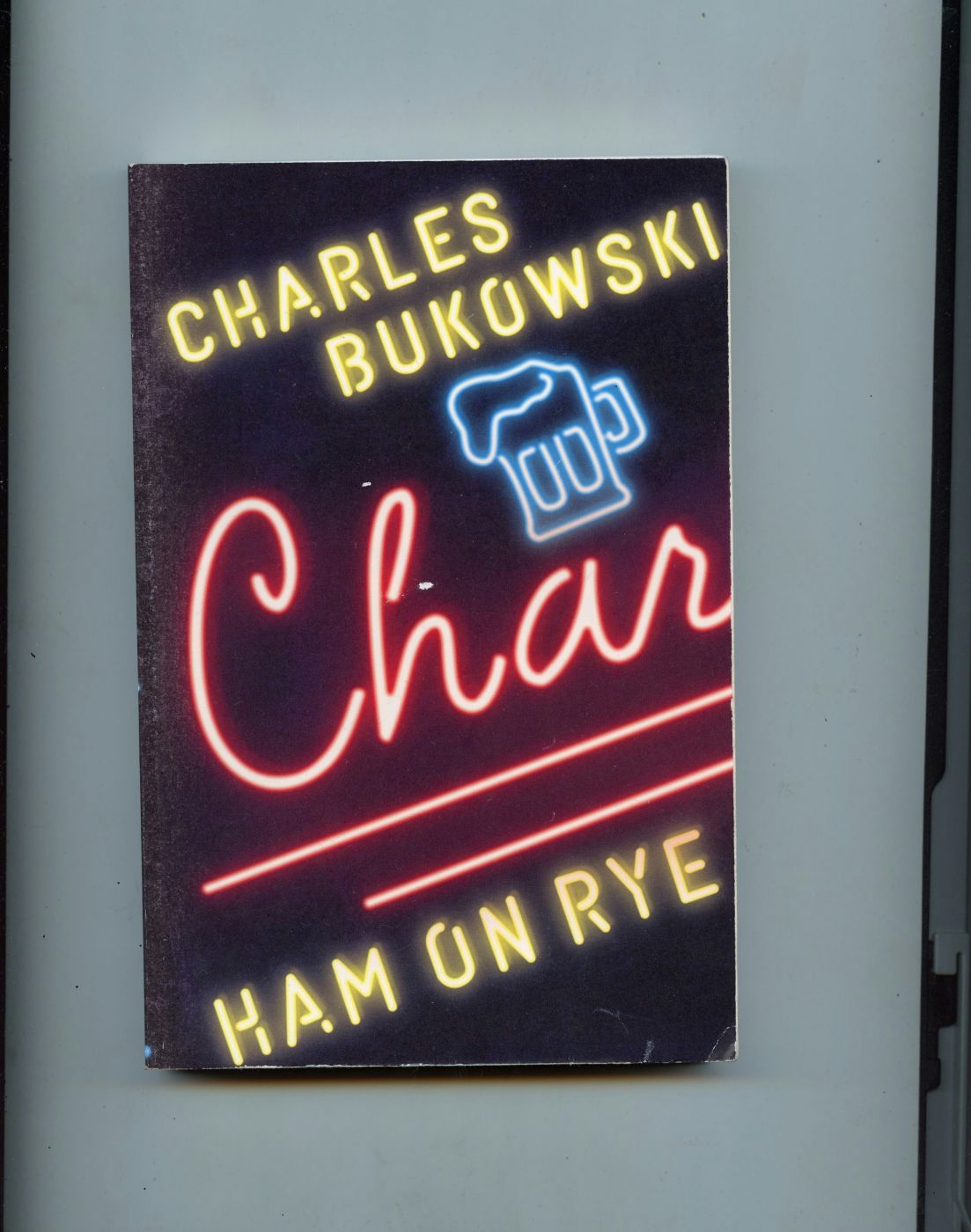
Charles Bukowski, the poet, novelist, and chronicler of humanity’s less polished moments, has two words engraved on his gravestone: Don’t Try. That’s it. No grand declaration about the meaning of life, no sentimental farewell, no advice about following your dreams or believing in yourself. Just two words that, depending on how you interpret them, could either change your life or provide a convenient excuse to spend the afternoon on the couch in your underwear.
I recently came across an article about those two words and the philosophy behind them. Apparently, some people have interpreted Bukowski’s epitaph as an invitation to laziness, a suggestion that effort itself is somehow beneath us. That interpretation never occurred to me. Not for a moment. I knew exactly what he meant, or at least I recognized something in those words that had been rattling around in my head since that unfortunate evening when I sent a perfectly good line sailing into the orchestra seats, only to have it sent back with resounding indifference and a thick, deep silence.
Bukowski was hardly a man who avoided work. He wrote thousands of poems, hundreds of short stories, and several novels. Whatever else you might think of his writing, you can’t accuse the man of sitting around waiting for inspiration to knock politely on his door. His wife, Linda, later explained that Don’t Try wasn’t about refusing to make an effort. It was about allowing the work to come from something genuine rather than forcing it into existence. If you have to manufacture the impulse, if you’re constantly straining to produce something that isn’t there, perhaps you’re going about it the wrong way.
There’s a distinction here that matters enormously, particularly to anyone who makes a living creating things. Effort and force are not the same thing. You can spend years learning a craft, practicing, failing, improving, and occasionally discovering that you’re not nearly as brilliant as you imagined you were the night before. That’s effort. That’s the work. But there’s a point at which all that preparation has to give way to something less deliberate. You have to trust what you’ve learned and allow it to do its job.
I think about that young actor standing onstage, practically waving a flag over his three lines, demanding that the audience recognize his comic genius. He wasn’t doing the work of the scene anymore. He was trying to produce a result. And the audience, quite sensibly, declined to participate.
The funny thing is that I hadn’t changed the words. I hadn’t rewritten the joke or altered the circumstances. I had simply become so interested in the laugh that I’d forgotten about the line. And when I finally stopped trying to make it funny, it became funny again.
Perhaps Bukowski would have understood. Or perhaps he’d have told me to get out of his way and let him finish his drink. Either way, I suspect we’d have agreed about the soap.

When Trying Becomes the Problem
There’s something peculiar about the creative process. We spend an enormous amount of time preparing to do something that, when it finally works, often appears effortless. A musician practices a piece of music until the notes are no longer something to be conquered. An actor rehearses a scene until the words become thoughts rather than lines memorized from a script. A writer struggles with a sentence, moving words around, replacing one with another, until suddenly the sentence says exactly what it needs to say. And when that happens, there’s a temptation to keep going, to improve it just a little more, to see if we can’t squeeze another drop of brilliance out of the thing. Sometimes that’s precisely when we ruin it.
The difficulty is knowing when effort has done its job and when it has begun interfering with the result. There’s no convenient little light that comes on to tell us we’ve crossed the line. No buzzer sounds when a perfectly good idea has been subjected to one revision too many. We simply keep working, convinced that more attention, more refinement, and more control must inevitably produce something better. And because we’re invested in the outcome, we become increasingly reluctant to leave anything alone.
I think this is especially true in branding and marketing, where the temptation to control every aspect of how a business is perceived can become almost irresistible. A company discovers something about itself that customers genuinely appreciate. Maybe it’s an unusual sense of humor, a particular way of communicating, or an approach to its work that sets it apart. Whatever it is, it seems to resonate. People notice. They respond. Someone in a meeting points out that they’ve stumbled onto something valuable, and naturally, everyone wants to know how to make more of it. That’s a perfectly reasonable question. It’s also where things can start to go sideways.
The conversation shifts from understanding why something works to figuring out how to make it work harder. The humor becomes a strategy. The personality becomes a set of approved characteristics. Somebody suggests that the original idea needs to be amplified, refined, and made more consistent across every possible customer interaction. Before long, the thing that attracted people in the first place has been pulled apart, examined, reassembled, and polished until it bears only a passing resemblance to what made it appealing.
And the frustrating part is that everyone involved may have had perfectly good intentions. Nobody set out to destroy anything. They were trying to improve it. They saw something valuable and wanted to make the most of it, which is what businesses are supposed to do. But somewhere along the way, they stopped paying attention to the thing itself and became preoccupied with the response they hoped to produce.
It’s the young actor waiting for the laugh all over again, only now he’s got a marketing department standing in the wings, holding a clipboard and suggesting that he put a little more emphasis on the third word. The audience, meanwhile, is still sitting there, waiting for someone to simply say the line.
Knowing When to Leave It Alone
Of course, there’s a danger in taking Bukowski’s advice too literally, particularly in an industry where a great deal of thought and effort goes into producing something that appears simple. Nobody wants to hire a branding agency that announces, halfway through a project, that it’s decided to stop trying. I can imagine that conversation going rather poorly, especially when the client receives the invoice. But there’s a difference between abandoning the work and recognizing when it has accomplished what it was supposed to. The first is negligence. The second requires a level of confidence that can be surprisingly difficult to achieve, particularly when everyone involved has an opinion about what might make the result better.
At ThoughtLab, we spend considerable time getting to know a business before we begin deciding how it should present itself to the world. We ask questions, listen to the answers, challenge assumptions, and occasionally discover that what a company considers its greatest strength isn’t necessarily what makes it interesting to the people it hopes to reach. That’s an important part of the process because we’re not simply trying to invent an appealing personality and attach it to a business. We’re looking for something that’s already there, something worth understanding before we decide how best to communicate it. Sometimes the most valuable thing we can do is recognize we’ve found it and resist the temptation to dress it up until nobody recognizes it anymore.
This doesn’t mean that every spontaneous idea is brilliant or that every instinct deserves to be followed. Plenty of terrible ideas have arrived fully formed, accompanied by an enthusiastic declaration that they just felt right. That’s why experience matters. It’s why we revise, reconsider, test our assumptions, and occasionally throw away something we were terribly fond of yesterday. But all that work should bring us closer to the essential idea rather than bury it beneath evidence of how hard we’ve worked. A brand doesn’t become more compelling simply because more people have contributed to its development, any more than a joke becomes funnier because the actor delivering it has spent an additional twenty minutes practicing his eyebrow movements in the dressing room mirror. Yes, gentle readers, I once did that.
There’s also something worth considering about the people on the receiving end of all this effort. Customers aren’t sitting around admiring the strategic complexity behind a company’s messaging. They’re responding to what they encounter, often without giving it much conscious thought. Something feels right, or it doesn’t. A company sounds like someone they’d enjoy doing business with, or it sounds like every other company competing for their attention. And while thoughtful strategy and careful execution can influence those reactions, they can’t simply be commanded into existence. You can give people reasons to trust you, remember you, and come back. What you can’t do is insist that they feel something because you’ve worked very hard to make them feel it.
That may be the most difficult part of Bukowski’s philosophy for anyone in marketing to accept. We can control the work we do, the care we put into it, and the decisions we make along the way. We can become exceptionally good at recognizing what makes a business distinctive and communicating that distinction clearly. But the response belongs to someone else. The audience gets to decide whether the line is funny, just as the customer decides whether the brand means anything to them. And sometimes, after we’ve done everything we reasonably can, the smartest thing left to do is simply let the line land.

The Work Behind the Effortless
There’s a reason we don’t begin a branding project by deciding what a company ought to sound like or what its customers ought to feel. Those questions come later, after we’ve spent time understanding the business itself, the people behind it, and the people it hopes to reach. It’s tempting to skip ahead to the interesting part, the clever language, the striking design, the campaign that makes everyone around the conference table smile. But without something substantial underneath it, all that creativity can become an elaborate attempt to persuade people to feel something the business hasn’t given them a reason to feel.
That’s where the distinction between effort and force matters most. The work we do at ThoughtLab isn’t about removing the effort from branding. Quite the opposite. It’s about putting that effort where it belongs, into finding the truth of a business and understanding why that truth might matter to someone else. Once we’ve done that, the creative work has something to stand on. We’re no longer trying to invent a personality that will get a reaction. We’re finding a way to communicate something worth reacting to, and there’s a considerable difference between the two.
I think back to that line I delivered onstage. The words hadn’t changed, and neither had the scene. What changed was my relationship to the audience. I’d stopped listening to what was happening around me and started concentrating on what I wanted to get out of them. The moment I returned my attention to the scene, the laugh came back. And perhaps that’s a useful lesson for businesses, too. When you stop concentrating quite so desperately on the reaction you want from your customers, you may finally begin paying attention to what they’re responding to in the first place.
The Takeaway
I sometimes wonder what would have happened if I’d continued trying to improve that line every night. Perhaps I’d have discovered some magnificent new way of delivering it, a comic revelation that would have propelled me straight into the arms of Lorne Michaels. More likely, I’d have spent the remainder of the run standing onstage, wondering why the audience refused to appreciate the tremendous amount of effort I was putting into being funny. Fortunately, another actor recognized what I was doing and was kind enough to let me make a fool of myself before pointing me in the right direction.
I think businesses could benefit from a little of that wisdom. Not because branding should be effortless or because strategy and careful execution somehow interfere with creativity, but because at some point, trying to make something more appealing can diminish what made it appealing in the first place. The goal isn’t to eliminate effort. It’s to direct that effort toward understanding what matters, finding what makes a business worth paying attention to, and communicating it without insisting that the audience respond exactly as we’d like.
Bukowski left us with two words that contain a surprising amount of wisdom. Don’t Try. Coming from a man who devoted so much of his life to writing, they seem less like an instruction to stop working and more like a reminder to trust the work once you’ve done it. There’s no guarantee that anyone will laugh, applaud, buy what you’re selling, or remember your name. You can prepare for those possibilities, and you can certainly hope for them, but you can’t force them into existence.
And if you’ve found something genuinely good about your business, something that people respond to without being instructed to do so, perhaps you don’t need to keep improving it until it becomes something else. Understand it. Take care of it. Give it room to be what it is. Sometimes the best thing you can do for a perfectly good idea is recognize that it’s already doing its job.
Just remember the soap.