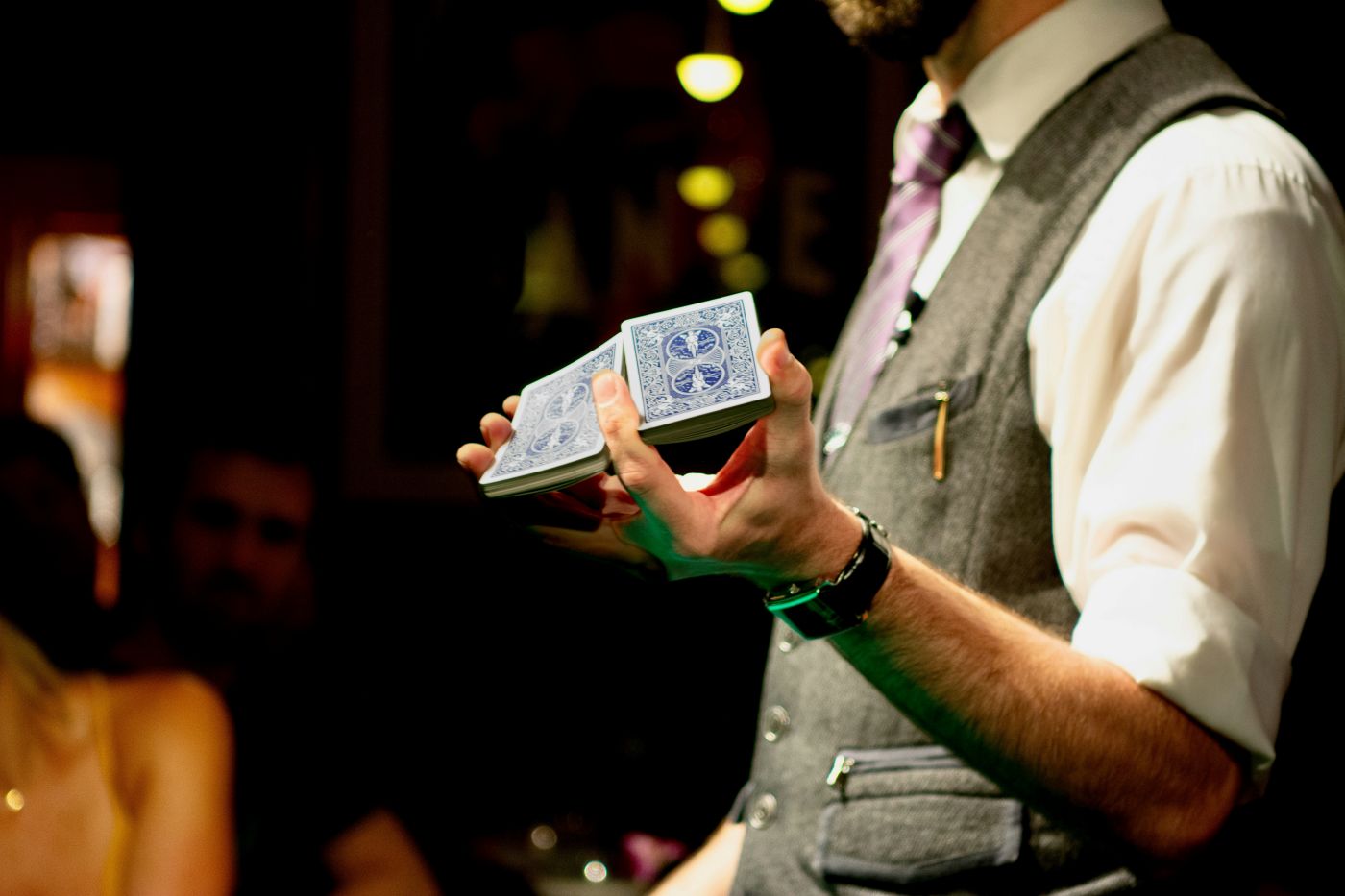
I know this isn’t new territory; there are literally hundreds of blogs, articles, white papers that touch on this subject: being dry, having a block of sorts. I myself have personally written a few dozen blogs on the subject of drying up, of writer’s block or creative stutters, so no, dear reader, this is not a new subject, and this won’t be the last time I write about it, sad to say.
It’s one of those mornings. Sometimes, I wake, and I’m excited about hitting the keys. Maybe there’s a little something I started yesterday that will spark the creative bones, and I will lay out some lovely words in good order, and I’ll have a blog. Or, even better, a blank screen will not seem imposing today; it will be a welcoming sight for all the thoughts and ideas that I cannot wait to put there. The daunting blank screen will be less daunting and remain blank for only a few moments before the ideas flow, the fingers tap, and words, words, words (as Hamlet said) will pour forth. Oh, what a glorious feeling!
Have you ever looked at the cursor? I mean really looked at it, seen it and watched the job it performs. It’s there, blinking on and off, being and not being, in 500 millisecond intervals. When the day is ripe, and the words are dropping like sated Romans at one of Nero’s feasts, the blink is almost imperceptible. It’s there, but it’s moving, skittering across the screen, leaving a trail of wonder and wisdom. Facts and insights that will make the reader stop in their day and think about what they just read. The world will pause as they collectively absorb one of my sentences and become unified across time and space, in simple, silent awe of the words I laid down.
On days like today, the cursor simply says, “Well?” Well. Well. Well. Well. Well. 500 milliseconds at a time. Asking me, imploring me, well, are you going to write something, writer? Are you going to do the usual finger dance, word drop across the keys, and leave wisdom, humor, insight for all those who stand with open mouths, like Catholics at Communion, awaiting the nourishment of the body of our Lord and Savior in sentence form, in word salad, in picture-perfect paragraph form. Are you going to be doing that any time soon, the cursor asks, and then back to its nightclub, dance rhythm; Well? Well? Well? Well? Repeat and fade.
I know this isn’t new territory; there are literally hundreds of blogs, articles, white papers that touch on this subject: being dry, having a block of sorts. I myself have personally written a few dozen blogs on the subject of drying up, of writer’s block or creative stutters, so no, dear reader, this is not a new subject, and this won’t be the last time I write about it, sad to say. Why? Because it’s a truth we all have to accept and learn to let into our lives without ruining it altogether.
The Hard Truth
I was watching an interview with Matt Damon, and he was discussing The Odyssey. At one moment, Damon shares that they were heading into filming the horse scene, the interior of the Trojan horse. Damon recalls saying to director Chris Nolan, “Tomorrow we start shooting the horse scenes; how are you going to do that?” To his surprise, and mine as well, Nolan replied, I don’t know. Now Damon laughed, but he followed up by saying something like, Nolan does that; he has all the pieces, all of the elements he needs, and then he decides how to put them together. For Damon and the rest of the cast, it made the experience feel like an indie film, a little loose and a little improvisational. And, as Damon went on, he said we got to the day, and we all crowded into the horse with the camera guy and the director, and we just made it work.
Now, I know what you’re thinking: a $250 million film and this guy has no idea what he’s going to do in one of the most famous scenes from the epic poem? That’s crazy. Maybe, but it’s also true. Sometimes you have no idea, and in those times, like I’m facing now, you cannot look at what you’re not doing or worry about how you’re going to do it; you simply go forward and do it and trust it will come out right.
That’s true with any creative endeavor. The truth is, creatives rarely have it all mapped out. We don’t rise, turn on a faucet, fill our magic cups with creative juice, and then just share it with the world. Each time we sit down to produce something, to create something, we’re starting from scratch. That’s the important thing to know: you’re starting from scratch on some level every single time you set about to create something.
Levels of From Scratch
I’m talking about this today partly because I’m dry and working as I work, but also because people, creatives and non-specific creatives often forget this and it causes us to panic and feel like we’re drowning. To define my terms, non-specific creatives are the people who either say, “I don’t have a creative bone in my body,” when they actually do, or the folks whose jobs don’t mark them as creatives; however, they are very creative and inventive people, but they’re told they aren’t in the creative department. So, for those folks, all of them, we are discussing this today.
Whenever we go into a creative situation, we’re all starting from scratch. This project is new, this moment is now, and this team is fresh to the subject, so we start from scratch. I say this in the hopes that all creatives and all the people who “handle” creatives understand that we’re all starting from scratch and that none of us should expect miracles right out of the gate. Now I mean it when I say that we are starting from go; we have the ingredients to make the thing from scratch, there’s no box of creative in the baking goods aisle at the Safeway. We aren’t taking a shortcut like using instant potatoes. There is no envelope of instant creative. It has to be made from scratch.
Here’s the tricky part: from scratch isn’t a universal. The term “from scratch” comes from sports in the 18th and 19th centuries. In foot races, a judge would literally scratch a line in the dirt where the start of the race would be. Everyone started from the same place, no advantages; we all gather at the scratched line to race. As time passed, it was adopted in the cooking world and in the culinary arts; from scratch means cooking or baking with raw ingredients, like sugar, eggs, and flour, no pre-mixed boxes of ingredients. The only difference being how much experience the baker, cook, or creative has going in.
Here’s the point: Christopher Nolan saying I don’t know, when asked how he’s going to shoot a tough scene, is not as unnerving as a first-time director who has never been behind the camera and suddenly has a $250 million budget. Nolan’s “Starting from scratch” is certainly different from another director starting from scratch. There are and will always be levels of scratch. What changes is the level of experience that comes with it.
I’d rather have a director with Nolan’s experience saying I don’t know to the question of how than I would with a first-time, struggling director. Both are looking at the scene fo the first time, but what they have done before will dictate how they will look at it now. And this is the truth about all creatives and all creative endeavors. We all start from the same scratched line in the dirt, but some have stepped to that scratched line many more times than others, and that makes a difference.

Trust Your Experience
This is for me as much as it is for anyone reading this article; trust that time and experience have given you an edge even if you’re starting from scratch. And this applies to managers as well; you have to trust your creatives and know that even if they are in a slump of sorts, they have experience and understanding, so they will know how to get out of the temporary trough they’re in now.
Even when I wake up, and the thought of sitting in front of the keys leaves me cold and shaking, I know I’ve been here before; I know that these times of drought pass; I know how to shoot the horse scene; I have all the pieces; I’m just not sure how to bring them all together right now.
The Ugly First Move
Here’s the part nobody wants to hear on a dry morning: the way out of this isn’t inspiration. It’s not a walk, not a shower, not a second cup of coffee pretending to be a ritual instead of a stall tactic. The way out is an ugly first move. You make a bad sentence on purpose, just to prove the keys still work, just to give the cursor something to chase besides your hesitation. Nolan didn’t solve the horse scene by waiting for the answer to arrive fully formed. He solved it by getting into the horse. The knowing came after the doing, not before it, and that order matters more than we like to admit, because we’ve been trained — by school, by every “brainstorm before you write” worksheet we ever filled out — to believe thinking has to finish before the sentence starts.
It doesn’t. It can’t, not really, not on the days when the well’s gone dry. On those days, thinking and writing have to happen in the same motion, badly, together, like two people carrying a couch down a narrow stairwell. Nobody’s carrying that couch alone. And nobody’s carrying it gracefully. You just get it down the stairs.
I say this to myself every time, and I still forget it every time, because forgetting is apparently part of the deal. You’d think thirty years in, and I’d have installed some permanent scaffolding in my brain: a sign that says, in blinking neon, JUST WRITE THE BAD SENTENCE, DUMMY. But no. Each dry morning shows up wearing a new disguise, insisting it’s different, insisting this time the well is actually empty and not just resting. It’s never actually empty. It’s resting. There’s a difference, and the difference is the whole article.
Back to the Cursor
So let’s go back to where we started: the cursor, blinking its interrogation, 500 milliseconds at a time. Well? Well? Well? I used to hear that as a threat. An accusation. A tiny courtroom asking me to account for myself before I’d said a single word. But I think I had the tone wrong. I think, on the good mornings and the dry ones alike, the cursor isn’t cross-examining me. It’s just holding the door open. It doesn’t care what I bring through it: a good sentence, a bad one, a half-formed idea about Matt Damon inside a wooden horse. It just wants me to walk through with something, anything, because the walking through is the whole trick. The cursor was never asking whether I had the answer. It was only ever asking whether I was willing to start without one.
That’s the reframe that gets me through mornings like this one. Not confidence. Not a burst of the muse. Just a willingness to treat “well?” as an invitation instead of an interrogation, and to answer it with whatever I’ve got, even if what I’ve got is thin.
The Takeaway
You are always starting from scratch. That part never changes, no matter how many times you’ve stood at the line. What changes what has to change, what you have to let change is your relationship to not knowing. Nolan didn’t know how to shoot the horse scene. I don’t always know how this paragraph ends before I’ve written the one before it. That’s not a flaw in the process. That is the process.
So the next time the cursor starts its little interrogation, well, well, well, don’t wait for the answer to arrive gift-wrapped. Get in the horse. Write the ugly sentence. Trust that the experience you’ve already banked, the hundreds of scratched lines you’ve stood at before, will carry you further than waiting ever could. The block isn’t a wall. It’s just the well resting. Go get a bucket.