Know the law. She said it with such confidence, and yet she was wrong. This made me think of something, some item or idea I had seen recently. Then it came to me, oh right, this is like every YouTube video I’ve seen where someone says, I know the law
A few days ago, I was driving to the local grocery store when I saw and heard an ambulance ahead of me. As I have been taught, I pulled my car to the side of the road so the ambulance could pass unhindered. Now, admittedly, I pulled over a little early as the ambulance was a couple of yards away, but better safe than sorry. As I pulled over, the car behind me went around me and continued its journey. I paid it little attention until I reached a stoplight and saw that the car that had passed me had stopped next to me. I heard a woman yell, " Hey,” at me, and I looked at the car that passed me. She yelled again. I smiled, and she said, “You should learn the law, you don't have pull to the side for an ambulance, that’s only for fire trucks or police cars. And again she advised me to learn the law. The light changed; she went left; I went straight; thus endeth my relationship with that law-abiding woman. But not really.
It bugged me, her little bit of roadside advice. I know she’s wrong, but the phrase “know the law” got under my skin. Despite believing I knew the law, which I learned way back when I started driving, her tone and anger made me think I might be wrong. Perhaps I didn’t need to pull over, and my action forced that poor woman to reach the stoplight exactly a tenth of a second before me, but that could have been less time if I hadn’t pulled over. I was in a tizzy. Again, not really. I believe a tizzy involves a large, floppy hat, papers flying out of a satchel, and a lot of "Oh, goodness" me’s being thrown about.
Off I went to the computer, and I Googled the law. Trunks out, I was right, and she … well, she’s gone, so this doesn't matter, but it does. She was wrong. You must move to the edge of the right side of the road when an emergency vehicle is approaching. This is done so that the emergency can be tended to and no accidents occur. A good, solid, obvious law. That I knew and I knew I knew, but this woman's vehemence had made me question myself.
Know the law. She said it with such confidence, and yet she was wrong. This made me think of something, some item or idea I had seen recently. Then it came to me, oh right, this is like every YouTube video I’ve seen where someone says, I know the law or I know my rights, you can’t do that. And it turns out they’re incredibly wrong.
With that in mind, content junkies, I’m going to do a little surface skim on what some folks think the law is, but really, it’s not.
Filming Every Blessed Thing
I have stood on the mount and railed to the skies about the need to film anything and everything, and that has gotten me nowhere, so this is not one of those blogs. Not fully. I’m sure there will be some railing happening, I just can’t help myself. But this one isn’t so much for the filmmakers as for the filmees.
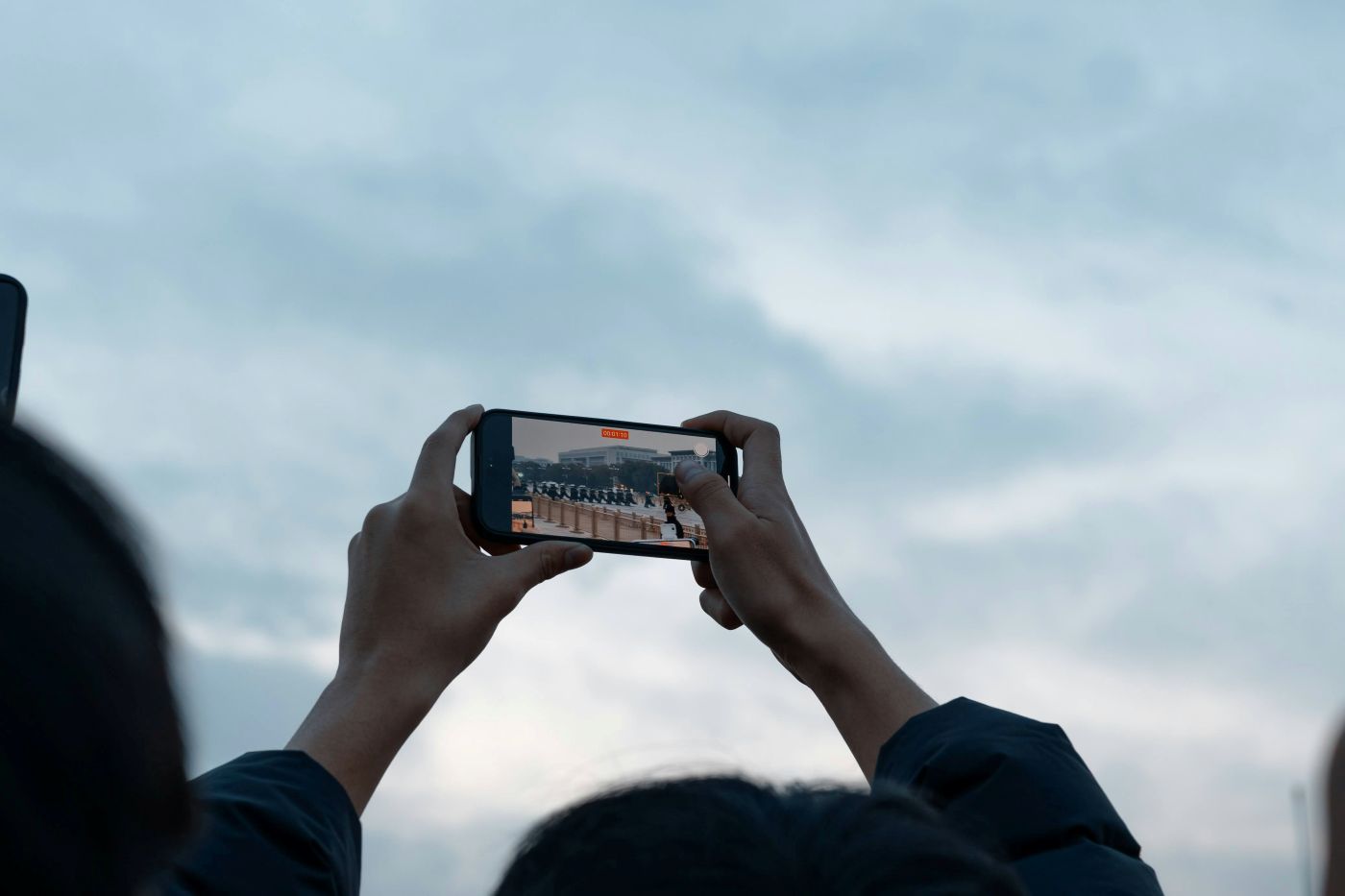
A thing I often see in these videos is someone using their phone to record another person, and the person being recorded then threatens the person filming. Now these threats are usually accompanied by, “I know the law, you can't film me,” or “I know my rights, and you have to have my permission to film me.” Those being filmed are usually agitated, in some distress, and not the best representation of the perfect human being. Thus, they are vulnerable. And when people are vulnerable, especially in public, they will fight and toss around erroneous legal ideas. So, for those who find themselves being captured on tape, know these things.
Filming in public is generally legal in the United States, under the First Amendment, as long as you’re somewhere you’re allowed to be: a street, park, or public building. Make note of that, public buildings. Examples of public buildings would be:
- Government Buildings: City halls, state capitol buildings, federal buildings, courthouses, and police stations.
- Publicly Owned Infrastructure: Libraries, public schools/universities, post offices, and public hospitals.
- Public Spaces/Land: Streets, sidewalks, public parks, and beaches are considered public forums where filming is generally protected.
- Transportation Facilities: Publicly owned transportation hubs, including airports and train stations.
Now, this doesn’t mean you can drop into any public building and film willy nilly. I mean, if Willy and Nilly are public servants, then, you know, you can film them. Honestly, if you’re going to film in a public building, let someone know why you’re there and why you’re filming. Given the current political climate, it will reassure people’s free-flowing fears if you’re upfront and honest about why you’re filming.
Honesty, and this is a personal observation, the videos I see where someone goes into a public building and just starts filming employees, saying nothing, but being a little creepy, are odd. What makes these types of interactions worse is when an employee asks what the filmer is doing, and they respond with, “It’s my First Amendment right, you can’t stop me, this is a public building.” In those situations, it feels as if the filmer is seeking an argument. There seems to be no other reason they have gone into that public, usually federal building, to film except to get a reaction. But that’s the filmmaker’s choice. I just wonder what the goal of annoying a regular person just doing their job is.
Again, for those being filmed, once you leave your home, your dwelling no longer has a reasonable expectation of privacy. So, if you’re out in public, walking down the street, getting out of your car to go shopping, then you’re in public, and anyone can film you legally. So, when you say you’re not allowed to film me, or it’s against the law for you to film me without my permission, well, you’re wrong. Sad to say, but that’s the truth. If you’re in public, you’ve given up your presumed right to privacy, and you can be filmed.
Private Property Open to the Public
We have established that you’re allowed to film in public places, parks, streets, and public buildings; private property open to the public is a different story. If you’re going to pull out your phone and film the deli guy as he slices your ham, there are things you should know. Here are a few:
- Property Rights vs. First Amendment: The First Amendment does not override property rights. The owner or management can request that you stop taking pictures or filming at any time.
- Trespassing: If a store employee or manager asks you to stop filming and you refuse, you may be asked to leave. Remaining in the store after being asked to leave constitutes criminal trespass.
- Expectation of Privacy: While customers have a lower expectation of privacy in a store aisle than in a bathroom, the overall setting is still private property, meaning you do not have an automatic right to film.
Company Policies:
- Starbucks: According to a company policy report, customers may take photos for personal use, but media members generally need permission. However, individual store management can still ask you to stop if the filming is disruptive or harassing.
- Safeway: As a private business, Safeway has the right to restrict or ban filming on its property.
- Commercial Use: Filming inside for commercial purposes almost always requires prior, written permission from the store owner.
So, content creators, if you decide to film a random person having a breakdown in a grocery store, the store manager has the right to ask you to stop filming. If you refuse, you can and most likely will be trespassed from the establishment.
For private places with public access, it’s probably wise to have and know the company’s position on filming in the store. That position should also be printed and displayed to avoid any unnecessary arguments. Also, there should be a company-wide employee meeting to ensure everyone is on the same page regarding filming. Almost everyone has a phone with a camera, and there seems to be a lot of interest in filming, just about anything, so private businesses open to the public need to be prepared for any kind of pushback when it comes to in-store filming.
For those who are unwilling to be thrust into the role of being content, stay calm. Remember, most of the time, someone is showing a camera in your face when you just want to buy bananas because they want a reaction. They want to say, "You can’t stop me; it’s my right to film you." They want a fight so they can prove something on social media. I know it’s hard and weird, but it’s better to walk away, find the manager, talk to them, find out the store's policy, and go from there. Yelling at the filmmaker and screaming about your rights just feeds into the content monger’s desires. Stay calm, give them no content, and find the manager. Don’t stop your life or get into a scrap where the police get called, that’s just a content spiral. Walk away because engaging with them could lead to conflict and result in you being harassed online.
It’s very important that if you’re being filmed and you don’t want to be, that you don’t try to grab the phone, smack it out of the filmer’s hands, or act aggressively toward them. This can lead to you being charged with assault. Best bet, walk away, find management, and let them deal with it.
To Permit or Not to Permit
There are times when a content creator may face an angry person yelling that they need permission to film them, and, as we have seen, if that person is in public and you’re just casually filming, they are wrong. You don’t need their permission. Nor do you need a permit. Here are some guidelines as to when you would need a permit to film:
- Commercial Filming: If the intent is to sell or use the footage for economic gain (e.g., ads, promotional videos), a permit is required.
- Exclusive Public Space Use: If you are blocking sidewalks, occupying significant parking spaces, or restricting public access to a park or street, you need a permit.
- Large Equipment/Sets: Using large lights, cameras on tripods, props, or actors often triggers permit requirements, even if it's just one or two people filming.
- Special Locations: Filming in National Parks usually requires a permit if you have more than eight people, use props/models, or are not in areas open to the general public.
- Private Property: If filming on private property (e.g., a mall, amusement park), you need the owner's permission, and they may require a permit.
Now, when we’re talking about capturing a person’s likeness, their face or body, this means you have to understand waivers. Some basic rules for waivers are:
- Commercial Use/Advertising: If you use a person's image or voice to promote a product, service, or business, you must have a signed release.
- Featured Subjects: Anyone who is interviewed, prominently featured, or the main subject of your video should sign a release.
- Documentaries/Film: If the footage is for a movie or documentary, written releases are crucial to protect against lawsuits, even if shot on a phone.
So, there you go, some rule, actual rules, not just someone yelling they know their rights, or it’s against the law, in the heat of the moment. Be aware that the rules for audio are different. Some states have an all-party consent, or two-party consent, when it comes to recording audio. This means that everyone in the conversation must consent to the audio recording. Some states are just one part where the recorder has to know. Check with your state's rules before you attack some poor content monger in the bakery section of the Piggly Wiggly.
You Can, But Should You
Now you have a better understanding of the rules for filming in public. Now you know what you can and can’t do. Now the question is, should you? Just because you can do something, does it mean you should do something?
There is a YouTube channel, and I am loath to mention it because I don’t want to give the guy any attention; he is the reason for asking, should you. This guy is all about harassing people in parking lots who don’t put their shopping cart in one of those little cart corrals or bring it back into the store. He follows people and insults them, and in one episode, he asks a woman who has a handicap sticker on her car if her handicap is “lazybonesitis.” I assume he thinks he’s clever, but all I see is cruelty.
I agree we should put our shopping carts in the corral or bring them back inside, but some folks don’t do that. I ask whether those people truly deserve to be harassed to the point of begging to be left alone, begging this person not to put magnets on their car announcing their car crime. And most times, especially when he goes after women alone, he pushes them to the point of tears. These poor women have no idea what’s happening except that a guy is shoving a camera at them and pushing them, insulting them to the point that they are sobbing, begging to be left alone, begging to be allowed just to go home and feed their kids. But, funny, funny, cart guy keeps going. Sometimes he insults the way they look, sometimes he makes judgments about them as people, about their lives, and he doesn’t seem to care that he is pushing another human being to the brink of mental breakdown just to get content.
So, yes, he can, yes, he’s allowed, yes, the law is on his side, but does that mean he should? Are there not bigger problems that someone with a desire for attention and a camera could tackle that would help humanity? Could that time and energy be better used to inform people about worse things, things that need to be changed? The answer is yes, but he’s a bully with a camera, and all that matters to him is getting footage of people he’s upset.
Content is king, but kindness eclipses that crown. When you’re creating content, remember that not everyone grew up with a camera on their face. People often get skittish when they're being filmed. Be aware and have some empathy. A few hits on Twitter or TikTok cannot be worth reducing another human being, another person on this planet with you, to fear, frustration, and tears. When you hurt another human, you steal from their life. Think beyond yourself.
The Takeaway
Knowing the law is great. Knowing the actual law is better. Whether you're the one holding the camera or the one trying to avoid being in the shot, the rules are clearer than most people think — and a quick Google search beats a confident wrong opinion every time.
You can film in public. You can't always film on private property. You need a permit for commercial work, and a release if someone's face is your content. Audio rules vary by state, so check before you record.
But beyond the law, there's a question worth sitting with: just because you can, should you? A camera is a tool, and like any tool, it can be used to build something or cause damage. At ThoughtLab, we believe the best ideas — and the best content — come from thinking deeper before you act. The best creators do exactly that. The rest are just bullies with better equipment.
Be informed. Be decent. And maybe, just maybe, put the cart back.