Innovative, trustworthy, and customer-focused are true of almost everyone. Here’s how to find the brand attributes that are true only of you.
“Sarah’s getting married,” was the message on my machine. My old girlfriend, truly the love of my life. The one that got away was getting married. Now, I say the one that got away; she’d probably say she was the one who escaped. Fled for freedom, broke the chains, and skedaddled into normalcy. Potato, potato. Looks different when it’s just written, doesn’t it? Anyway, the point is that Sarah was getting married.
A few days later, I met up with Amy, Sarah’s best friend, who had left the message on my machine. After some small talk, I finally asked, “Well, tell me about him.” Amy hesitated. “Have you not met him?” I asked. She said she had, and then reluctantly gave me a description of the man who was killing, once and for all, the last chance I had of ever getting Sarah back.
“He’s tall. He’s reliable. He’s trustworthy. He’s punctual, very punctual. He’s neat, and he loves his mother.”
And that was it. She looked away, then looked back at me, smiled, and sipped her coffee.
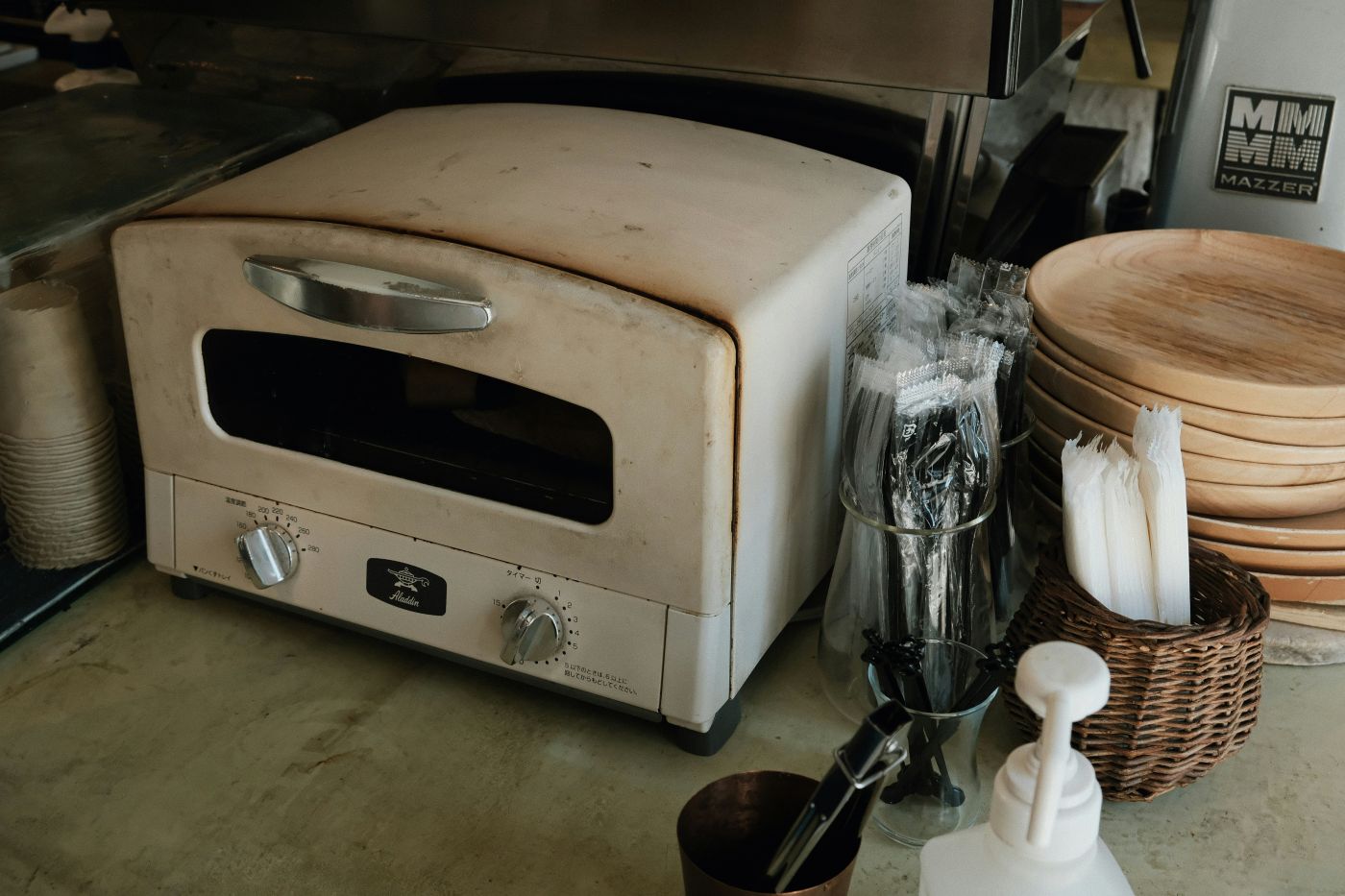
“So, he’s a toaster oven,” I said.
Amy suddenly remembered a meeting she had to get to and was off, leaving me with the image of a countertop appliance slipping into bed with my ex.
The qualities Amy gave me were fine. But they weren’t particularly specific. She could have been describing almost any guy. Or a countertop food processor. I couldn’t pick this fellow out of a lineup. He’d blend in with every other guy, which, I suppose, was part of his appeal.
As I wandered home, I felt sad for Sarah, sad for myself, but do you know what my overwhelming thought was? I felt sorry for all the brands out there using those same supposedly special words to describe themselves. All those innovative, trustworthy, customer-focused brands that couldn’t survive having their name swapped for a competitor’s. They blend together until there’s no individuality, no distinction, just a giant Borg of brands moving as one through everyone’s feed. Much like Sarah’s new man, they’ve all melded into something perfectly acceptable and utterly indistinguishable.
Yup, my heart was breaking, my world was crashing down around me, and I was thinking about brands. Also, I needed to get Sarah a nice wedding present. Something that might make her second-guess her choice and come running back to me in her wedding dress, racing through rain-slicked streets, begging me to take her back.
Definitely, I needed a trip to Williams-Sonoma.
Congratulations, You’re a Dishwasher
Imagine you’re sitting in a conference room with a group of very serious people who have gathered to discuss your company’s brand attributes. Notebooks sit on the table, a few laptops are open, and someone has brought a large collection of colored sticky notes. This is important work, and everyone is determined to get it right. After a couple of hours of spirited discussion, the group agrees on three words: innovative, trustworthy, and customer-focused. There are nods of approval around the table. Someone writes the words on the whiteboard, underlines them, and the meeting adjourns. Congratulations. You’ve just described a dishwasher.
Think about it. A modern dishwasher is innovative. Some of them have sensors that can determine how dirty your dishes are, which seems like a remarkable amount of intelligence to devote to a lasagna pan. They’re trustworthy, at least until they decide to empty their contents onto your kitchen floor, and they’re certainly customer-focused. Their entire existence is devoted to making your life easier by doing something you’d rather not do yourself. If a dishwasher can comfortably wear your brand attributes without looking ridiculous, you might want to reconsider what you’ve accomplished in that conference room.
The problem isn’t that those attributes are wrong. Most companies would be delighted to be considered trustworthy, and there’s nothing objectionable about being innovative. The trouble is that these words have become so common, so thoroughly worn down by overuse, that they’ve stopped telling us anything meaningful. They’re the corporate equivalent of describing someone as nice. Well, that’s lovely, but what does nice mean? Does he rescue injured birds? Remember your birthday? Does he return his shopping cart to the little enclosure in the parking lot? Those are three very different people, and I’d argue that knowing which one you’re dealing with tells you considerably more than the word nice ever could.
This is where the swap test becomes useful. Take your company’s brand attributes, remove your name from the page, and replace it with the name of your closest competitor. Do the words still make sense? Could they appear on that competitor’s website without anyone noticing? If the answer is yes, you’ve identified something that may be perfectly true about your company but does very little to distinguish it. And if you can replace your company’s name with the name of a household appliance and the description still works, I’d suggest the problem deserves a little more attention.
There’s a difference between the qualities customers expect you to possess and the qualities that give them a reason to choose you. Reliability might get you into consideration, but it rarely makes you unforgettable. And that’s what we’re really after when we talk about building a brand. We want people to recognize something particular about us, something they can remember and associate with our company rather than with every other business offering roughly the same thing.
After all, Sarah’s new husband may be an absolutely wonderful man. But based on Amy’s description, I still couldn’t tell you whether she married the love of her life or a particularly dependable KitchenAid.
True Isn’t the Same as Distinctive
Here’s where things get interesting. A company can be every bit as trustworthy, innovative, and customer-focused as it claims to be, and still have absolutely nothing interesting to say about itself. The words may be accurate. They may even be supported by years of excellent service and a collection of glowing customer testimonials. But accuracy and distinction are two different things, and confusing them is how we end up with an entire marketplace of companies introducing themselves as though they’re all applying for the same entry-level management position.
Consider Volvo. For decades, the company built its identity around safety. Now, plenty of other automobile manufacturers make safe cars, and some may even outperform Volvo in particular safety tests. But Volvo made safety central to its identity, backed it up through engineering, and became so closely associated with the idea that the word itself practically brings the brand to mind. That’s a brand attribute doing some actual work. It isn’t simply something the company claims to possess. It’s something people have learned to associate with the company, and that association has value.
Or consider Patagonia. The company could describe itself as innovative, responsible, and customer-focused, and nobody would object. But those words wouldn’t begin to explain what makes Patagonia interesting. Its commitment to environmental activism has influenced its products, business decisions, and relationship with customers. You may agree or disagree with its positions, but you have a pretty good idea what the company stands for. There’s something substantial there, something that goes beyond a pleasant collection of adjectives arranged on a PowerPoint slide.
And that’s the distinction we’re looking for. A meaningful brand attribute isn’t necessarily something no other company possesses. That would be a ridiculous standard. It needs to be something you’ve made your own, something that shows up in your decisions and gives customers a reason to remember you. It should help explain not only what you believe about yourself, but why anyone else should care.
I suspect Sarah’s new husband really was reliable. He probably arrived when he said he would, remembered to take out the garbage, and maintained an admirable relationship with his mother. Wonderful qualities, all of them. But somewhere beneath that reassuring collection of domestic virtues was an actual human being with peculiarities, passions, and perhaps a deeply troubling enthusiasm for miniature golf. That’s the fellow I wanted Amy to describe. Not because he needed to be extraordinary, but because I wanted to know what made him him.
Brands deserve the same consideration. And so do the people we’re asking to choose them.
You Can’t Design What You Haven’t Discovered
This is where the work we do at ThoughtLab comes in. Before anyone starts designing a logo, choosing a color palette, or deciding whether the company needs a photograph of three attractive people laughing at a laptop, we need to understand what makes that company different. And I don’t mean different in the way every company claims to be different. I mean genuinely, demonstrably different. What does this business believe that its competitors don’t? What does it do particularly well? What would its customers miss if it disappeared tomorrow? These aren’t always comfortable questions, especially when the answers challenge the lovely collection of adjectives everyone agreed upon at the last branding meeting.
At ThoughtLab, we talk about Depth-Before-Design because design can only communicate what we’ve taken the time to discover. If your brand foundation is a handful of generic attributes, even the most beautiful visual identity will struggle to communicate anything distinctive. You might end up with a gorgeous website, an elegant logo, and a brand voice that sounds remarkably like the company down the street. You’ve spent a great deal of money making yourself look different without doing the harder work of understanding why you actually are.
And this is where our idea of becoming a category-of-one enters the conversation. A category-of-one isn’t necessarily a business that does something nobody else on Earth has ever attempted. Those are hard to find, and most of us aren’t going to reinvent the wheel before lunch. And after lunch… fuhgeddaboudit. It’s a company that has discovered what makes it valuable and built its identity around that distinction. Its attributes aren’t simply aspirations or agreeable descriptions. They’re reflected in the way the company operates, the promises it makes, and the experience its customers have when those promises are tested.
This doesn’t mean you should throw out trustworthiness or reliability simply because they’re common. If you’re running an airline, I’d certainly hope reliability is somewhere near the top of your priorities. But it’s worth asking whether reliability is what makes your airline special or simply what passengers reasonably expect in exchange for not having to drive across the country. The distinction matters because customers aren’t choosing between your company and a theoretical absence of service. They’re choosing between you and somebody else who is also claiming to be reliable, innovative, and deeply committed to their satisfaction.
The real work of branding begins when we stop asking which attractive words we’d like people to associate with us and start investigating what gives those words substance. Sometimes the answer is sitting right in front of us, buried beneath years of habit and assumptions about what customers want to hear. Sometimes it takes considerable digging, a few uncomfortable conversations, and the willingness to abandon something we’ve grown rather fond of. But that’s the work. And it’s far more valuable than another afternoon spent rearranging adjectives on a whiteboard.
Because if your brand attributes could just as easily describe the dishwasher in the company kitchen, perhaps it’s time to stop polishing the presentation and find out what makes your company worth talking about.
The Takeaway
At ThoughtLab, we believe building a category-of-one starts with discovering what makes a company unmistakably itself. That’s why we insist on Depth-Before-Design. We want to find the qualities that are genuine, meaningful, and evident in the way a business behaves, rather than settling for a collection of attractive words that look good on a conference room wall. A distinctive brand isn’t built by choosing more impressive adjectives. It’s built by understanding who you are well enough that you no longer need to borrow anyone else’s.
If you’re not sure your brand attributes would pass the swap test, that’s exactly the conversation we like to have.
As for Sarah, I hope she found something wonderful in the man Amy described to me. Something beyond the punctuality, the reliability, and his admirable devotion to his mother. I hope there were a thousand little things about him that made her laugh, drove her crazy, and reminded her why she’d chosen him in the first place. Because that’s what Amy’s description was missing, and it’s what so many brands forget. The things that make us worth choosing are rarely the things that make us sound good on paper.
And for the record, I never did buy that wedding present at Williams-Sonoma. I stood there for twenty minutes staring at the toaster ovens, wondering which one looked most like the man who’d stolen the love of my life. Eventually, I went home. Some things are better left on the shelf.