Well, one reason might be human beings, their needs and wants. Do we want our jobs to be taken over by algorithms? The Luddites asked the same questions as they headed into the Industrial Revolution. With technology, there is always the question of just because we can do it, does that mean we should do it?
I was chatting with a friend of mine while we were having dinner a few weeks back, and he said to me, “Man, you’re screwed. It was already pretty bad that you work with words, but now you’re just going to be made obsolete by AI.” In an effort to seem unfazed, I said, “Well, AI can’t do this,” and I took one spaghetti noodle, slurped it slowly, a la Lady and the Tramp, and sucked it into my mouth. The last bit of the noodle slapped the end of my nose and left a spot of Bolognese on my cheek. I smiled, and he laughed, and the evening went on.
Later, in the darkness of my apartment, I sat on the couch and thought about it. How screwed am I really? I mean, I’ve written blogs about AI before. I’m not ignorant of how little my job means to anyone, even people in my own company, but it didn’t really hit me this hard before. I was curious as to why.
I know I perform a rather arcane function here at ThoughtLab. I’ve been told by my boss that it’s not financially wise to keep me on when there are a million different AI systems that can do what I do faster and better than I can. I’ve endured queries from friends who drop me emails that say, “Even before the singularity hits, you’re going to be ancient history.” The idea being that an algorithm will push me toward the breadline. Toward unemployment, and me building my own Hooverville in the parking lot of Hooters. Not ideal. And while we’re at it, neither is having my “friends” mock my existence and seemingly cheer on my demise at the hands of technology.
I’m not the only one, and I know for a fact that there are hundreds, if not thousands, of people who are now worried about when a giant gift basket with a huge Good Luck balloon floating over it comes down the aisle between cubicles and someone from HR wishes them luck with a smile and an extended hand of kindness, while the other hand is busy working overtime escorting them to the exit. The following day, Dan, with his big basket and Good Luck balloon, is gone, and in his place is an algorithm. Everyone will be whispering, “Did you hear what happened to Dan?” or “I guess this is how it starts.”
The usually chipper and chatty office now grows eerily quiet, and everyone is looking over their shoulders, waiting for the AI axe to fall. There is a lot of fear, worry, and abject terror floating about in the world today, some of it due to politics and whatnot, but a big chunk of it is due to the fear that AI will take our jobs and, even worse, that we’ll reach the singularity and become meat puppets for our robot overlords.
Sciency people love the idea of the singularity. I am making a huge, unsubstantiated generalization here because I do that, and because I am trying to mask my personal fear that a line of code is so much better than I am at tapping the keys and putting words on the screen. I also fear deepfakes taking any film or TV roles I might have been right for. All that aside, I’ve noticed that those in the science and technology fields are more welcoming and accepting of the singularity than some creative types.
And it makes sense. Why create something like AI and not want to see how far it can go, what it can do? I mean, most of us drive about town and follow the speed limit. However, even my little Hyundai has a speedometer that goes up to 160. So there was some hope in that design, right?
Why build it if you’re not going to use it? What’s the point of delving into such advanced technology if you’re not going to explore every avenue it offers, every solution it renders, and every question it answers? Why do AI half-assed when full-assed could yield great discoveries and unimaginable scientific advances, which may aid in medical advances and more? Why build something if you’re not going to explore its limits?
Well, one reason might be human beings, their needs and wants. Do we want our jobs to be taken over by algorithms? The Luddites asked the same questions as they headed into the Industrial Revolution. With technology, there is always the question of just because we can do it, does that mean we should do it?
I keep circling back to these big questions because they feel safer, somehow. The ethics of technology. The future of work. The singularity. They let me sound thoughtful instead of hurt. Yup, that’s some hard cheese. I’m hurt. But if I’m honest, none of this anxiety actually lives at that altitude. It lives much lower, much closer to home.
It lives in the way people talk about what I do for a living. The way “working with words” is said like a punchline. The way creativity is treated as a luxury until it needs to be cut. The way the people building the machines are celebrated as serious and essential, while the people those machines replace are told, gently and pragmatically, to adapt.
That’s not a fear of AI. That’s something else entirely.
The Lie
There’s a strange tone people use when they talk about creative work. You can hear it in the way they say things like writing, acting, or design. It’s never hostile exactly. It’s lighter than that. Casual. Amused. As if the work itself is a charming side quest that somehow turned into a career by accident.
Nobody talks that way about building systems, tools, or platforms. The people who create those things are described as serious. Visionary. Necessary. Even when what they’re building exists almost entirely to replace someone else, the language stays respectful. Admiring, even.
But when the conversation turns to the people being replaced, the tone changes. Then it’s pragmatic. It’s just business. Or it’s a lesson about adaptation, about learning new skills, about keeping up. As if the problem isn’t loss, but stubbornness.
Working with words has always sat in a strange place because it doesn’t look like labor in the way people expect labor to look. You can’t point to a machine or a spreadsheet and see it happening. There’s no visible output until suddenly there is, and by then it looks obvious. Anyone could have done that, the thinking goes. The fact that they didn’t somehow never enters the conversation.
So creativity gets framed as optional. Nice when it’s useful. Disposable when it isn’t. Something you indulge until it becomes inconvenient. When budgets tighten, or new tools appear, it’s the first thing people feel comfortable questioning. Not because it failed, but because it never quite proved it deserved to be there in the first place.
And that’s the lie. Not that technology changes work. It always has. The lie is that creative work was never real work to begin with, and so replacing it feels clean, rational, and like progress. Nobody has to feel bad about what gets erased if they never fully believed it mattered. And they don’t.
The Financial Test
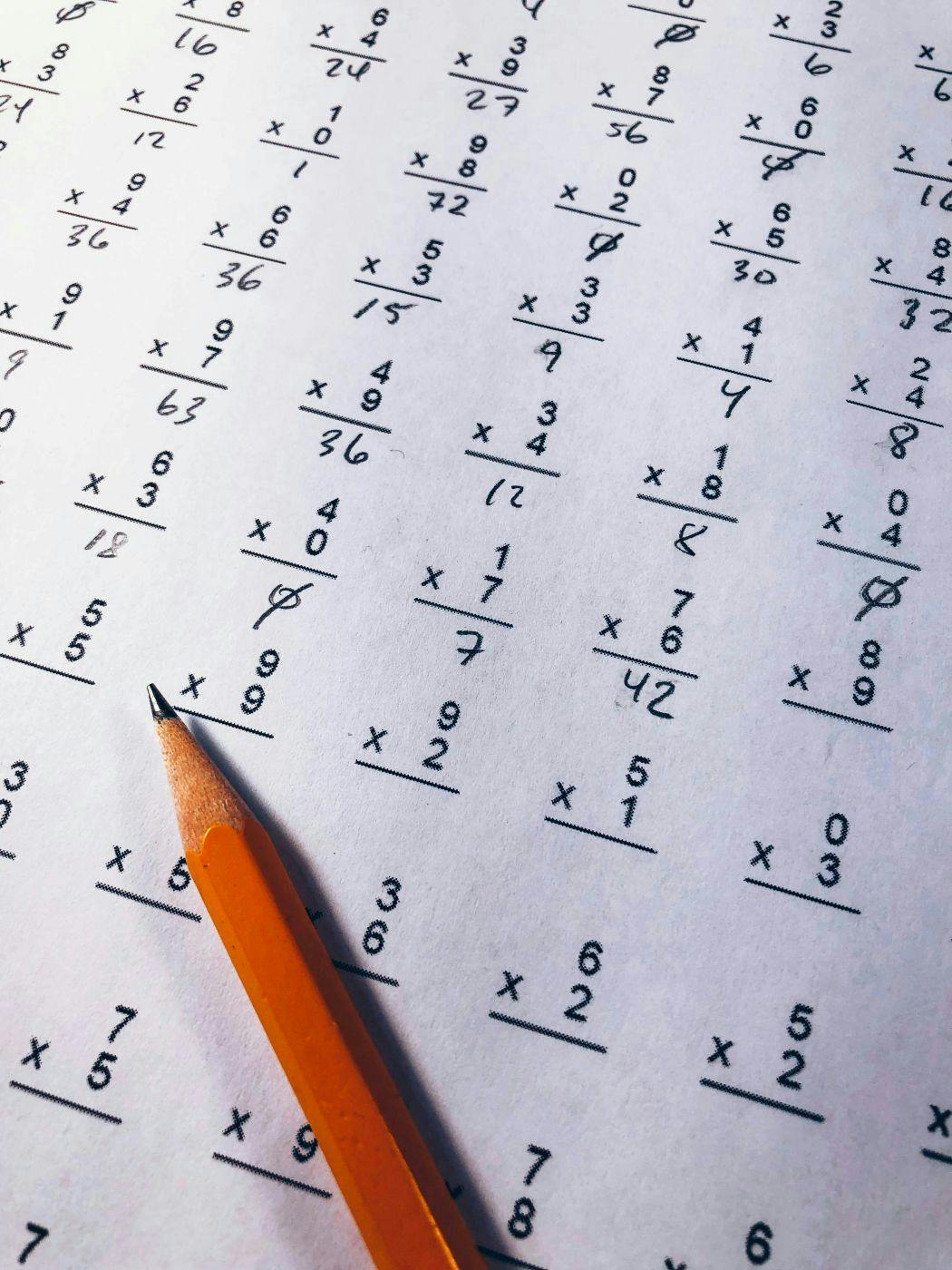
At some point, every creative learns the language they’re expected to answer to. It’s a language shaped by efficiency, scale, and return. Value is defined by how quickly something can be produced, how cheaply it can be replicated, and how easily it can be explained in numbers. If your work resists that framing, it’s treated less like a contribution and more like an inconvenience.
I’ve been told, directly, that it isn’t financially wise to keep someone like me on. Not because the work blows, it usually doesn’t. Not because it goes unused. But because there are tools now that can generate something similar faster and at a lower cost. The reasoning sounds practical when it’s framed that way. It always does. Once the conversation is reduced to comparison, the outcome is already decided.
What’s harder to explain is why creative work is almost always the thing asked to justify itself this way. Other parts of an organization rarely face the same scrutiny. The systems that support the work are assumed to be necessary. The layers built around process and oversight are rarely questioned. But the work that actually shapes how something sounds, feels, or connects is expected to prove its worth again and again.
Reducing creative work to output is the only way to make it vulnerable. Once it becomes a line item, it can be ranked. Once it can be ranked, it can be replaced. The decision gets to feel neutral then. I’m not being dismissed. I’m being optimized. The language does a lot of emotional work for the people who use it. Personally, if I’m being optimized, I want a special suit and some superpowers.
There’s something uniquely hollow about being told your value lasts only until a cheaper approximation appears. Not because you failed, but because the work itself was never considered essential. Useful, sometimes. Appreciated, occasionally. But never foundational. When replacement arrives, it feels less like a loss and more like a correction.
Once that logic settles in, everything else follows easily. Progress keeps its clean conscience. Efficiency gets to wear the mask of responsibility. And the people on the other side of the equation are expected to understand, accept the reasoning, and quietly move on.
Don’t kill the plants or clog the toilets, just leave.
The Quiet Shame
What hurts most isn’t the possibility of losing work. It’s the growing sense that the work was never fully respected to begin with. That the thing I’ve spent years learning how to do was always viewed as optional, even when it was useful, even when it worked.
There’s a particular sting that comes with being told to adapt. On the surface, it sounds reasonable, even encouraging. Learn a new skill. Stay flexible. Keep up. But underneath that advice is an assumption that the thing you’re being asked to leave behind is easily replaced, not just by a tool, but by something better. As if the attachment you feel to the work is sentimental rather than earned.
I don’t think most people mean to be cruel when they talk this way. I think they genuinely believe they’re being practical. But practicality has a way of flattening people. It turns years of effort into a preference and devotion into stubbornness. If you struggle with the idea of moving on, the problem isn’t the loss. It’s your attitude toward it.
There’s also the quieter embarrassment of realizing how often you’ve defended yourself without being asked. Explaining what you do. Why it matters. How it helps. Over time, that explanation starts to feel less like clarification and more like an apology. You begin to internalize the idea that your work is a luxury, something to be grateful for rather than something to stand on.
The shame doesn’t announce itself. It settles in slowly. It shows up when you downplay what you do at parties. When you make jokes about being replaceable before someone else can. When you laugh along with comments that land a little too close to home, because it’s easier than admitting they hurt.
And that’s the part that’s hardest to say out loud. Not that technology might take my job, but that I’ve been quietly trained to believe I shouldn’t mind if it does. That the needs of the many techies outweigh the needs of the few creatives.
Progress Without Witnesses
What’s striking isn’t that replacement is happening. It’s how easily it’s celebrated. New tools arrive, and the language around them fills with excitement and inevitability. Faster. Smarter. More efficient. The tone suggests improvement without cost, as if nothing meaningful is being traded away.
There’s rarely any pause to acknowledge what disappears in the process. No moment of recognition for the work that’s being absorbed, flattened, or imitated. No curiosity about what gets lost when speed replaces judgment or when approximation stands in for intent. The focus stays fixed on what’s gained, never on who absorbs the loss.
Think about the small towns you see in movies or read about in the news. The ones where Main Street is lined with shuttered shops. Where the signs that once lit up the brick walls are now just faded outlines. Paint peels. Wood rots. The buildings stay standing, but whatever made them alive is gone.
That’s what this kind of progress feels like to creatives. A slow emptying out. Something once vibrant reduced to a shell that people pass without noticing. No one remembers what the shop sold, who gathered there, or why it mattered. It’s just another vacant storefront now, another space that didn’t keep up.
The loss happens quietly enough that eventually it stops registering at all.
Progress is framed as a virtue in itself. Questioning it is treated as fear, nostalgia, or resistance to change. But that framing depends on something going unexamined. It assumes that whatever is replaced was expendable, that the people doing that work were simply occupying space until something better arrived.
What’s missing is any sense of witness. No ceremony. No respect. No acknowledgment that a form of labor shaped by taste, context, and lived experience is being quietly set aside. Things vanish politely now. With a memo, a roadmap, or a promise that this is all for the best.
It’s not that people don’t notice. It’s that noticing would require slowing down, and slowing down would complicate the story. It’s easier to call it evolution than to sit with the reality that progress, as we currently practice it, asks some people to disappear without comment.
Refusal
I don’t have a solution to offer here. I’m not interested in pretending that creativity will always find a way or that everything balances out in the end. That kind of reassurance feels dishonest after this much truth.
What I do have is a refusal. A refusal to keep apologizing for the kind of work I do. A refusal to measure its worth solely by how cheaply it can be replicated or how quickly it can be replaced. A refusal to accept that the act of creating something human should always stand trial, while the act of automating it is treated as self-evident progress.
I don’t need creativity to win. I don’t need it to dominate or scale endlessly or justify itself in quarterly terms. I need it to be recognized as real work, done by real people, with real consequences when it’s dismissed.
If progress requires pretending that some kinds of labor never mattered, then it isn’t neutral. It’s selective. And if the future depends on erasing the value of the people who give things meaning, then it’s worth asking who that future is actually for.
I’m not afraid of technology. I’m tired of the story we tell ourselves to avoid feeling responsible for what it replaces.
The Takeaway
At ThoughtLab, we spend a lot of time talking about clarity. About meaning. About why something resonates with people instead of just functioning for them. That work doesn’t come from speed alone. It comes from judgment, taste, and from someone deciding what matters and what doesn’t.
Technology can help with that. We use it. We respect it. We’re not interested in pretending otherwise. But tools don’t carry responsibility. People do. And when the conversation about progress skips past the people whose work gives things shape and voice, something essential gets lost, even if the output looks fine on paper.
Creativity isn’t a luxury item you keep around until it becomes inconvenient. It’s the part of the work that makes anything worth building in the first place. When it’s treated as disposable, the damage doesn’t always show up immediately. It shows up later, in things that technically work but feel empty, interchangeable, and forgettable.
This isn’t a warning about the future. It’s a reminder about the present. About what we choose to value while we’re chasing what’s next. Because the story we tell ourselves about whose work matters has a way of becoming the world we end up living in.
And that’s not a question technology gets to answer for us.