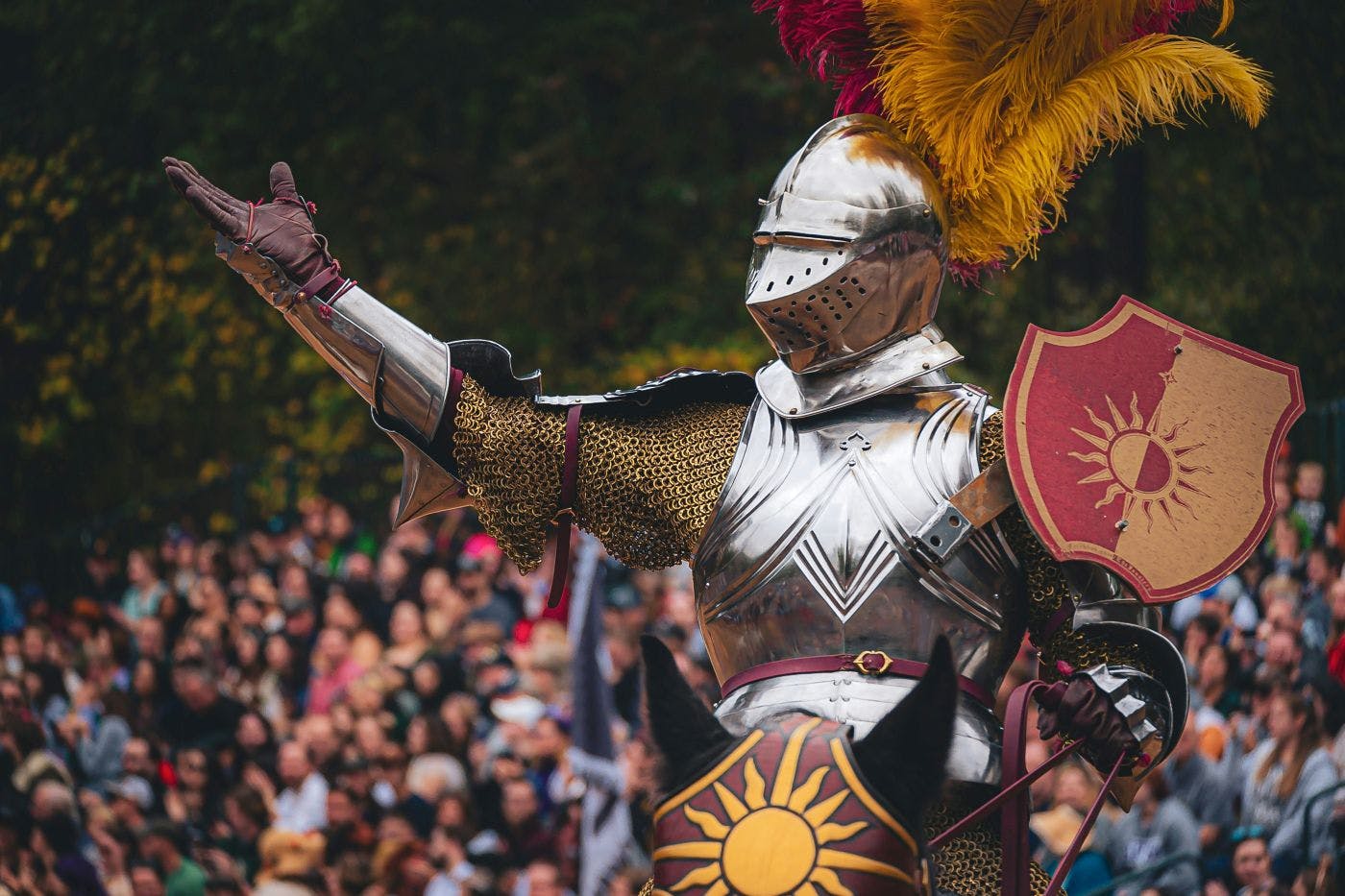
Renaissance Faires are built on a simple truth. People love the idea of transformation without having to go through any of the work that real transformation requires. You put on a costume, grab a turkey leg, talk like you swallowed a Shakespeare dictionary, and for a few hours, you feel transported.
For many years during college and into grad school, I worked at Renaissance Faires. I was a mud beggar. We took classical pieces of literature, plays, and poems, and performed them as fractured fairy tales in a huge pit of mud. It was, as I was told, based on history. Poor folks would mix mud with straw to make bricks, and the gentry would pass by and offer a coin or two for these lower-class people to sit in the mud or put their faces in the mud. Your basic high-class berating the lower class, and the lower class needing the coin, so there you go.
It was a fun gig and often the highlight of the faire days. We had big crowds at our mud shows, and when I did street work covered in mud, I got pretty good hat. Meaning people gave me a lot of coin to do my bits.
Now, I know that beggars in mud would not be a section in a Ken Burns documentary, and what we call Renaissance Faires have nothing to do with the Renaissance. Turkey legs, “wenches” with their bodices pushed to angles Frank Lloyd Wright couldn’t diagram, an ocean of burlap, and tennis shoes sticking out from beneath rented tunics. None of that is even close to the real thing.
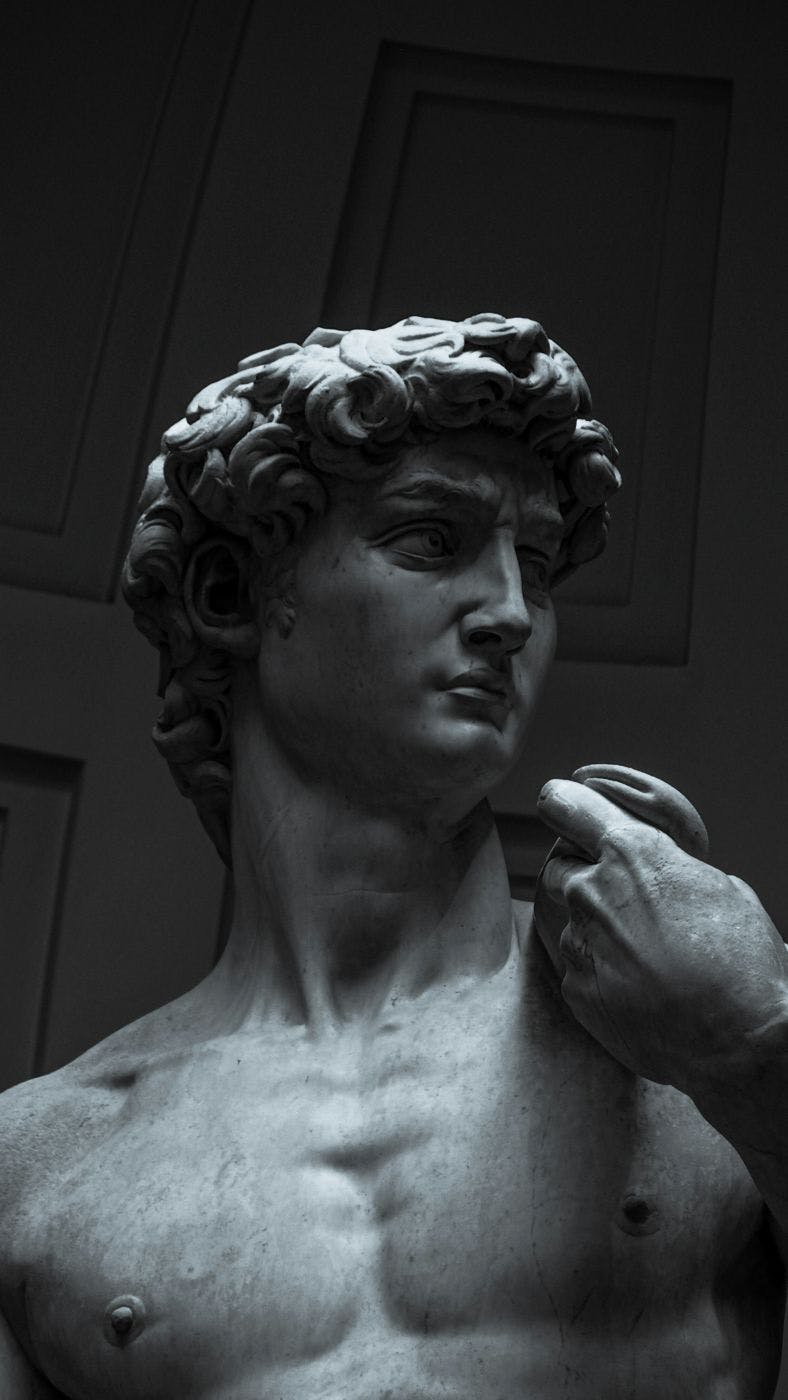
But the Renaissance happened. And we still feel the aftershocks of it today in art, science, and culture. When a movement is so big that it reorients the world, we call it a renaissance.
And lately, I’ve been wondering if branding is due for one. Not the costume version, not the mud-pit performance of change, but the real thing: a shift in how brands see themselves, what they create, and what audiences actually value.
The Two Renaissances: Real and Performed
Renaissance Faires are built on a simple truth. People love the idea of transformation without having to go through any of the work that real transformation requires. You put on a costume, grab a turkey leg, talk like you swallowed a Shakespeare dictionary, and for a few hours, you feel transported. It is a fun performance. It is also completely weightless. Nothing in the world shifts because a group of people pretended it was the sixteenth century for an afternoon.
The actual Renaissance could not be more different. That period changed how Europe thought, created, built, traded, and imagined the future. It rewired what people believed was possible. It altered the trajectory of science and art. It reshaped the idea of the human mind itself. It was not a show. It was a structural shift. And it took generations of effort to create something that lasted long enough for us to still feel it five hundred years later.
Brands today tend to operate in the faire version. They focus on spectacle. They perfect the costume. They build the booth, apply the makeup, rehearse the lines, and step out on stage ready to perform a version of themselves that looks bold and fresh for the crowd. But deep down, the structure stays the same. The story remains the same. The beliefs stay the same. So the change never lands. It never has weight.
This is why so many rebrands feel flat. They are a coat of paint. They are mud on the face meant to draw a crowd, not a shift in what the brand stands for or how it behaves. We can all feel when a company is putting on a show instead of doing the harder work of becoming something truer and stronger.
A real renaissance, whether in culture or in branding, begins when the performance stops being enough. When people want more than a costume. When they look for meaning instead of makeup, that is the space we are entering now. The old performance is wearing thin. Audiences are wise to the trick. Brands that once relied on spectacle are discovering that no amount of mud will cover the fact that they have not actually changed.
Why Branding Is Ripe for a Real Renaissance
Every renaissance begins the same way. People start to feel the limits of the world they are living in. They sense that the tools they have are no longer enough. They grow tired of the old stories. They look around and realize the landscape is crowded with repetition. This is exactly where branding sits right now.
We are living in an age of endless content. Brands publish so much material that most of it disappears the moment it hits the feed. Companies chase trends because they are told that relevance depends on being part of the noise. AI has multiplied this pressure by giving every brand the ability to create more of everything, faster, and with less thought behind it. The result is a kind of visual and verbal fatigue. Everything starts to look the same. Everything starts to sound the same. The world goes gray.
At the same time, trust is thinning out. Audiences are sharper than they used to be. They recognize when a brand is trying too hard. They have learned to spot fake personality. They scroll past manufactured sincerity without a second thought. They are surrounded by brands that claim they have a mission, but almost none of those missions hold up under even a moment of scrutiny. People want to believe in something. They just do not find much worth believing in.
Add to that the rise of templated design. Entire industries now operate on the same grids, the same font stacks, the same soft gradients, the same quirky illustrations, the same tone of voice that tries to sound playful and ends up sounding identical. Templates make production easier, but they also flatten identity. The more brands rely on them, the more they blend into each other until it becomes hard to remember who said what.
All of this creates an atmosphere that is begging for a shift. When sameness reaches a tipping point, originality becomes valuable again. When noise is everywhere, clarity becomes rare. When brands chase attention with quick tricks, people start to crave something that feels built with care.
These pressures do not mean branding is breaking down. They mean branding is ready for a real leap forward. The conditions look a lot like the moments before other renaissances in history. Too much imitation. Not enough conviction. A hunger for something grounded, human, and alive.
That is why the mud pit metaphor works. Brands have been performing change for so long that many do not remember what actual change looks like. But the audience does. And they are starting to ask for it.
What Triggered the Original Renaissance and What Brands Can Learn From It
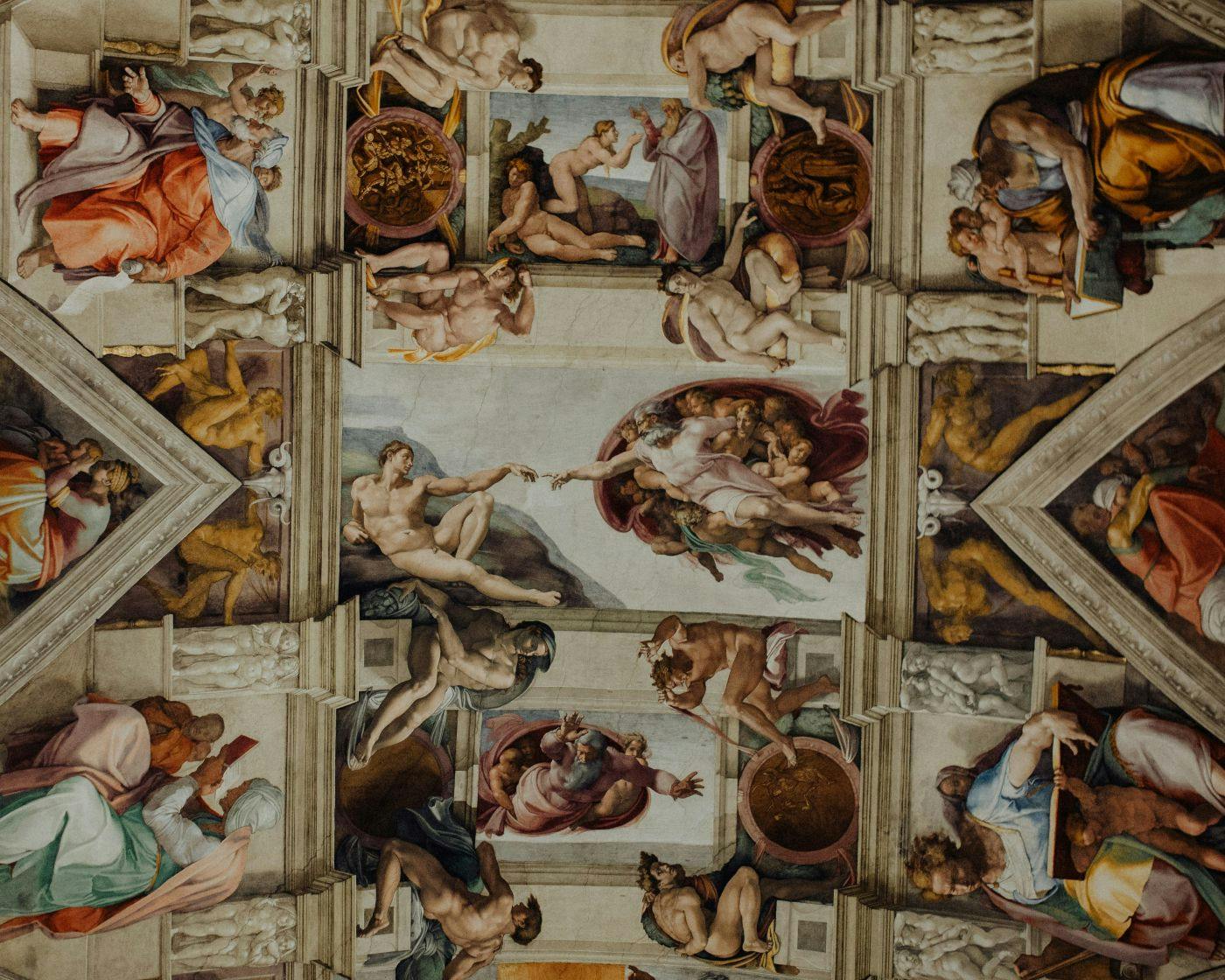
The original Renaissance did not happen because people decided to paint better ceilings or carve more impressive statues. It happened because the world had reached the edge of an old idea. The systems that once made sense no longer fit the needs of the time. People felt the gap between how things were done and how things could be done. When that gap grows wide enough, curiosity takes over. People start looking for answers in places they had ignored for years.
One of the first shifts was a return to first principles. Thinkers went back to the foundations. Artists studied anatomy instead of guessing at it. Architects returned to geometry. Writers rediscovered clarity and structure. There was a belief that truth could be understood if you were willing to study it closely enough. That one belief sparked a level of craftsmanship that we still admire today.
Brands can learn from that. A renaissance begins when you stop decorating the surface and pay attention to the structure underneath. It shows up when you stop mimicking the market and start asking what you believe, who you serve, and why your work matters. It is the kind of work that takes patience and honesty. It does not rely on spectacle. It relies on intention.
Another trigger was humanism. Instead of centering gods and kings, the Renaissance centered people. Their experiences. Their curiosity. Their hunger to understand the world. This human-centered worldview produced art and ideas that felt honest and alive. It also pushed creators to study real people instead of relying on symbolic versions of them.
Brands have been drifting away from this. They speak in abstractions. They talk about audiences instead of individuals. They rely on personas that do not resemble anyone in the real world. A renaissance in branding will require a return to the human side of the work. Not more data points. Not more segments. A clearer understanding of people as they actually are.
There was also a surge in collaboration. Artists worked with engineers. Scientists worked with philosophers. Ideas crossed boundaries that had kept disciplines separated for centuries. This blending created breakthroughs no one could have produced alone.
Modern brands need that same cross-discipline spark. Strategy without design is thin. Design without story is hollow. Story without belief is forgettable. A renaissance happens when these pieces stop living in separate rooms and start shaping each other.
And maybe the most important lesson from the original Renaissance is this. The people doing the best work were not trying to impress anyone. They were trying to understand something. They were trying to build something worthy of being handed down. That kind of intent tends to produce work that lasts. Not because the creators wanted an audience, but because the work itself carried meaning.
Brands will have to rediscover that mindset if they want a renaissance of their own. Not more spectacle. Not more costumes. A deeper reason to create what they create.

The Mud Problem and Why Brands Get Stuck in Spectacle
If you have ever spent a day covered in mud, you know one thing. People notice you. They point. They laugh. They hand you a coin because you look like someone who is willing to do something ridiculous for a moment of entertainment. It is a quick hit of attention, and it works. But the moment you wash off the mud, the trick is gone. You are back to being yourself. The mud was never the point. The performance was.
A lot of brands operate that way. They look for the fastest way to stand out in a crowded market, so they throw themselves into the nearest mud pit and hope the crowd gathers. They rely on spectacle because spectacle is easy to measure. Views, likes, reactions, clicks. The numbers give the illusion of progress. It feels like momentum even if nothing underneath has changed.
This is how brands get stuck. They start chasing short-term attention instead of long-term identity. They confuse visibility with value. They design for the algorithm instead of the customer. They talk louder because they think volume will cover the fact that they are not saying anything new. And the whole time, the structure of the brand stays exactly the same.
Mud is a distraction. It keeps brands busy when they should be doing the quieter work of understanding what they believe and how they want to show up in the world. It gives them a costume they can hide behind. It lets them perform change instead of doing the slow, sometimes uncomfortable work of actually becoming better.
The other trap is that mud works until it doesn’t. Crowds get bored. The novelty fades. People start to recognize the trick. And when that happens, the brand is left with nothing solid to stand on. No point of view. No core narrative. No sense of who they are outside the performance.
The brands that will struggle most in the coming years are the ones that mistake the show for the transformation. They keep adding more mud, more noise, more spectacle, hoping it will create meaning. But meaning does not grow in the mud. It grows in the choices a brand makes when no one is watching. It grows in the structure, not the splash.
Which brings us to the turning point. If brands are stuck in spectacle, and the audience is starting to see through it, then something has to give. The conditions are set for a shift. A real brand renaissance does not begin with a crowd cheering at the edge of a pit. It begins when a brand steps out of the mud and asks a simple question.
What if we stopped performing and started building something real?
The Coming Brand Renaissance and What It Will Look Like
If brands are going to have their own renaissance, it will not look like louder campaigns or cleverer taglines or a sudden wave of mascot-driven stunts. It will start quietly. Renaissances usually do. They begin when enough people decide they are tired of the old way of doing things and are ready to do something that feels honest again.
The next era of branding will be shaped by conviction. Not the pretend kind where a brand declares a mission because the website needed a headline. Actual conviction. A clear sense of what the company believes, what it refuses to compromise on, and what value it wants to create in the world. You can feel when a brand has that. The story gets sharper. The choices get cleaner. The work feels like it came from a spine instead of a committee.
This renaissance will also be shaped by clarity. Not the stripped-down, minimalist clarity that turns everything into a quiet beige box, but the kind of clarity that organizes thought. The kind that helps a customer understand what this brand stands for in a single sentence. Clarity creates trust. And trust is the currency that matters when everything else feels temporary.
Craft will come back to the center. You can already see hints of it. People respond to brands where the work feels cared for. Where the typography feels intentional. Where the story has weight. Where the design is not just pretty but purposeful. Craft is not about decoration. It is about creating something that holds up under attention instead of dissolving the moment you look closer.
Another sign of the coming shift is how audiences are reacting to personality. The exaggerated quirkiness that once felt fresh now feels forced. People want voices that sound human without trying so hard to be entertaining. A brand that speaks clearly and simply will stand out more than one shouting jokes into the void.
And then there is the long-term view. For years, brands optimized everything for the next quarter or the next campaign. That short horizon created a world of fast content and shallow ideas. But renaissances happen when creators start thinking in years and decades instead of days. When the goal shifts from getting attention to building something that holds its shape over time.
This is the real difference between spectacle and transformation. Spectacle wants a reaction. Transformation wants a foundation. And the brands that embrace that shift will be the ones that define the next era. They will not need costumes or tricks. They will not need to cover themselves in mud to get a crowd to look their way. Their work will speak for itself.
A renaissance is not a performance. It is a return to what matters. And branding is ready for that return.
Signs of the Shift: Brands That Hint at a Renaissance
We do not have to guess what a brand renaissance might look like. Pieces of it are already showing up in the market. A few brands have stepped away from performance and started doing the kind of work that feels built, not staged. They are not perfect, and they are not trying to be. But they point in a direction that is worth noticing.
Take Patagonia. People hold them up as the poster child for purposeful branding, but the real story is simpler. Patagonia does what it says it will do. The company’s clarity is not a marketing trick. It is a set of decisions that show up in their supply chain, their product design, their investments, and even their willingness to tell customers not to buy more stuff. The brand speaks plainly because the company acts plainly. That is what conviction looks like when it reaches the surface.
Then there are brands like Liquid Death. On paper, it sounds like pure spectacle. Tallboys of water wrapped in metal band energy, and absurd humor. But the reason it works has nothing to do with the jokes. The brand is built on a very clear structure. A simple product. A loud identity. A point of view that is consistent in everything they make. The spectacle is just the clothing. Underneath it, the brand is surprisingly disciplined. That discipline is why the performance works.
Quiet luxury is another signal. People are gravitating toward brands that do not need to announce themselves. The appeal is not the logo. It is the quality. The feel of the materials. The restraint. The confidence of a company that does not need to explain its choices. This movement is a reaction to the noise. It is a reminder that understatement can be just as powerful as showmanship when the work has depth.
You can even see this shift in smaller, emerging brands that do not have the budgets or history of the big players. Some coffee companies, outdoor makers, skincare brands, and tech tools are building loyal followings not through stunts but through consistency. They choose a tone and stick with it. They design with intention. They talk to customers like adults. They tell the truth and let the product do the heavy lifting. It is not flashy, but it is real.
The point is not that these brands have cracked some secret code. The point is that each of them has stepped away from the mud pit. They are not performing change. They are practicing it. Their work has a spine. Their story has shape. And as a result, audiences respond with something stronger than attention. They respond with trust.
These examples are not the whole Renaissance, but they are the early threads. And early threads tend to show where the fabric is headed.
What This Means for Creative Teams
If a brand renaissance is coming, the responsibility for shaping it will fall on the people who make the work. Designers, writers, strategists, directors, founders, and anyone else who has a hand in building a brand’s identity. The shift will not happen because a company says the right words. It will happen because the people inside the work decide to raise the standard.
For creative teams, this means slowing down long enough to think clearly. Not every idea needs to be fast. Not every piece of content needs to be immediate. The best work usually comes from a moment of stillness, where the team stops trying to guess what the market wants and starts asking what the brand actually believes. That kind of honesty is rare. It is also where breakthroughs begin.
It also means bringing structure back into the process. During the last decade, a lot of branding drifted toward improvisation. Make something clever. Make something loud. Make something that trends for a day. But audiences have moved on from that. They want brands that feel like they know who they are. That kind of identity does not come from guesswork. It comes from frameworks, foundations, and choices that hold together over time.
For designers, it means treating craft as more than decoration. Craft is the difference between something people glance at and something they remember. It is the difference between a layout that feels assembled and one that feels intentional. Craft signals care, and care is something people can feel even if they do not have the language to describe why.
For writers, it means taking responsibility for the voice. The world is full of brands that talk too much and say very little. A strong brand voice is not about cleverness. It is about clarity and honesty. It is about sounding like someone who knows what they stand for. When a brand speaks with that kind of confidence, people listen.
For strategists, it means returning to first principles. Who is this brand. What matters to it. Who is it trying to serve. What problem does it solve. Why does it deserve attention in a world full of noise? These questions never get old, but they often get skipped in the rush to create something quick. A renaissance demands we ask them again.
And for everyone involved, it means resisting the pull of the mud. The pull toward stunts. Toward spectacle. Toward the quick hit of attention that feels like progress but leaves nothing behind. Creative teams have more influence than they realize. They can keep the brand in the performance, or they can help it step into the real work of becoming something that lasts.
This is not about perfection. It is about intention. When creative teams build with intention, the work stands straighter. The story lands deeper. The brand begins to feel like it was made, not assembled. That is the difference between a costume and an identity.
And that difference is what will carry brands into whatever renaissance comes next.
The takeaway
A renaissance never announces itself. It shows up when the old tricks stop working, and the old stories stop holding their shape. It shows up when people begin to feel the difference between a performance and the real thing. Branding is at that point now. The costumes are wearing thin. The noise is losing its effect. Audiences can see when a brand is acting and when it means what it says.
If brands want to move into their next era, they will have to step out of the mud. Not because mud is bad, but because mud is temporary. It is a way to get attention, not a way to build identity. The work that matters happens in the quiet choices. It occurs in the structure. It happens when a brand decides it is ready to stop performing and start standing for something.
A renaissance in branding will not look like a new trend. It will look like companies rediscovering clarity, craft, and conviction. It will look like teams choosing to build work that holds together even when the spotlight moves on. At ThoughtLab, this is the work we show up for. Helping brands sort through the noise, understand what they truly stand for, and build an identity with enough structure and truth to last.
Mud can draw a crowd. Meaning can build a future. And the brands that understand that difference will be the ones who set the pace for the next era.