
Why being slightly better leaves you waiting in line, and how to create the role only you can play.
I had an audition once, years ago, and I was completely unprepared. It was a day off from work, and I was driving toward the beach when my agent called with the audition. She told me the casting director knew me, knew my work, and wanted to see me for this role. She also said not to worry about the sides; it was mostly reaction, I could show up anytime, and they’d take me. So, being a dutiful actor minion, I turned the car around and headed to the studio.
My agent was wrong. This wasn’t a quick, easy thing. The film’s director and producer were there. It wasn’t the pre-screen I had assumed, and I was dressed completely wrong. The casting assistant gave me an odd look, as did the casting director when I walked into the room. I said hello and told them I didn’t have the sides. That sent them into a bit of a panic, and it took a minute to get me the script. Once I had it, I asked for a moment to read it over because I didn’t want to do a cold reading. They granted me five minutes and brought me back in exactly five minutes later.
I did the reading. It was terrible. I knew it, and the casting director, who knew what I was capable of, knew it too. I thanked the room and stepped into the hall. When the casting director came out to see who else was waiting, I said to him, “I wasn’t really prepared. Can I give it another shot?” He shook his head and said, “No, they don’t want to see any more of you.” The next actor in line gave me one of those yikes-that-was-harsh looks and went into the room.
I left and went to the beach. The whole way there, I kept replaying that sentence in my head: “They don’t want to see any more of you.”
Brutal.
We Already Have One of You
I’ve thought about that audition many times over the years, mostly because humiliation has an impressive shelf life, and I have an enormous shelf at home. But lately I’ve been thinking about that sentence differently. “They don’t want to see any more of you.” Take the personal sting out of it, and there’s a useful question hiding inside it. What if your customers are essentially saying the same thing about your company?
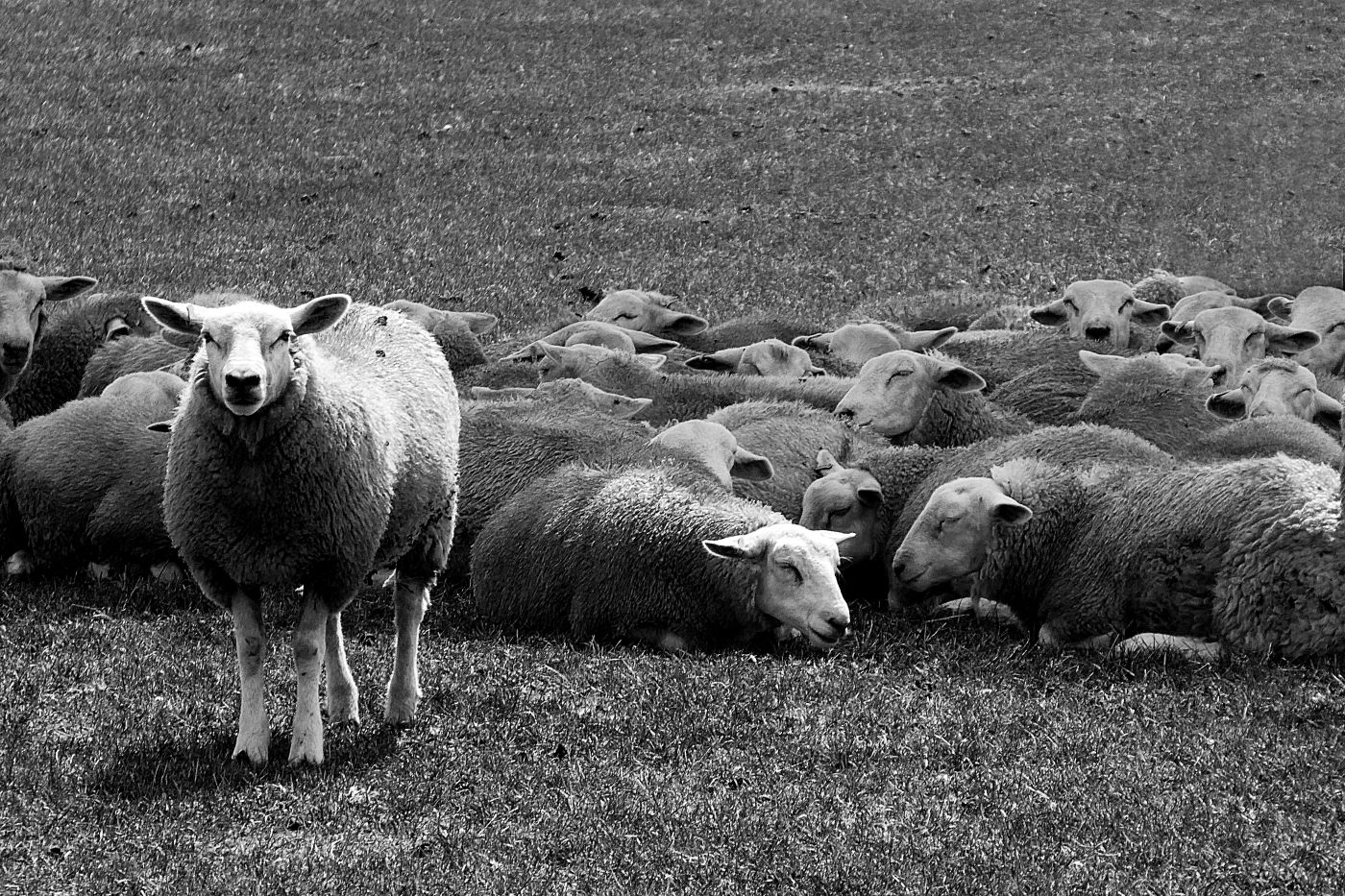
Not because you’re bad. That would almost be easier. You might be very good at what you do. You may have talented people, happy customers, and a product that works exactly as promised. The catch is that the customer already has twelve other companies standing in front of them saying roughly the same thing. Then you walk into the room and announce that you’re experienced, innovative, and committed to exceptional service. Congratulations. Take a seat. We already have one of you.
That’s the risk of entering a crowded category and trying to win by being a slightly improved version of what’s already there. You’re asking people to care about differences they may not even notice. Maybe you’re faster. Maybe you’re cheaper. Maybe your process has an extra step, and your customer service team answers the phone three rings sooner. Those things can matter, but they still leave you standing in the same line, waiting for someone to decide which version they prefer.
Category of One thinking changes the audition. Instead of asking how you can look better than the other people waiting outside the room, you start asking why you’re auditioning for the same role in the first place. What do you bring that changes what the customer is choosing? What can you own that doesn’t require a comparison chart to explain? What would make someone look at the other choices and realize they’re no longer choosing between versions of the same thing?
That doesn’t happen just because you announce that you’re unique. Every company thinks it’s unique, just as every actor sitting outside an audition room thinks there’s something they can do with the role that nobody else can. Maybe there is. But believing it and making someone else see it are two very different things.
You have to give them a reason to want to see more of you.
Stop Auditioning for the Same Role
The natural response when you’re surrounded by competitors is to study them. What are they saying? What are they offering? What does their website look like? Where are they strong, where are they weak, and where can we squeeze ourselves into the conversation? There’s nothing wrong with knowing the landscape. You should know who else is in the room. The trouble starts when you use what they’re doing to decide what you should do.
That’s how companies slowly audition themselves into sameness. A competitor emphasizes speed, so you emphasize speed and service. Someone else talks about innovation, so you become relentlessly innovative. Their website has smiling people standing around a conference table, so you find slightly happier people and a nicer conference table. Nobody sits down and decides to become interchangeable. It happens one perfectly reasonable decision at a time.
Category of One thinking asks you to stop looking sideways long enough to look inward. What is actually true about this company that matters? Why do customers choose you when they have other options? What do you understand, believe, or do that shapes the experience in a way someone else can’t simply copy next Tuesday? Those answers may not be on your homepage, because they’re often not the things companies think to market. Sometimes they’re buried in the culture, hidden in how the work gets done, or sitting inside something everyone in the company takes for granted.
That’s where the opportunity lives. Not in inventing a louder version of the same promise, but in finding something substantial enough to build around. Once you have that, you’re no longer trying to beat five companies at their game. You’re changing the choice itself.
It’s the difference between being the best person auditioning for the role and walking into the room with something they didn’t know they were looking for.
Different Isn’t Enough
Of course, being different isn’t particularly difficult. I could have walked into that audition wearing a chicken suit and carrying a trombone. They would have remembered me. I would have been different from every other actor in the room, and unless the film happened to be about a trombone-playing chicken, I still wouldn’t have gotten the job. Different gets attention. Meaningful difference gives someone a reason to choose you.
Brands confuse the two all the time. They decide they need to stand out, so they get louder, stranger, funnier, edgier, or whatever else nobody in the category appears to be doing at the moment. Sometimes that works. Sometimes it’s a chicken suit. The difference attracts attention but has nothing underneath it, so once the novelty wears off, the customer is right back where they started, comparing essentially interchangeable choices.
A Category of One has to be built around something that matters to the people you want to reach. That doesn’t mean asking customers what color they’d like your logo to be or letting a focus group design the company. It means understanding them well enough to know where the category is failing them, what they value that nobody seems to value enough, and where your particular strengths can create something they can’t easily get somewhere else.
That’s why the most useful differences often aren’t invented at all. They’re uncovered. Something in the company is already unusual, valuable, or deeply understood, but nobody has recognized its potential because everyone is too busy looking outside the building for inspiration. The interesting question isn’t always, “What can we do that nobody else is doing?” Sometimes it’s, “What are we already doing that nobody else can do quite like us, and why should anyone care?”
Find that answer, and you have something more useful than differentiation. You have a reason to exist that isn’t dependent on being slightly better than the company standing next to you.
And in a world with no shortage of companies asking for attention, that matters.
Find the Thing They Can’t Replace
This is where the work gets harder, because you can’t create a Category of One by sitting in a conference room and deciding you need to be one. You can’t simply declare yourself unique, slap a new tagline on the website, change the colors, and wait for the world to notice. If what’s underneath all of that is interchangeable, you’ve just decorated the interchangeability.
That’s why, at ThoughtLab, we start with Depth Before Design. We dig before we start deciding what something should look or sound like. We want to understand the company, the people inside it, the customers it serves, and the assumptions everyone has been carrying around for so long that nobody remembers to question them. Somewhere in there may be the thing that changes the conversation, but you have to be willing to look for it instead of reaching for the easiest answer.
And the easiest answer is usually comparison. We’re faster than them. We care more than they do. We have more experience. Fine. Maybe all of that is true, but it keeps you lined up beside the competition, asking the customer to judge who wore it better. Category of One means finding something strong enough that comparison stops being useful. The customer understands why you exist and why choosing you is different from choosing another version of the same thing.
That difference has to survive beyond the marketing. It has to show up in what you do and in the experience people have with you. Otherwise, it’s just positioning sitting on top of a company that hasn’t changed. A Category of One isn’t something you say you are. It’s something people begin to understand about you because everything keeps proving it.
That’s what you’re looking for. Not another reason you’re better. Not another claim your competitors can make by changing three words on their homepage. Find the thing worth building around, build around it without sanding off everything interesting, and give people a reason to stop comparing you.
Because once they stop comparing you, you’re no longer auditioning for the same role.
The Takeaway
“They don’t want to see any more of you.”
It took me a long time to hear that sentence without remembering how much it stung. But for a company, it might be worth hearing before the market has to say it. Not because you aren’t good at what you do, and not because there isn’t room for you. The question is whether you’ve given anyone a reason to see you as something other than one more option in a line they already have.
That’s what Category of One thinking is really about. It isn’t being louder, stranger, or marginally better. It’s finding the intersection between what’s true about your company and what genuinely matters to the people you serve, then having the confidence to build from there. Do that well enough, and the conversation changes. People stop asking how you compare because comparison no longer tells them everything they need to know.
This is the work we do at ThoughtLab. Depth Before Design means we don’t start by deciding how to make you look different. We start by finding the difference worth showing. The thing with enough truth and value behind it that your brand can own it, your company can deliver it, and your customers have a reason to care about it. That’s how you move away from competing for the same role and toward creating one that belongs to you.
Nobody asked for another one of you. They already have plenty of those.
Give them the one they haven’t seen yet.