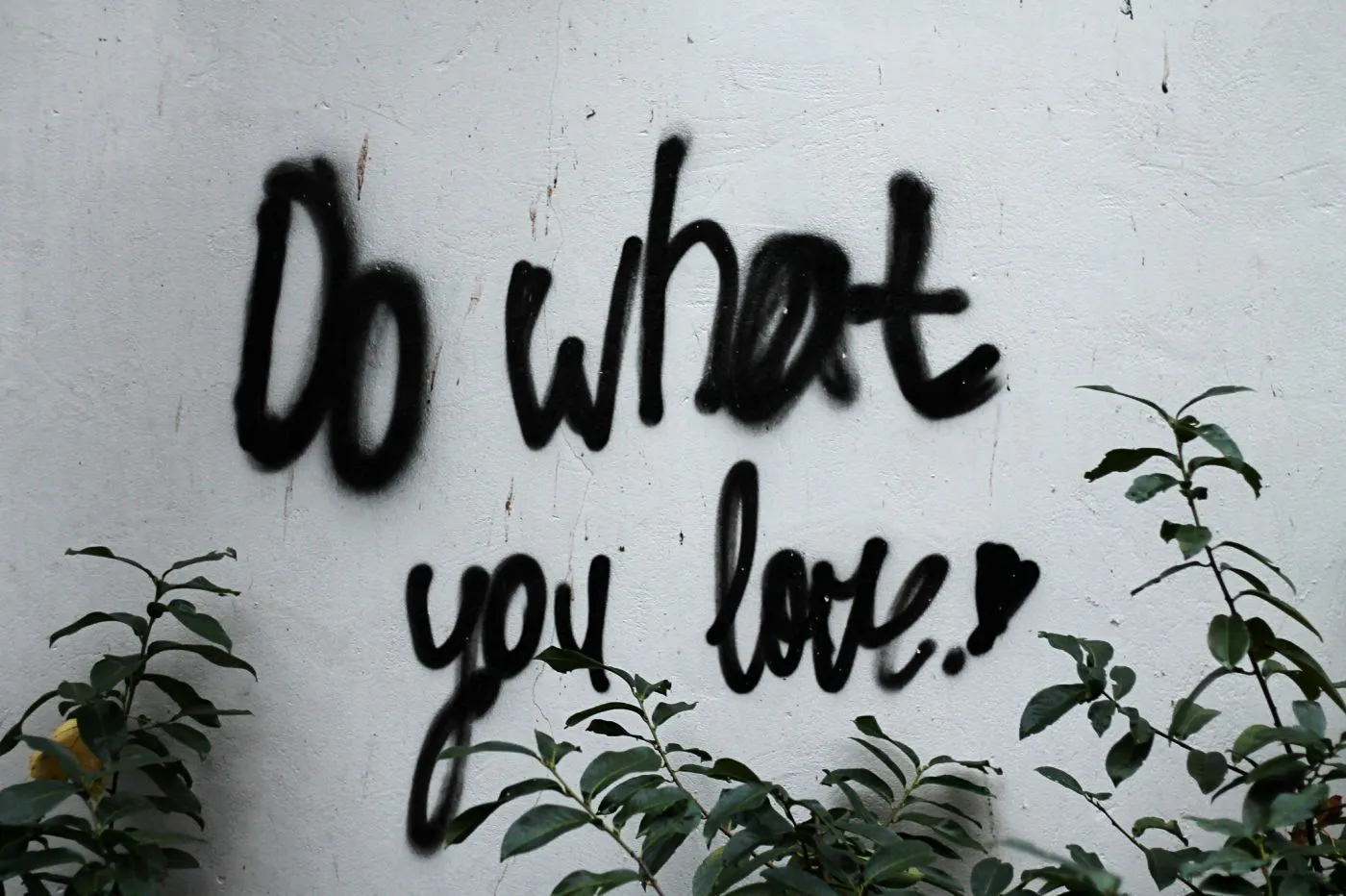
What do you do? That’s a question most of us have been asked a hundred times, usually at a party, a dinner, or in one of those awkward little social moments where strangers are being encouraged to become less strange. Someone turns to you with a drink in one hand and a look of polite expectation on their face and asks, “So, what do you do?”
What do you do? That’s a question most of us have been asked a hundred times, usually at a party, a dinner, or in one of those awkward little social moments where strangers are being encouraged to become less strange. Someone turns to you with a drink in one hand and a look of polite expectation on their face and asks, “So, what do you do?”
I’ve always found that question a little odd.
Part of that is probably just me. My mind doesn’t immediately leap to my resume when someone asks me. Half the time, I’m tempted to answer, “When?” What do I do when? When someone jumps out of a closet and screams, I scream too. Then, depending on my mood, I’ll laugh, launch into an angry speech, or quietly pee my pants and pretend nothing happened. Thus, dark pants are always a must with me.
I’ve never really believed that a person’s occupation is the cleanest unveiling of who they are, so my brain tends to reject the question on first contact. I also enjoy watching people react when I answer it badly. Some get confused. Some are patient. Some explain, through increasingly clenched teeth, that they mean how I earn money, how I pay my bills, what I do for a living, as every normal person on earth apparently understands except me. At which point I’ll sometimes say something like, “Oh, I’m a headhunter for the Vatican,” and just like that, the conversation dies a merciful death, and I can use that death as a cloud to cover my escape.
But the question itself isn’t bad. If you stay with it for a minute, it opens onto something much more interesting than job titles usually allow. Because once you move past the title, the email signature, the department name, and the neat little answer people give when they want to be understood quickly, you get to something more useful, which is what a person actually does.
And that’s where things get interesting, because beyond the paycheck, the locker, the keycard, the door plaque, and the company handbook, what a person does at work is almost always more complicated than the official version of it. There’s the job as it’s described, and then there’s the job as it’s actually lived, and those two things are rarely identical.
Every job has its formal structure. There are rules, processes, systems, responsibilities, approved methods, and tidy little boxes on org charts. But anyone who’s worked anywhere for more than five minutes knows there’s another layer underneath all that. It’s the hidden layer, the unofficial one, the little fixes and workarounds, the social knowledge, the machine quirks, the habits that save time, the relationships that matter, the things that smooth the rough edges and keep the whole place from sliding into confusion by Thursday afternoon.
That knowledge rarely appears in a handbook. It usually doesn’t show up in training. Nobody puts it in the orientation video. It gets passed along in quieter ways. You’re supposed to do it this way, but here’s what actually helps. Don’t send that request after lunch, or it’ll sit there all day. If the line starts making that noise, grab the broom handle. Talk to Jeanette. She knows everything. Leave ten minutes early if you want the loading dock clear. Print two copies because that printer eats one when it’s raining. No joke, just when it’s raining.
These are small things until they’re not. They seem insignificant right up until the day they save time, prevent a mess, avoid a mistake, calm a client, rescue a deadline, or keep a bad day from becoming an expensive one.
That’s the strange thing about experience. People gather these bits of knowledge so gradually that they stop seeing them. They forget what they know because what they know has become normal to them. What once had to be learned through embarrassment, repetition, failure, observation, or a generous whisper from someone who’d been there longer now just feels obvious. But it isn’t obvious. It’s earned. And it may be more valuable than people realize, especially now.
Because we’re living through a moment when more and more people are looking at artificial intelligence with some mix of fascination and dread, and underneath all the big claims and bigger headlines is a quieter fear that a lot of people feel but don’t always say plainly. What if what I do can be flattened? What if my job can be reduced? What if the thing I’ve spent years learning is about to be done faster, cheaper, and without me?
That fear is real. I feel some version of it myself. I’m not writing from a mountaintop here. I’m not above the panic, and I’m not interested in pretending this technology poses no threat. It does. Some work will change. Some work is already changing. Some jobs will shrink, bend, split apart, or disappear.
But before you decide you’re replaceable, it may be worth asking a better question than what’s your title. Ask what you actually do. Not the polished answer. Not the interview answer. Not the version that fits neatly on LinkedIn. I mean the real thing. The full thing. The hidden thing. The things you know, notice, fix, anticipate, translate, soften, prevent, remember, improvise, and carry that don’t appear in the formal description of your role but are part of why you’re good at it.
Because most people are worth more than the official version of their job suggests, and one of the worst things fear does is make people forget the shape of their own value.

The hidden layer of every job
Every job has an official version and a lived version, and they’re rarely the same thing. The official version is the one you’ll find in the posting, the handbook, and the upbeat onboarding materials that make every workplace sound like a clean machine run by calm adults with clipboards. That version has titles, duties, procedures, goals, and neat little categories. It tells you what the job is supposed to be.
But then there’s the version people actually live inside every day, and that one is messier, stranger, and much more human. That’s where all the little adjustments live. It’s where people learn what the software claims to do versus what it actually does, which process matters and which one mostly exists so someone farther up the chain can say there is a process, who replies quickly, who has to be cornered in person, who wants details, who wants the short version, and who needs to be handled like a live grenade with a caffeine problem.
That layer of the job doesn’t usually get named, even though it’s the part that keeps things moving. It’s made up of small judgments, memory, habits, side knowledge, and tiny acts of translation. It’s knowing that one customer needs reassurance before they need an answer. It’s knowing that if you ask Dan before ten in the morning, you’ll get a decision, but after lunch, you’ll get a philosophy lecture and no usable outcome. It’s knowing that the machine is technically fine, but it only behaves if you start it slowly and don’t touch the left side for the first five minutes, like it’s a nervous horse.
None of that sounds grand when you say it out loud, and maybe that’s part of the problem. A lot of work that matters doesn’t sound impressive in isolation. It sounds small, overly specific, even a little ridiculous. But workplaces are full of these ridiculous little truths, and the people who know them are often the people quietly preventing disaster, delay, or confusion, and all the other expensive little messes that don’t always show up on a spreadsheet but absolutely show up in real life.
This is the stuff people mean when they talk about experience, though I think experience sometimes gets sold too vaguely, like it’s just a polite way of saying you've been around a while. What experience often really means is that you’ve built up a mental map of how things actually work. Not how they were meant to work, not how the handbook says they work, but how they work when the printer jams, the client gets twitchy, the system goes down, or Jeanette from payroll, who has held the building together since the Clinton administration, quietly tells you not to do it that way unless you want trouble.
That kind of knowledge matters because work is never just task completion. Its interpretation. It’s adjustment. It’s reading what kind of moment you’re in and responding accordingly. Two people can have the same job title, follow the same formal process, and still be miles apart in usefulness because one has learned the hidden layer and the other hasn’t yet.
And this is where I think a lot of people accidentally shortchange themselves. They look at what they do and describe it in the flattest possible terms. They say, I answer emails, I manage schedules, I update reports, I handle orders, I support clients. And yes, technically, maybe that’s true. But it’s also incomplete in a way that borders on self-erasure. Because buried inside those plain descriptions are all kinds of harder, more human things: deciding what matters, noticing patterns, sensing tone, catching risk early, and keeping things from falling apart in ways nobody will ever fully see because, if you did your job right, the problem never became visible enough for anyone to notice.
That’s part of what makes this kind of value so easy to miss. It often shows up as the absence of chaos. Nothing exploded. Nobody panicked. The customer stayed. That may not sound dramatic, but somebody usually helped make it so, and it usually wasn’t the handbook.
This is why I think people need to spend more time looking at the hidden layer of their work, especially now. Because once you start paying attention to it, you realize your job is probably not just a collection of duties. It’s also a collection of judgments. You’ve learned where the rough edges are. You know where things tend to break. You know which rules matter, which ones are flexible, which person needs a softer touch, which detail is about to become a problem, and which small move right now will save everybody a larger headache later.
That may not fit neatly into a job description, but it’s still part of what you do. In many cases, it’s the most valuable part.
The stuff people stop noticing
One of the strangest things about getting good at something is that the skill starts to disappear on you. Not in reality, of course. You’re still doing it. In some cases, you’re doing it better than ever. But in your own mind, it begins to lose its shape because what once took effort now feels ordinary. That’s the trap.
Anything repeated enough starts to feel obvious, even when it isn’t. You do a thing for long enough, solve the same kind of problem often enough, notice the same patterns over and over, and eventually your brain stops labeling it as skill. It just starts calling it Tuesday. You forget that there was a time when you didn’t know how to do any of this, when the system looked confusing, the people were hard to read, the problems felt bigger, and the rhythm of the place hadn’t settled into your bones yet.
That forgetting is understandable, but it can also be costly, because once your knowledge becomes invisible to you, it becomes much easier to underestimate yourself. You stop thinking of what you do as earned knowledge and start thinking of it as basic. You say things like, “Oh, that’s just part of the job,” or “Anybody could do that,” when in fact anybody could not do that, at least not the way you do it, not with the same timing, context, judgment, and weird little understandings you’ve picked up over the years.
I think this happens in almost every line of work. The teacher forgets that reading a room is a skill. The office manager forgets that knowing how to get an answer from three conflicting personalities before noon is a skill. The nurse forgets that calming a frightened patient while quietly noticing something is off is a skill. The writer forgets that hearing when a sentence is lying is a skill. The person who has lived inside the work for years stops seeing the edges of what they know because they’re standing in the middle of it all day. And once that happens, fear can really get its hooks in.
Because if you already have a thin description of your own value, it doesn’t take much for a new technology to make you feel hollowed out. If you tell yourself, “I just do scheduling,” or “I just write copy,” or “I just enter numbers,” then of course the rise of AI is going to feel like a spotlight shining directly on your throat. You’ve reduced yourself to the most easily repeated surface of the work, and now you’re comparing that surface to a machine built to look fast, efficient, and endlessly capable. But most jobs are not just their surface.
That’s what people forget, and maybe that’s what fear makes worse. Fear has a way of shrinking your self-description. It takes a life full of judgment, memory, improvisation, and earned instinct and turns it into a thin little summary that sounds alarmingly replaceable.
That’s why I think there’s real value in slowing down and taking stock, not in some corporate self-optimization way, but in a more honest one. Just stop for a minute and think about what has become so normal to you that you no longer count it. Think about what you notice now without trying, what you can head off before it becomes a problem, and about the things newer people ask you because they assume, correctly, that you know. Think about what colleagues rely on you for that never appears in your title, or the moments where you don’t need a manual because the knowledge is already living in your hands, your ears, your gut, or your timing.
That’s not nothing. That’s not filler. That’s not the fluff around the real job. In a lot of cases, that is the real job, or at least the part of it that makes the whole thing work in real life.
And there’s something else that happens when people stop noticing what they know. They also stop talking about it. They stop naming it to themselves, which means they certainly don’t name it to employers, clients, coworkers, or future opportunities. They leave some of the most valuable parts of their contribution trapped in silence because those parts feel too obvious, too small, or too unglamorous to mention. They don’t sound like achievements. They sound like habits or quirks. They sound like the sort of thing nobody would care about. But somebody should care about them, and first on that list is probably you.
Because once you start noticing the hidden parts of your work again, the emotional texture changes. You stop looking at yourself like a list of tasks and start seeing the fuller picture. You start remembering that what you do is not only what can be counted, copied, or cleanly summarized. Some of it is shaped by experience in a way that is hard to fake. Some of it came from embarrassment, trial and error, bad bosses, broken systems, near misses, and the thousand tiny adjustments that slowly teach a person how to move through a place without being knocked flat by it.
That may not be glamorous, but it is real, and real is what this piece keeps coming back to. Not false comfort. Not big claims. Just the reality that people often know more than they think they know, and do more than they give themselves credit for. The problem is that familiarity can hide that from them. They’ve lived with their own competence for so long that they’ve mistaken it for simplicity. That’s worth correcting, especially now.

Why AI makes this harder to see
I think part of what makes this moment so unnerving is that AI doesn’t just threaten jobs. It threatens people at the level of description. It makes people look at what they do and boil it down to the simplest, flattest version, usually the one most likely to scare them.
- I answer emails.
- I write reports.
- I schedule meetings.
- I review contracts.
- I do payroll.
- I write copy.
- I manage accounts.
And once the work has been reduced to that level, of course, panic starts creeping in. Because now you’re no longer comparing a machine to the full reality of what you do. You’re comparing it to a stripped-down summary, a kind of cardboard cutout of your working life, and cardboard is easy to replace. Just ask my cat.
That’s part of what feels so unsettling about this whole conversation. It encourages people to describe themselves in the language of surfaces, tasks, or Functions. The most visible, repeatable, easy-to-name parts of the work. And those parts are real. I’m not pretending they aren’t. Some of them will absolutely change. Some already have. It would be silly to write a piece like this and act as if everything is fine and everyone should just breathe into a paper bag until the robots lose interest. Something is changing. We can all feel it.
But fear has a way of taking a partial truth and turning it into a total one. Yes, some parts of work can be automated, accelerated, or handed off. Yes, some tasks are more vulnerable than others. But once fear gets involved, people stop there. They look at the most repeatable slice of what they do and decide that must be the whole thing. They begin talking about themselves as if they are nothing more than a series of functions, which is a miserable way to look at a person and a wildly incomplete way to look at work.
Because most jobs are not just made up of tasks. They’re made up of judgment, timing, context, and interpretation around the tasks. A machine may be able to produce an answer, but can it tell when the answer is going to land badly, when the client needs a softer touch, when the data looks clean but feels wrong, or when the boss says one thing but means another? Sometimes maybe. Sometimes not. But the point isn’t to win a purity contest about what AI can or can’t do. The point is to remember that your value probably doesn’t live only in the visible output. It also lives in how you shape, soften, question, time, deliver, adapt, and carry the work.
That’s the part people lose sight of when they’re scared.
And I get it. I’m not outside this. I’m not writing this from some place of serene detachment, as if I’ve made peace with all of it and now spend my afternoons blessing the future. I feel the same jolt as other people. I read the headlines, see the demos, and hear the confidence with which people talk about replacing this role, shrinking that department, eliminating this need, and I understand why so many people feel a little sick.
But that’s exactly why I think this kind of self-examination matters now. Not because it will magically protect everyone from change. It won’t. Not because if you write down enough of your value the future will spare you. It may not. But because fear is a terrible historian. It makes people forget what they know and describe their own usefulness poorly. It makes them flatten years of earned judgment into one thin sentence, then tremble when a machine starts producing a passable version of that sentence. That’s not a full accounting of a person. That’s fear talking.
And I think one of the few genuinely hopeful things available right now is this: a lot of people are more valuable than the frightened version of their self-description would suggest. A lot of people have built up forms of knowledge, judgment, adaptability, and quiet usefulness that don’t show up in the broad public conversation about work because those conversations tend to focus on what can be counted, not what can be carried. But workplaces run on what is carried. They run on memory, timing, trust, context, and all the weird little bits of understanding that make the difference between something technically getting done and something actually going well.
That’s why I don’t think the right response to this moment is denial, but I also don’t think it’s surrender. I think it’s attention. Better attention. Closer attention. A willingness to look at what you really do before you decide how replaceable you are. That’s where the hope is, if there’s any to be found. Not in pretending change isn’t real, but in refusing to describe yourself so poorly that you help the fear along.
Break your job into pieces
One of the things I do with acting students is ask them to take some simple action they perform every day and break it down into the smallest possible parts. I don’t mean the summarized version of the action. I mean the real thing, the version that usually happens so automatically they no longer notice it. If you’re dressed and ready to leave for work, what do you actually do? Maybe you pick up your keys from the plate by the door with your left hand, then shift them to your right so you can grab your bag. Maybe you pat your pocket for your wallet, reach back for the light switch, open the door, pull it shut behind you, check your pocket again because you don’t fully trust yourself, walk to the car, unlock it, put the bag on the passenger seat, get in, and start the engine.
The point of the exercise is to make the actor conscious of what they do and how they do it, because most familiar actions have a way of collapsing into one big blur. We know we do them, but we stop seeing their parts. And if you’re trying to build a character, that missing detail matters. You need to pay closer attention to behavior. You need to understand not just that a person does something, but how they do it. That’s where observation becomes useful. It pulls the ordinary back into focus and helps the actor step outside their own default patterns long enough to see what’s really there.
I think people could do something similar with their jobs, especially now. Most of us describe our work the same way we describe those daily actions, in broad strokes, in summaries, in these flattened little statements that skip right past the texture of what’s actually happening. We say we answer emails, manage people, process orders, write copy, solve customer problems, and oversee projects. And yes, on one level, that’s true. But it’s also a lot like saying, “I leave the house.” It tells you the general action, but almost nothing about how it's actually done.
That’s why I think there’s value in slowing the whole thing down and getting almost annoyingly specific. What do you do first? What do you notice? What do you anticipate? What do you fix before anyone else sees it? What do you double-check because experience has taught you not to trust the first answer? Who do you go to when something smells wrong? What problem have you learned to catch early? What conversation do you rewrite in your head before you have it because you already know how it’s likely to land?
That level of detail does two things. First, it gives you a much truer picture of your work. Second, it gives you back some respect for what you know. A lot of people feel replaceable because they’ve been describing themselves from too far away. They’ve been giving the summary version. But when you move in closer, when you start paying attention to the sequence, the judgment, the adjustments, and the little choices built into the day, the picture changes. The job gets more human. More specific. More lived in. And usually, more valuable.
This is the same basic lesson actors learn when they observe behavior closely enough. The obvious version of an action is rarely the full version. The truth is usually hidden in the details, and it's in the details that people separate from categories. That matters onstage, and I think it matters here too. Because once you begin to see the real shape of what you do, it becomes much harder to reduce yourself to a single thin sentence and call that the whole story.

This isn’t just about proving your value to your boss
An exercise like this can help in practical ways. If you’ve taken the time to really look at what your job contains, you’ll probably be better able to talk about it in an interview, argue for yourself in a review, explain your role more clearly, and push back when someone describes your work too cheaply. That all matters. I’m not above practicality, and I don’t think most other people are either. We all have bills, and very few of us are in the market for philosophical comfort that can’t survive contact with rent. But I don’t think that’s the deepest reason to do it.
The deeper reason is that many people have drifted into a strangely thin relationship with their own usefulness. They work hard, they solve problems, they help hold things together, but they describe themselves in this flat, almost bureaucratic language that strips all the life out of what they actually contribute. After a while, that kind of self-description starts to do damage. It makes a person feel generic. Replaceable. Like they’re just the container for a function someone else could easily perform.
That feeling gets worse in a moment like this, when every conversation about technology seems to arrive with a trumpet blast and a body count. People hear that this tool can do this task and that system can now handle that workload, and because they’ve already been describing themselves too narrowly, they start folding inward. They begin to wonder whether there was ever much to them professionally in the first place, beyond the visible task.
I think that’s one of the crueler things fear does. It doesn’t just make people anxious about the future. It alters their memory of the present. It makes them speak about themselves as if they’ve contributed less than they have. It turns years of learned judgment into “I just do admin,” or “I just write things,” or “I just keep things moving.” That word ‘jus’t has probably stolen more dignity from working people than half the management literature ever written. Because you rarely just do anything.
That’s why I think this exercise matters, even if no one ever sees the results except you. Even if you never turn it into a performance review bullet point. Even if your boss remains exactly as oblivious as before. There is still something worthwhile in sitting down and naming the shape of your own labor accurately. There is something steadying in it. Something clarifying.
It reminds you that your work life is not just a list of outputs. It’s a set of relationships between you and problems, you and people. and systems that often don’t behave as advertised. It reminds you that experience has substance, even when that substance is hard to quantify. And, most importantly, it reminds you that the reason you can do certain things quickly now isn't because they’re simple. It’s because you’ve spent years getting good at them. That distinction matters. And I think a lot of people need to hear that right now.
Not as flattery. Not as motivational poster material. Just as a plain statement of fact. If you’ve been doing something for years, there is a very good chance that part of your intelligence has gone underground. It’s become structural. It’s holding things up quietly. You don’t see it because you’re standing on it.
That’s why this kind of attention can feel surprisingly emotional. You start writing things down, and at first it seems almost silly, maybe even a little embarrassing. Then, if you stick with it, another feeling creeps in. You begin to realize you do more than you’ve been admitting, know more than you’ve been counting, and carry more than you’ve been giving yourself credit for. The work becomes visible again, and with it, some lost proportion.
That may not solve everything. It may not stop change, or save every role, or calm every fear. But it is still worth something, because there is relief in seeing yourself more accurately. There is hope in discovering that the frightened version of your self-description was incomplete. And there is real dignity in understanding that the life you’ve built inside your work contains more depth, more judgment, and more earned knowledge than the flat public language of jobs usually lets on.
That’s not a rainbow. It’s not a promise that everything will be fine. It’s just a truer place to stand.
What can and can’t be flattened
I don’t think there’s much value in pretending all this anxiety about AI is overblown or imaginary. Some tasks are absolutely going to be automated, accelerated, or absorbed into systems that can do them faster than people can. Some jobs will change shape. Some already have. A piece like this gets weaker, not stronger, if it starts making grand claims that nobody with a pulse actually believes. So no, I’m not saying human beings are untouchable. I’m saying something narrower, but I think more useful. A lot of people are describing their work at exactly the wrong level.
If you describe your work only as a set of visible tasks, then yes, some of those tasks may well be flattened. A machine can draft the email, summarize the meeting, sort the data, and generate the first pass. That’s real. Ignoring it doesn’t help anybody.
But that still isn’t the whole picture, because in many jobs, the task is only the visible shell. What matters just as much, and sometimes much more, is the judgment that surrounds it. Should this email be sent now or later? Should this answer be softened, shortened, challenged, or held back? That’s the difference I keep coming back to. The task can sometimes be copied. The judgment is harder to flatten.
And judgment is not some rarefied executive skill that only belongs to people in expensive shoes. It lives everywhere. It lives in the warehouse worker who knows when the machine noise is normal and when it means stop now. It lives in the nurse, the mechanic, the writer, the manager, the server, the designer, the receptionist, the technician, the person on the phone with an irritated customer who knows when to stick to the script and when to gently abandon it for the sake of getting to a real solution.
And to be clear, I’m not saying those quieter forms of intelligence are mystical or impossible to imitate. Some of them may be modeled or supported. Some may even be done reasonably well in certain contexts. But work is not experienced in certain contexts. It’s experienced in specific ones. In messy ones. In situations where a person has to decide whether the client is confused or offended, the boss wants honesty or reassurance, whether the problem is technical, personal, political, or just happening on a Tuesday when everyone is already one inconvenience away from losing their minds.
That’s where a lot of people still matter, and not in some sentimental way. In a practical way. In a money, time, trust, and consequence way.
I think that’s worth saying because a lot of the public conversation about work has a flattening effect of its own. It makes people talk as if jobs are basically bundles of tasks and productivity is just the speed with which those tasks are completed. But anyone who has spent time in a real workplace knows that is not the whole game. Getting something done is one thing. Getting it done in a way that other people can live with, use, trust, build on, or survive is something else.
And that doesn’t mean people should sit back and assume their hidden value will magically protect them. It means they should get clearer about where that value actually lives. If a machine can now do part of the visible task, then the human question becomes sharper, not weaker. Where do I add judgment? Where do I add context? Where do I improve timing, trust, interpretation, quality, care, or connection? Where does my experience change the outcome, not just the process?
That’s a much better question than simply asking whether AI can do some version of the task. In many cases, the answer will be yes. But the more useful question is whether that is the whole job, and for a lot of people, it isn’t.

A better question
Maybe the problem with “What do you do?” isn’t that it’s rude or shallow or a bad way to start a conversation at a party. Maybe the problem is that most of us have gotten used to answering it badly.
We answer with the title. The category. The clean little summary. We say what we are in the language people expect, and in doing so, we leave out most of what actually matters. We leave out the lived part of the work and offer the label instead. That’s understandable. Titles are easy. They travel well. They fit into forms, introductions, and awkward social exchanges where nobody really wants the full truth anyway. But if you’re trying to understand your own value, especially in a moment like this, then the title is probably one of the least interesting things about you.
A better question might be, what do you make easier?
That gets closer.
Or what problems do you quietly prevent before other people even notice them?
That gets closer too.
Or what have you learned to see that other people still miss?
That may be closer still.
Because once you start answering those kinds of questions, the shape of a person changes. You’re no longer just the one who processes forms, answers phones, writes reports, or manages projects. You become the person who notices when a client is getting frustrated before they say so, the person who can tell when a problem is about to spread, or who knows how to keep a conversation from going sideways. That is a much fuller way of seeing work, and I think it’s a much kinder way of seeing yourself.
That’s why I keep coming back to attention. Not panic, not denial, not wishful thinking. Attention. Close enough attention that you can stop describing yourself like a placeholder for a task and start describing yourself like a person who has actually lived inside the work.
And maybe that’s the better question in the end. Not what do you do, but how do you help this place work? What do you carry that doesn’t appear on paper? What have you learned through repetition, frustration, boredom, pressure, and plain old time that now lives in your hands, your timing, your language, your instincts, and your ability to deal with reality as it arrives?
Those answers probably won’t fit on a name tag. They may not sound elegant in a networking conversation. They may even feel a little too specific, too odd, too rooted in the strange local weather of your particular workplace. But that doesn’t make them less real. It makes them more real.
And in a moment when so many people are being tempted to reduce themselves to the most generic version of their job, there is something steadying about resisting that reduction. That’s a better place to begin from than fear, and it is certainly a better place to begin from than a job title.
The Takeaway
I’m not writing this to tell anyone not to be afraid. I’m not that calm, I’m sweating through my past lives, and I don’t think most people are. Work is changing. Some of that change will be useful. Some of it will be painful. Some of it will make life easier right up until it makes life stranger. Pretending otherwise would make this piece feel false, and false comfort is no comfort at all.
What I am saying is that fear has a way of making people describe themselves badly. It strips the texture out of their work. It turns years of experience into a sentence or two. It reduces judgment to function, memory to routine, and hard-won usefulness to something that sounds thinner and easier to replace than it really is.
That’s why I think this kind of close attention matters. If you take the time to really look at what you do, the real sequence of choices, observations, and instincts that make up your working life, you may end up with something more valuable than a better answer for LinkedIn. You may end up with a clearer understanding of yourself.
And that matters.
Because a lot of people are walking around with more skill, more judgment, and more earned knowledge than they realize. They’ve just stopped noticing. The work became familiar, so it began to feel simple. But familiar and simple are not the same thing. Something can feel ordinary to you and still be deeply valuable. In fact, that’s often exactly how real skill works. It settles in so fully that you stop seeing it for what it is.
So before you panic, before you flatten yourself into a few basic tasks and decide the machine has already won, take a closer look. Break the work apart. Name what’s there. Notice what you carry. Notice what you prevent. Notice what you understand now that you only understand because you’ve lived it.
The hopeful part, at least to me, is not that change isn’t coming. It’s that most people are more than the frightened version of their self-description. And that’s worth remembering, not just for your boss, your next interview, or your annual review, but for you. Because in a moment where so much is pushing us to think faster, cheaper, broader, and more mechanically, there’s still real value in the specific human being who knows how this place works, who has learned its rhythms, who can read the room, spot the problem, soften the blow, and keep things moving.
That feels worth holding on to.
At ThoughtLab, we spend a lot of time thinking about how change reshapes the way people work, live, and make sense of the world around them. What keeps standing out to me is that the future is never just about tools. It’s also about people, and whether they still understand the value they bring to the table while the tools keep changing around them. That’s the part I wouldn’t lose. Before you let fear tell you that you are replaceable, make sure you’ve taken a full inventory of what you actually are.