Because when basic human decency starts to feel rare enough to astonish us, we’re no longer just witnessing kindness. We’re seeing what it means to live in a culture where ordinary goodness no longer feels ordinary. It feels like evidence from another time.
I’m finding this happening to me more and more lately. I’ll be killing time, avoiding the things I should be doing, scrolling through YouTube. Past all the self-promotion, the look-at-me videos, the endless clips of people behaving horribly, I’ll suddenly come across a moment of humanity so genuine and full-hearted it stops me cold.
Someone gives without making a show of it, or notices another person in pain and moves toward them instead of past them. Someone offers time, comfort, or a hand on the shoulder. No punchline. No performance. No obvious angle. Just care. And what’s strange is not that this still happens. What’s strange is how shocking it feels when it does.
We live in a culture obsessed with being seen. Everyone is broadcasting some version of themselves for clicks, approval, or money. Spend ten minutes online, and it can start to feel like the whole world has been turned inside out. Private life becomes public material. Sincerity starts looking strategic. Human struggle gets repackaged as content.
That’s why moments of real kindness land with such force. They cut through in different ways and do more than just move us. They expose us, and show us how hungry we’ve become for something uncalculated, something that hasn’t been staged for attention, yet that still feels human all the way through.
And sometimes they make us cry, not only because they’re beautiful, but because they feel so out of place. That’s the part that gets me. Seeing real human kindness can start to feel less like everyday life and more like walking through a museum. You come face to face with something deeply familiar, something you know should still belong to the world around you, and yet it feels preserved. Almost historical. You admire it, feel grateful for it, and at the same time, you feel a kind of grief that something so basic now seems rare enough to stop us in our tracks. That reaction matters.
Because when basic human decency starts to feel rare enough to astonish us, we’re no longer just witnessing kindness. We’re seeing what it means to live in a culture where ordinary goodness no longer feels ordinary. It feels like evidence from another time.
We’ve gotten too used to the performance
Part of what makes these moments hit so hard is the sheer amount of nonsense surrounding them. You can be ten videos deep into the online carnival before it starts to feel like the whole culture is being run by people who have never once sat quietly with themselves. Everyone is selling a method, defending a personal brand, filming a confrontation, manufacturing a reaction, or explaining with wild confidence why everybody else is an idiot. And that’s before you get to the people who seem to have built a full-time career out of being publicly unbearable.
After a while, that atmosphere gets into you. It lowers your expectations and teaches you to look for the trick, the angle, the hidden transaction beneath the gesture. You start assuming there’s always a motive, some camera just out of frame, a reveal coming, or grubby little payoff underneath what looked at first like kindness. Even tenderness starts to feel suspicious. Generosity can look like the opening move in somebody’s personal brand strategy, which is such a bleak sentence I almost want to take it back, but not quite. Mentally redact that thought, would you?
And that suspicion doesn’t stay online. It follows us out into the world and starts shaping how we read each other. We get very good at spotting performance, very quick to detect self-interest, very ready for the clip, the pivot, the monetized version of what a moment was supposedly about. Some of that skepticism is earned. God knows the internet has given us reasons. But there’s a point where cynicism stops being discernment and starts becoming damage. It narrows your ability to recognize goodness when it appears without spectacle.
Because real goodness usually arrives without spectacle. It is rarely polished and doesn’t announce itself. Most of the time, it looks like somebody stopping, noticing, staying a little longer than they had to, or giving something without needing to convert the moment into proof of their own exceptional character, a temptation a shocking number of people seem unable to resist.
That’s why these moments feel so different when they show up. They haven’t been inflated for effect or polished into inspiration. They still carry the texture of real life, which is to say they can be awkward, unplanned, and a little uneven. In other words, human. And maybe that’s part of why they undo us. It isn’t only that they’re kind, it’s that they remind us what kindness felt like before everything got dragged through performance, every experience became content, and so many people began acting as if being witnessed were the same thing as being alive.
What I keep coming back to is this: when an ordinary act of care lands with the force of revelation, it’s worth asking what has been starved in us for it to hit that hard. Not because something is wrong with us, but because something may be wrong with the atmosphere we’ve accepted as normal. We’re not built to live on irony, posture, and algorithmic noise alone. At some point, the soul, and yes, that’s a dramatic word, but I’m keeping it, starts reaching for evidence that people are still capable of being decent to one another without turning the whole thing into a performance. And when that evidence appears, it doesn’t just move us. It tells about the culture around it.
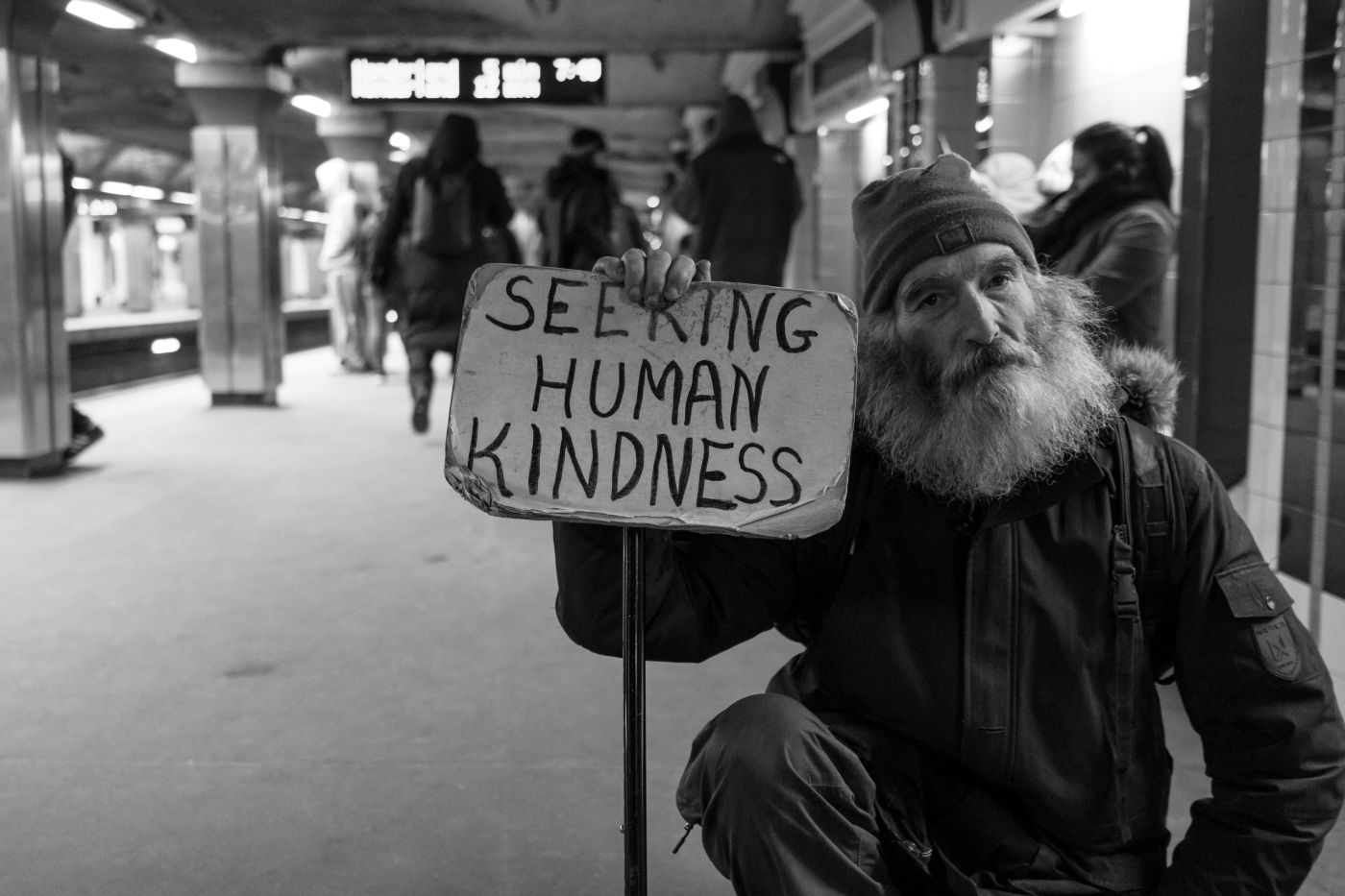
When kindness feels rare, the loss is bigger than kindness
What stays with me is not just that these moments are moving. It’s that they feel rare enough to hit this hard.
You see somebody do something simple and decent for another person, and the reaction can feel way out of proportion to the act itself. Not because the act is small, but because it should be normal. That’s the part that stings. We’re not only responding to kindness, but we’re also responding to the sense that it has drifted outside the everyday and into something we notice almost with surprise.
That’s where the museum feeling comes from for me. Sometimes real human goodness feels less like daily life and more like coming across something preserved from a world that understood people a little better. You recognize it immediately. You don’t need it explained to you. Of course, this matters. Of course, this is what people need. But the feeling isn’t pure relief. There’s grief in it too, because what should feel present can start to feel almost historical. And that should trouble us more than it does.
A culture doesn’t have to collapse in some dramatic, movie-ready way to lose something essential. Sometimes it just gets thinner, distracted, performative, and more impatient. People get rewarded for speed, reaction, and display. Attention gets chopped into pieces. Care starts looking inefficient. Gentleness starts looking a little out of step with the tempo of things. Before long, sincerity can feel risky, and ordinary kindness can begin to seem almost unusual.
That shift changes people. It changes what they expect of strangers, public life, and of each other. If enough bad faith piles up around you, you stop assuming goodness will meet you. You brace instead. You protect yourself in advance. You go into ordinary encounters with your guard already half raised because experience has taught you that disappointment is usually closer at hand than grace.
You can live like that. Most people do, at least some of the time. But it makes the world harsher than it needs to be, and over time, it starts to distort what should still feel normal. Tenderness begins to look exceptional, and patience starts to feel noble. A small act of care can land with the emotional force of a miracle, when really it should still be part of the basic agreement of being alive together on this weird little spinning rock, which, yes, sounds grand until somebody pays for a stranger’s groceries and suddenly it doesn’t.
Maybe that’s why these moments go so deep when they appear. They don’t just make you feel better about people; they remind you of the standard that, beneath all the noise and vanity and endless public performance, there is still another way to move through the world. You can be attentive and generous, you can notice someone else’s pain without turning the moment into a statement about yourself.
And when that starts to feel rare, the loss is bigger than kindness. It means we’ve begun to accept a world that asks less of us than it does of being fully human.
People are hungry for what doesn’t feel performed
This is bigger than YouTube, obviously. The screen is just where the problem becomes impossible to miss. The deeper issue is that performance has leaked into everything. Work. Relationships. Public language. Brand language. Even care now comes with a tone of presentation around it, as if nothing can simply be felt anymore. It has to be framed, posted, optimized, and turned into proof.
People can feel that. Even when they can’t quite name it, they can feel the difference between something expressed and something managed. They know when care has been workshopped within an inch of its life. They know when empathy has been polished until it gives off no heat at all. They know when a message is trying to look human instead of actually coming from one. That matters more than a lot of organizations seem to realize.
For years, brands have been told to connect emotionally, show purpose, sound more authentic, and act more human. Fine. Some of that advice was useful. Some of it gave us a thousand versions of the same softened corporate voice saying carefully approved things about community, while nobody involved appears to have met an actual human being in months. That may sound unfair. It may also be one of the less unfair things I’ve said all week.
What people are hungry for is not better-performed warmth. It’s relief from performance itself. They want language with an actual pulse and signs that somebody, somewhere in the chain, still understands what it means to pay attention. They want to feel that care exists before the message, not only within it.
That’s where trust starts now. Not with polish, or with a beautifully lit campaign about values. Trust starts when people sense that the behavior underneath the message is real enough to survive contact with ordinary life. It starts when the words don’t feel like a costume, when an organization seems less interested in managing perception and more interested in deserving belief.
And the bar for that is both higher and simpler than people think. You don’t get there by trying to look like the kindest person in the room. Usually, that’s when the room starts backing away slowly. You get there by being clear, by being consistent, by acting with some actual regard for the people you say you care about. Not theatrically. Not once a quarter. Repeatedly, quietly, in ways that hold up when nobody is clapping.
That is what makes humanity powerful right now. Not because it’s a branding trick, and the second it becomes one, the game is over, but because it has become so easy to spot the opposite. People are exhausted by being handled. They are tired of being nudged, steered, segmented, and spoken to in a language engineered to sound sincere without risking sincerity. When something real shows up, they know. The body knows before the brain finishes the sentence.
Which is why this matters beyond a few moving videos and a few tears in the middle of an otherwise wasted afternoon. Those moments are reminders. They show us that care still cuts through. Attention still cuts through. Decency still cuts through. In a culture swollen with performance, the things that feel most human now are often the things that have not been dressed up to death.
That should tell brands something, if they’re willing to hear it. Not that they need to act like saints, God help us, the internet has enough of those already. It tells them that people are still looking for signs of life, honesty, and that someone means what they say and says what they mean. In a world this managed, that kind of plain human coherence starts to feel almost radical.
The Takeaway
Maybe that’s why these moments stay with us. They’re small, but they don’t feel small. They break through the noise, the performance, the endless positioning, and remind us that people are still capable of meeting one another with something real.
That matters far beyond a few moving videos on a screen. It matters in culture, in business, and anywhere trust has started to thin out, which at this point is almost everywhere you look.
People are tired of being managed. They’re tired of language that performs care instead of carrying it. They are tired of the polished signal that says all the right things while giving off that faint, dead feeling of something assembled by committee. What cuts through now is not perfection, volume, or a better costume for the same old performance. It is the unmistakable presence of actual regard.
For brands, that should be both a warning and an invitation. The warning is that people can feel the difference between warmth expressed and warmth lived. The invitation is that humanity still works. ThoughtLab understands this better than most: trust does not come from sounding human on the surface. It comes from acting in ways people can recognize as human underneath the message.
That is what those moments of kindness are really showing us. Not just that goodness still exists, although thank God it does. They show us what people are hungry for, what the culture keeps stripping away, and what still has the power to reach us when it appears without an angle. A little care. A little attention. Someone choosing not to pass by.
The strange thing is that none of this should feel remarkable. It should feel ordinary, like the baseline. And yet here we are, sometimes crying over a stranger’s small act of decency because for one brief second it feels like stepping into a world we thought we might have lost. That says something worth paying attention to, not only about what the internet rewards or what culture has normalized, but about what still reaches people and what kind of presence has become rare enough to feel almost holy when it appears.
If basic kindness now feels miraculous, the answer isn’t to admire it from a distance like something preserved behind glass. The answer is to make it ordinary again.