

There’s something inside us that lights up when we hit a moment that refuses to explain itself. It’s like the brain sits up a little straighter. Wait, what was that? What’s going on here? Why is there a penguin in a high school hallway? We lean closer because the story suddenly gives us a job to do. It lets us wonder.
There is a film called Gregory’s Girl, about a kid named Gregory who is kind of dull, kind of in the middle, and he is in love with a girl who doesn’t love him back, but another girl does, and well, it’s a fun, easy-to-watch film. I love this film for a bit that is never explained.
During shots filmed at Gregory’s school, there is a kid in a penguin costume. He appears in the background, and sometimes he is being directed where to go by teachers, sometimes by other students. There is always an urgency about it, like one kid almost yells in panic, Room seven, you’re late. And the penguin totters off. Another time, Gregory is having a conversation with a teacher, and the penguin just walks by the open classroom door. No one in the film ever explains the reason for this kid dressed as a penguin anywhere in the run of the film. But there he is, being told where to be, being told people are waiting, being told he’s late, but no one ever offers any kind of explanation for the kid, the costume, or what it’s about. I absolutely adore that bit.
The fact that it’s never explained is the pure genius of the bit. It’s just presented as is, and the viewer decides what the hell is going on. The director, Bill Forsyth, said that during filming, he saw an actual student walking down the hall carrying a giant papier-mâché head, and no one blinked an eye. He knew that the unexplained penguin needed to be in the background of his film.
We now live in an age where we can get the answer to everything at any time and in any place. Kids can whip out their phones and have things explained to them in a flash. But not having something explained is much more intriguing and, as is the case with this film, absolutely hilarious. Often, especially when we’re talking about art, not explaining everything to death is better for the final outcome and makes us lean in more. But is that even possible now? Can brands be allowed to just lay something out, be it weird or wonderful, and not explain it into the minutiae of its being?
How far can the weird and unexplained carry a brand, or should they always make their points in a spoon-feeding fashion for their audience? I like weird, and as Hunter Thompson once said, When the going gets weird, the weird turn pro. So let’s look at pro brands and see how they are dealing with, or not dealing with, weird.
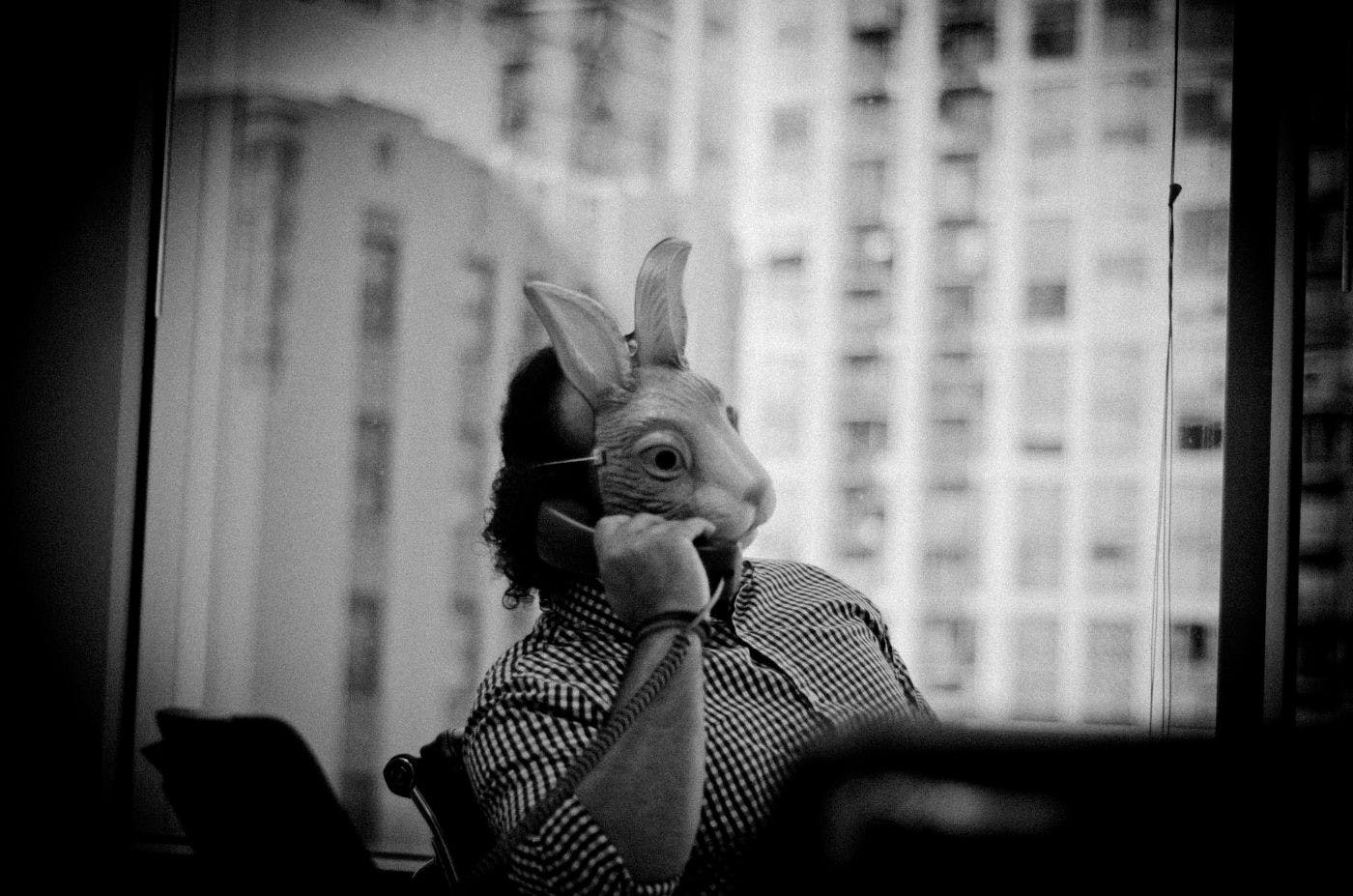
Why the Unexplained Works on Us
There’s something inside us that lights up when we hit a moment that refuses to explain itself. It’s like the brain sits up a little straighter. Wait, what was that? What’s going on here? Why is there a penguin in a high school hallway? We lean closer because the story suddenly gives us a job to do. It lets us wonder.
Most days, we get hit with so much information that curiosity barely gets a chance to show up. Everything comes prepackaged with a full breakdown and a side of extra context we never asked for. So when something appears with no label and no explanation, it feels strange in a way that wakes you up. It gives you space to poke at it and see what your own mind does with it.
That’s why the penguin works. It’s not chaos. It’s controlled mystery. You know it’s there for a reason, even if no one tells you what that reason is. Your brain loves that kind of puzzle. It’s playful. It’s harmless. It lets you build your own theory. Maybe the school drama club has a show coming up. Maybe the kid lost a bet. Maybe this is just what Scotland does for fun. You don’t know, and the film refuses to help, and that’s the joy of it.
The unexplained sticks because you had to participate in it. You weren’t a passive watcher. You became a co-creator for a minute, filling in the blanks with whatever made sense to you. The story trusted you enough to leave a door open, and you stepped through it without needing a map.
That tiny act of participation is why you remember it. And why mystery, handled with a little care and a little humor, can be such a powerful tool in art and in brands.
The Age of Instant Answers and the Death of Mystery
We live in a world where questions don’t even get a full moment to breathe. The second something feels unclear, a screen jumps in with the answer. Kids don’t sit with confusion at all. They ask their phones, and the mystery disappears before it even builds a little spark. It’s helpful, sure, but it also scrapes away a bit of the magic that comes from not knowing something right away.
There used to be pockets of uncertainty in our day. You saw something odd and had to live with it for a while. You talked about it. You guessed. You made up your own story. Now the guesswork is gone. The internet doesn’t want you to wonder. It wants you to know, and to know fast.
Brands have absorbed that pressure. Somewhere along the way, the fear of being misunderstood turned into a fear of letting anything breathe. So they explain. Then they explain again. Then they add a little FAQ at the bottom just in case someone missed the point. The result is content that feels like it was written by a very polite robot who’s terrified of being misread.
The funny thing is that audiences aren’t asking for that level of control. People still like a little mystery. They enjoy moments that make them lean in. They just don’t get many chances for it anymore because everyone is racing to answer questions before anyone even feels the joy of asking them.
The penguin from Gregory’s Girl wouldn’t survive in this climate. Someone would make a TikTok about it within an hour. The director would feel pressure to post a behind-the-scenes explanation. And the whole charm would evaporate the second everything became too clear.
Mystery didn’t die. We just stopped giving it room to stretch its legs.

Can a Brand Still Be Unexplained
So here’s the real question. Can a brand still get away with a little mystery? Can it drop something odd or delightful or slightly confusing into the world and trust people to figure it out on their own? Or at least enjoy not figuring it out.
Most brands don’t think so. You can feel the panic through their copy. They want everything spelled out front to back with no loose ends and no room for interpretation. They want the audience to walk away with the exact thought they planned, delivered in the exact order they planned it. Which is funny, because that level of control usually makes the whole thing feel even more confusing.
The truth is that being unexplained isn’t the same as being unclear. Mystery has intention behind it. You make a choice to leave a little space around an idea because you know it will land better without all the extra packaging. It’s the difference between a secret and bad communication. A secret invites you in. Bad communication shuts you out.
The brands that fear mystery usually fear trust. They don’t trust the audience to get it. They don’t trust the audience to explore. They don’t trust the audience to enjoy something that doesn’t come with instructions. And that fear makes everything feel safe and flat and very easy to scroll past.
But when a brand lets a little weirdness breathe, something else happens. People talk. They interpret. They share theories. They attach their own meaning. The brand becomes a tiny bit alive in their heads instead of just another polished message trying to be understood in the most literal way possible.
We’re not talking about chaos. We’re talking about confidence. The kind of confidence that says Here’s the penguin in the hallway, take from it what you will. That moment of restraint can create more connection than any perfectly worded explainer ever could.
The Pro Brands Who Turned Weird Into an Advantage
Some brands didn’t just dip a toe into the weird. They cannonballed straight in. They built whole identities around ideas that make no logical sense on paper, and they never bothered to spell any of it out. They just let the oddness exist. It’s the same energy as that penguin wandering through the school while everyone acts like this is a regular Tuesday. No questions. No commentary. Just quiet, confident, weird.
Take Liquid Death. They sell water in a can, but the brand talks like a metal band that wandered into a grocery store and refused to leave. Nothing about it tries to calm you down. And they never pause to explain why water needs a skull on the front. They let the audience figure it out, or not figure it out, and the result is a company that feels alive instead of packaged.
Then there’s the Duolingo owl. That big green bird acts like an unhinged hall monitor on social media. It flirts. It threatens. It dances in places no owl should be dancing. The company never releases a giant statement called Why Our Mascot Is Behaving This Way. They just let the owl do whatever the owl wants, and people cannot get enough of it.
Crocs might be the purest example of a brand that embraced the strange with open arms. The shoes look like something a cartoon neighbor would wear while dragging the trash cans to the curb, and instead of trying to hide that, the brand doubled down on it. They brought in celebrities. They added charms. They treated the shoe like a little playground for creativity, and people loved them even more for it.
Oatly also lives in this world. They slap odd lines on their packaging that read like the side notes of someone who drank too much coffee and started talking to themselves. And they don’t explain those lines. They treat the carton like a place for odd thoughts to exist, and the tone becomes part of the experience.
Each of these brands understands something simple. People like to play. They like to discover. They like to feel in on the joke. If you explain the joke, it dies on the table. If you let the weird breathe, the audience steps into the story on their own and keeps it alive.
The penguin survives because it doesn’t justify itself. These brands follow the same rule. Let the odd thing be odd. Let people talk about it. Let them feel clever or delighted or confused. When a brand trusts its audience to enjoy something without a tidy explanation, that brand suddenly feels like it has a soul.

The Brands That Lost Their Magic by Explaining Too Much
Some brands get a win and immediately start fussing with it. They hit on something that lands, feel a little spark, and instead of letting it breathe, they hover over it. They pick at it. They try to explain it from every angle, as if the moment might vanish unless they pin it down with words.
You’ve seen this happen with brands that suddenly get attention for something a little odd or unexpected. Maybe the internet latches onto a quirky campaign. Maybe people fall in love with a mascot or a tone or a moment that wasn’t part of the original plan. Instead of letting the moment live, the brand rushes in to clarify it. They roll out a long post about their strategy. They walk everyone through their thinking. They pull the curtain all the way back. And the audience, who were having a nice time with the mystery, now feels like they just sat through a lecture.
Over-explaining makes the weird feel forced. It turns something natural into something staged. You can almost feel the marketing team trying to recapture the spark by analyzing it to death. And once that happens, the charm slips away.
This often shows up when brands chase virality. They get one funny or strange win, and instead of trusting the instinct that created it, they try to engineer it on command. They build rules. They create guidelines. They try to reproduce the moment with a checklist. The result is content that feels like an imitation of their own earlier success.
The problem isn’t the weird idea. The problem is the need to control the meaning of the weird idea. The audience was already doing the fun work. They were filling in the blanks. They were trading theories. They were enjoying the unknown. The second everything gets explained, the game ends.
The brands that lose their magic aren’t boring. They just stop trusting their own mystery.
How ThoughtLab Approaches the Weird
At ThoughtLab, we’ve always had a soft spot for odd little moments. The sort of thing you notice halfway through and think, wait, what was that. It’s not dramatic. It’s not trying to be clever. It just drifts through and somehow makes the whole thing better. The penguin in the hallway has that energy. You don’t need a reason for it. You just accept it and keep watching.
Plenty of brands think they have to pick a side between clarity and mystery, like the two can’t live in the same room. But the strongest work usually blends both. You give people a clear path to walk, then you leave a little room for discovery. That little pocket of space is where connection shows up. People stop feeling like an audience and start feeling involved.
You don’t have to explain everything. People remember small moments on their own. A detail shows up, no one talks about it, and it still sticks. The penguin is a good example. It walks through a scene, and later it’s the thing people bring up, even though no one mentioned it at all.
That’s very much how we think about brand work. You build something solid and understandable, then you leave a little air around it. Let a few things unfold on their own. Let people notice something without being told why it matters. That small bit of trust goes a long way. It makes the whole brand feel like it has a real pulse.
The Takeaway
The strange kid in the penguin suit works because no one stops to explain him. He just appears, wanders through a few scenes, and somehow becomes the moment everyone remembers. The mystery isn’t a problem. It’s the charm.
Brands can learn from that. You can guide people without steering every thought. You can give them something solid while still leaving a little room for curiosity. When you hold back just a bit, the work feels more alive. It gives people something to notice on their own, something they can enjoy without being told exactly how to feel about it.
The world is crowded with answers. A small question can stand out. A quiet, odd detail can stick. And sometimes the thing that lives the longest in someone’s mind is the part you never explained at all.
That’s the penguin. That’s the power of a little mystery.