
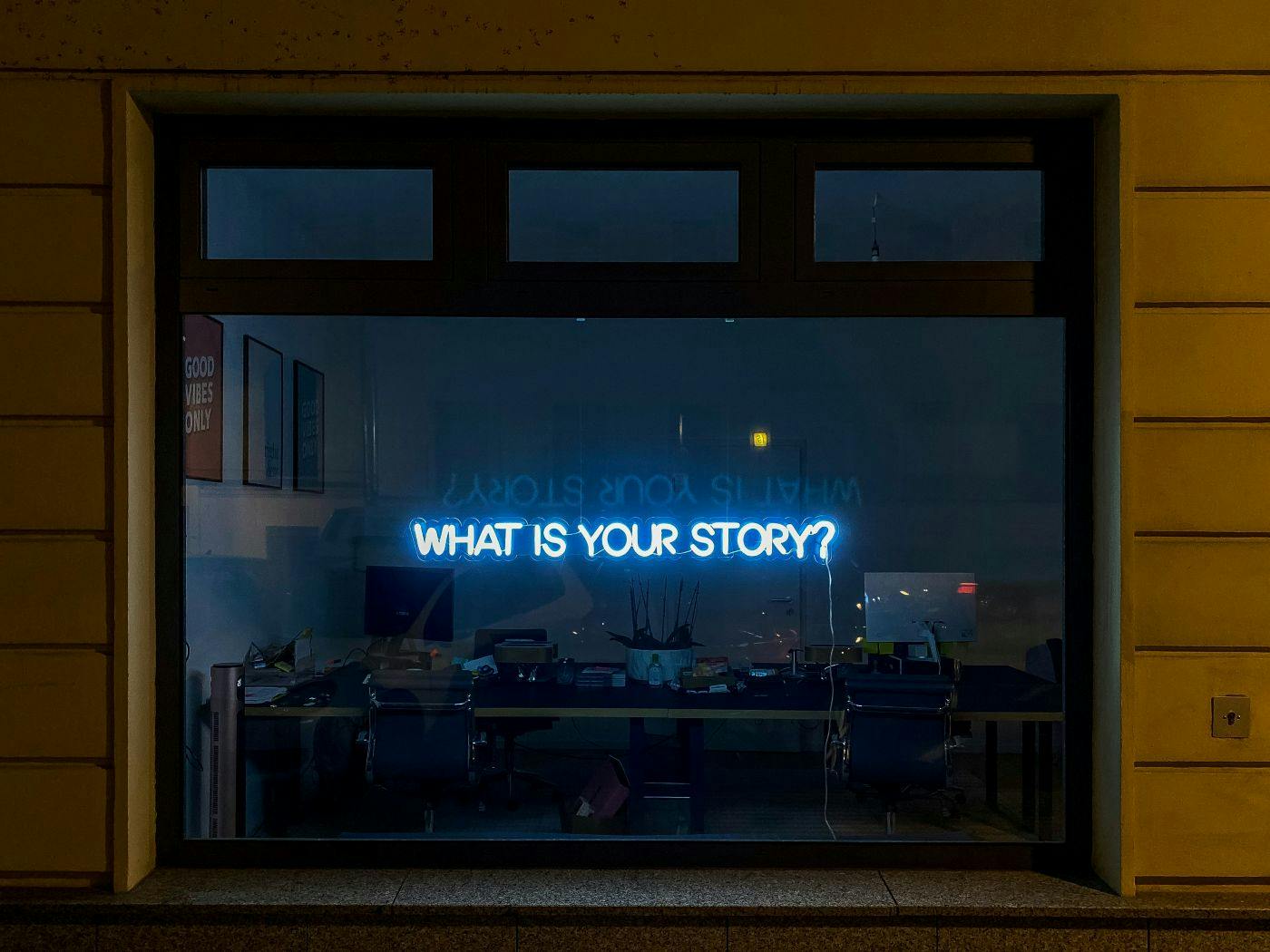
Telling stories keeps us connected as humans. Storytelling is vital for understanding ourselves and others, and moves us closer to universal understanding. Telling stories is a basic way humans connect.
Once upon a time, when my father was still walking this mortal coil, he asked me, why do you want to be an actor? I was a bit thrown, as he had only berated the idea and called it a lazy job, one all about fun and goofing off, but now, in that moment, he was serious, asking to understand. It was a moment that connected us and one I will forever remember. When I answered, he thought for a moment, nodded his head, said, “Huh,” then snapped his newspaper into shape and got back to reading about the Sox game that had been played the previous day. We never spoke of it again.
A lot of people ask that question: 'Why do you do this?' Why do you put yourself through the hell of auditions, rejection, trying again, and being rejected again? Why do you allow yourself to be told by agents that you’re fat, that you should invest in a toupee, that you’re too old, not funny enough, etc., etc? Why?
Some say, "Is it for fame? Do you crave fame and attention?" Or the scads of money, don’t actors make like 20 million dollars per film? Do you just want lots and lots of money? Why do you do a job that has about a 5% success rate, where everyone can judge you for your talent or lack of talent, where there are professionals whose job it is ot tell everyone how bad you are? Why would anyone ever get into this line of work?
My answer has always been and will always be: to tell stories.
Our lives are about stories. TV, movies, books, video games, board games, and that’s just the entertainment industry; let’s not forget brands and branding, marketing, sales, and all manner of commerce. Then there’s the news and sports. No storytelling in sports, you say, please. Let me tell you the story of a professional baseball team that was cursed because they sold Babe Ruth to another team and how that curse followed them, hounded them, and named them losers for 86 years as they missed the postseason or lost in the final innings until, glorious day, October 27, 2004, when the Curse of the Bambino was finally lifted and the Sox beat the St. Louis Cardinals.
Now, that was a story. Bloody socks, inhuman catches, smart coaching, that entire season was the story of the Boston Red Sox. And if you don’t think that to this day, there are people sitting in bars in The Fenway, drinking and telling the story of where they were when the curse was lifted, you’re lacking time in a Boston bar.
Think about the assassination of President Kennedy; some are caught up in the story of the second shooter, the grassy knoll, and the training Oswald got in Russia. But the real stories? Where were you when Kennedy was assassinated? We all know the story of JFK, but the other stories, in the assassination’s orbit, where were you, what do you remember, who were you with, who did you tell, how did they react? All of that is fodder for stories to be told and shared.
Those stories of 'where were you when' are an attempt to normalize the world around us when things seem insane and unbelievable. Where were you, what were you doing? Those questions led the questioned to launch into a story: I was with my brother and his fiance and they had never been to New York before, so we’re at John’s having a slice when suddenly … That’s their story of 9-11. Yes, I was doing something as mundane as banal as having a slice of pizza when the world as I knew it suddenly crashed and all hell broke loose. “Same here,” someone else says, “I was just riding the D train and then …” The stories connect them and ground them. Yes, this insane thing happened, yes, it is traumatizing, but you experienced it too? Okay, good. I’m not imagining this; I’m not going crazy. The world is in upheaval, but this person shared their story with me, and it was very similar to mine, so everything is going to be okay.
Stories unite us, help us cope, and can certainly make us feel less lost, less alone. Hearing someone’s story during a tragedy and finding it similar to our own story is comforting. Sharing stories offers a new perspective and engenders unified empathy, while unifying emotional understanding within a group. Sharing stories during tragic or inexplicable times builds a supportive community, and within those communities, we can feel seen and heard and begin the journey toward meaning-making in our own lives.
Telling stories keeps us connected as humans. Telling stories allows us to see where we were and where we’ve come to. Telling stories is a basic way humans connect. Storytelling is vital for understanding ourselves and others, and moves us closer to universal understanding.

Change
“... and then, you’re not going to believe this, right in the middle of a conversation about the Church social, Steve stands up and says very quietly, I don't go to church and I never will. Can you believe it?”
What happened to Steve? Why did he change like that in the middle of a conversation? How odd, right? But more importantly, why does that moment grab us and demand an explanation? Strange, right? But how perfect for a good story. We all know that change is important, and humans already understand that change is intuitive, but we don’t call it storytelling while we’re living it. We don’t say to our friends, “I have a great example of intuitive change to share with you. I was having a conversation about the church social …” No, we say, 'have I got a story for you.”
Pixar, the studio that gave us Toy Story, Cars, and Monsters, Inc., has rules about storytelling: a story is a change from the old status quo to a new one, from the old world to a new world, through action and conflict. That’s a story.
There’s a template created by Kenn Adams called the Story Spine. That template looks like this:
Once upon a time there was ___. Every day, ___. One day ___. Because of that, ___. Because of that, ___. Until finally ___.
This is a narrative structure that Adams pulled from the world of improv theater, because the theatre has always known that story is about change.
Change is vital to any story. We start at point A and, if we stay there, we go nowhere, and there is no story to be told. I mean, yes, there is a story, but it’s one about a guy who wakes up every morning, does his job, eats his food, watches his shows, then goes to bed, and in the morning, he does it all again. The end. That’s a terrible story for a few reasons, one the guy goes nowhere, does nothing, learns nothing, and never changes. Why do we want astory about him? He doesn’t inspire or cause us to aspire. He starts at A, stays at A, and then dies at A. No moral, no wisdom to be extracted.
That’s not a good story. It’s actually a terrible story because that guy’s life feels terrible. But if we add change to that routine, then we have a decent story. If we take the mundane, plodding information about the guy who goes nowhere, does nothing outside ofhis schedule, and add something, make the situation different somehow, like the guy who delivers his groceries doesn’t show up and he needs food so he has to actually get in his car and go to the market, that’s a change and that’s where the story can be told.
Without change, there is no story. With the situation above, the story as it stands is: One day, Gary woke up, ate his breakfast, did his work, ate his lunch, did more work, ate his dinner, did the dishes, watched Wheel of Fortune, and then went to bed. Gary did the same thing every single day until he died. The end. That is, technically, a story, but it’s certainly not a good one. And it’s certainly not a story people will listen to more than once. Why? Because nothing changes. Change makes stories listenable. However, purposeful change makes stories followable.
Purposeful Change
Not all change shows up uninvited.
Some change crashes into us. A phone call. A loss. A moment where the world tilts and nothing feels the same afterward. Those are the stories we tell because we have to, because if we don’t say them out loud, they rattle around in our heads and refuse to settle.
But there’s another kind of change. The kind that doesn’t announce itself with sirens or headlines. The kind that starts as a quiet discomfort. A sense that something isn’t working anymore. That if you keep doing things the same way, you’re going to end up somewhere you don’t want to be.
That’s purposeful change.
Purposeful change is the moment someone decides. Decides to leave. Decides to stay. Decides to say the thing they’ve been avoiding. Decides to stop pretending that this is fine when it very clearly isn’t. Nothing explodes. No one forces their hand. They just reach a point where standing still feels worse than the risk of moving. And that’s where stories shift.
Stories about accidental change get retold. Stories about purposeful change get followed.
We lean in when someone chooses something. When they walk away from the familiar, not because they have no choice, but because they finally realize they do. Those are the stories that stick. Not because they’re dramatic, but because they’re relatable. We recognize that moment. We’ve all stood there at one time or another, staring at the same life we’ve been living, wondering what would happen if we changed one thing.
Purposeful change doesn’t have to be big. It doesn’t have to be cinematic. Sometimes it’s as small as saying no. Or yes. Or admitting you don’t believe what you’ve been repeating out of habit. Sometimes it’s just deciding to stop doing the thing that’s slowly wearing you down.
What matters isn’t the size of the change. It’s the choice.
Once change becomes intentional, stories stop being about what happened and start becoming about what’s possible. They stop explaining the past and start pointing forward. And without anyone saying it out loud, they quietly invite the listener to ask the same dangerous, hopeful question.
What would I change if I let myself?

When Groups Start Telling Stories
Once people realized stories could be shaped, not just remembered, it didn’t stay personal for long.
People don’t live in isolation. We end up inside families, teams, organizations, and communities, usually without thinking too hard about how we got there. And wherever people gather for a shared purpose, they begin trying to explain themselves, both to one another and to the outside world. Those explanations slowly turn into stories, whether anyone intends them to or not.
That’s where brands enter the picture.
Not as logos or marketing assets, but as collections of people trying to articulate why they exist and what they are trying to change. At their core, brands are attempts at purposeful storytelling. They are groups saying, this is the problem we see, and this is how we’ve decided to respond to it.
The trouble is that most brands don’t tell stories the way humans do.
Instead of talking about decisions, they talk about features. Instead of acknowledging the discomfort that led to change, they present the outcome as if it arrived fully formed. The messy middle disappears. Risk gets edited out. What remains is a version of the story that feels polished but strangely empty.
That emptiness is why so many brand stories fail to connect.
People aren’t looking for perfection. They’re looking for motion. They want to understand what wasn’t working, what was at stake, and why someone chose to do something differently. Without that, there’s nothing to hold onto, no reason to listen past the first paragraph.
The brands that resonate tend to feel less like finished products and more like ongoing decisions. You can sense that something shifted, that a line was crossed, that the people behind the brand chose a direction rather than defaulting to what already existed.
Good brand storytelling doesn’t manufacture a narrative. It pays attention to the change people are already experiencing and makes a clear, human choice about how to move forward.
Just like any story worth listening to.
What Most Brands Miss
Most brands think storytelling is about saying the right things.
They spend a lot of time polishing language, refining taglines, and aligning on messaging. There are decks, workshops, and endless conversations about voice and tone. All of that can be useful, but it tends to orbit the problem rather than touch it.
What most brands miss is that stories don’t start with words. They start with a decision.
A story begins the moment someone decides that the current state of things isn’t acceptable anymore. That something needs to change, even if it’s uncomfortable, even if it’s risky, even if there’s no guarantee it will work. Without that moment, everything that follows is just description.
This is why so many brand stories feel interchangeable. They describe what a company does, but not why it chose to exist in the first place. They explain outcomes without acknowledging the tension that led there. The story skips the part where doubt was present, where tradeoffs were made, where something real was on the line.
When that part is missing, the story doesn’t feel false. It feels irrelevant.
People don’t expect brands to confess everything. But they do expect honesty about movement. They want to know what shifted, what problem became impossible to ignore, and what line the brand decided to cross. Without that context, a brand’s message has nothing to push against.
Another thing brands often miss is that storytelling isn’t something you apply after the fact. It’s not a layer you add once the product is finished or the company is established. Storytelling is simply the articulation of a change that has already happened. If no meaningful change exists, there’s nothing for the story to reveal.
This is where many brands get stuck. They try to tell stories before they’ve made a real decision. They want the emotional impact without the emotional risk. They want the clarity of purpose without having to choose one path over another.
But without that choice, there is no story. Just information arranged nicely.
And people can feel the difference.
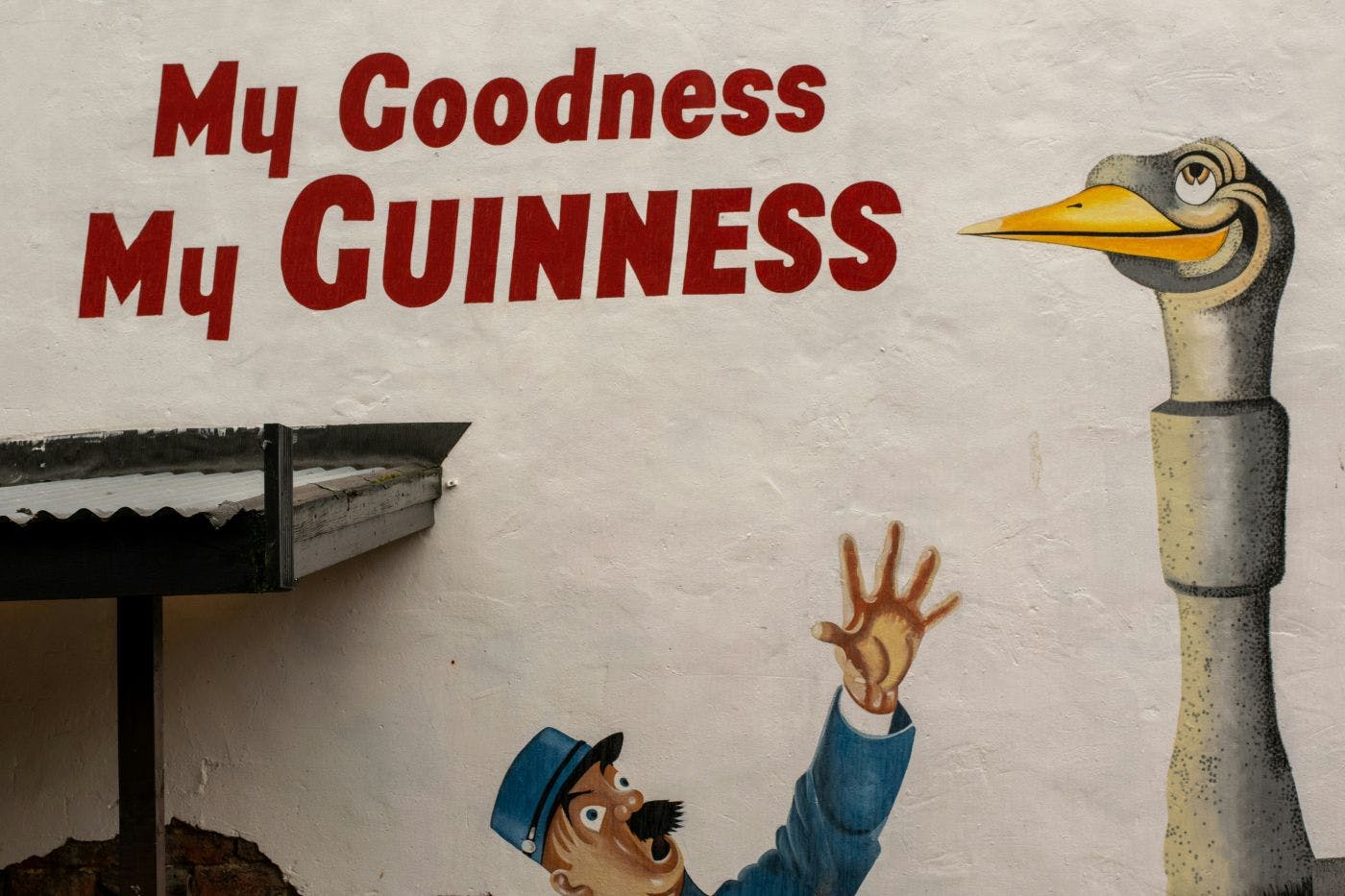
What Good Brand Storytelling Does When It Works
When brand storytelling works, it doesn’t feel like storytelling at all. It feels like recognition. Like someone finally articulated something you already sensed but hadn’t put into words yet. There’s a quiet moment of alignment, where the brand’s story overlaps with your own experience of the world, and nothing feels forced.
Good brand storytelling doesn’t try to impress people. It helps them orient themselves. It clarifies what the brand stands for, what it refuses to be, and what kind of future it’s trying to move toward. Not in abstract language, but in human terms that feel lived in rather than designed.
When it works, it creates trust without asking for it explicitly. People don’t feel persuaded. They feel understood. The story makes sense of the brand’s decisions, its boundaries, and even its imperfections. That coherence matters more than polish ever could.
A good brand story also gives people a role, even if it never says so outright. It lets customers, employees, and partners see where they fit into the larger movement the brand is part of. Not as targets or users, but as participants in a shared direction.
At its best, brand storytelling doesn’t say, “Look at us.” It says, “Here’s what we’re trying to change, and here’s why it matters.” And then it trusts people to decide whether they want to be part of that change.
Why People Are Skeptical of Brand Stories in the First Place
People didn’t become skeptical of brand storytelling for no reason. They became skeptical because they’ve heard too many stories that weren’t actually stories. They’ve been presented with language that promised meaning but delivered marketing. Big claims without visible commitment. Emotional words without emotional risk.
Most brand stories fail because they feel reverse-engineered. The conclusion is clear, the outcome is flattering, and everything messy or uncertain has been removed along the way. What’s left reads like a performance rather than an experience.
People can sense when a story is trying to get something from them rather than share something with them. They notice when a brand talks about values without ever showing the cost of holding them. They feel when a story exists to smooth over reality rather than reflect it.
There’s also fatigue. Everyone is telling a story now. Everyone claims purpose. Everyone wants to change the world in vaguely defined ways. When everything is positioned as meaningful, meaning itself starts to feel diluted.
So skepticism becomes a defense mechanism. People stop listening closely. They assume the story will sound nice but ask nothing of the brand itself. And too often, they’re right.
How Brands Find the Story They Already Have
The way out of this isn’t to tell better stories. It’s to look more honestly at the one that already exists. Every brand has a story, whether it wants one or not. It’s embedded in the decisions made early on, the problems chosen over others, and the trade-offs that shape how the company operates today. The story isn’t hiding in the copy. It’s hiding in the history.
Finding that story requires restraint. It means resisting the urge to inflate or dramatize. It means paying attention to moments when something shifted, when a default path was rejected, when someone said no to an easier option and chose a harder one instead.
Often, the real story shows up in places brands tend to gloss over. Early uncertainty. Internal disagreement. A moment when the original plan didn’t work. Those aren’t weaknesses to be edited out. They’re the points of tension that make the story believable.
This kind of storytelling isn’t about invention. It’s about recognition. It’s about noticing the change that already happened and articulating it clearly enough that others can see it too.
When brands do that, they don’t need to convince people. They don’t need to perform authenticity. The story carries its own weight because it’s rooted in something real.
And people, whether they realize it consciously or not, respond to that.
Before We Call It Storytelling
By the time brands start asking how to tell a better story, they’re often already too far downstream. They’re thinking about language before they’ve thought about choice. About messaging before they’ve examined movement. About how they sound before they’ve decided what they’re actually willing to stand behind.
But storytelling doesn’t begin when the copy gets written. It begins earlier, in quieter moments. In the decisions no one outside the organization sees. In the tradeoffs that don’t make it into the press release. In the things a brand chooses not to do, even when doing them would be easier.
Those moments are rarely dramatic. They don’t feel like storytelling while they’re happening. They feel like work. Or tension. Or uncertainty. Someone disagreeing in a meeting. Someone pushing back on an assumption. Someone deciding that the old way isn’t good enough anymore.
That’s where the story is forming, whether anyone is paying attention or not.
Everything that comes later, the language, the positioning, the campaigns, is just an attempt to catch up to that truth. To put words around something that already moved.
When brand storytelling feels hollow, it’s usually because that earlier work never happened. Or it happened, but no one slowed down long enough to notice it.
And when it feels real, it’s because the story isn’t being used to explain the brand. It’s being used to reveal it.
The Takeaway
Storytelling isn’t a technique. It’s a consequence. It shows up when something changes, and someone decides that change matters enough to name it. Humans do this instinctively, especially when the world feels unstable or unclear. We tell stories to understand where we are and how we got here.
Brands aren’t any different. They just forget that the story doesn’t start with what they say. It starts with what they choose.
At ThoughtLab, that belief shapes how we work. We don’t start with messaging or frameworks. We start by paying attention to the decisions that already changed something, even if they didn’t feel like storytelling at the time.
If a brand hasn’t made a real decision, there’s nothing for a story to hold onto. If it has, the story is already there, waiting to be noticed rather than invented.
The work isn’t supposed to sound meaningful. It’s to notice what actually moved, and being honest about it.
Everything else is just noise.