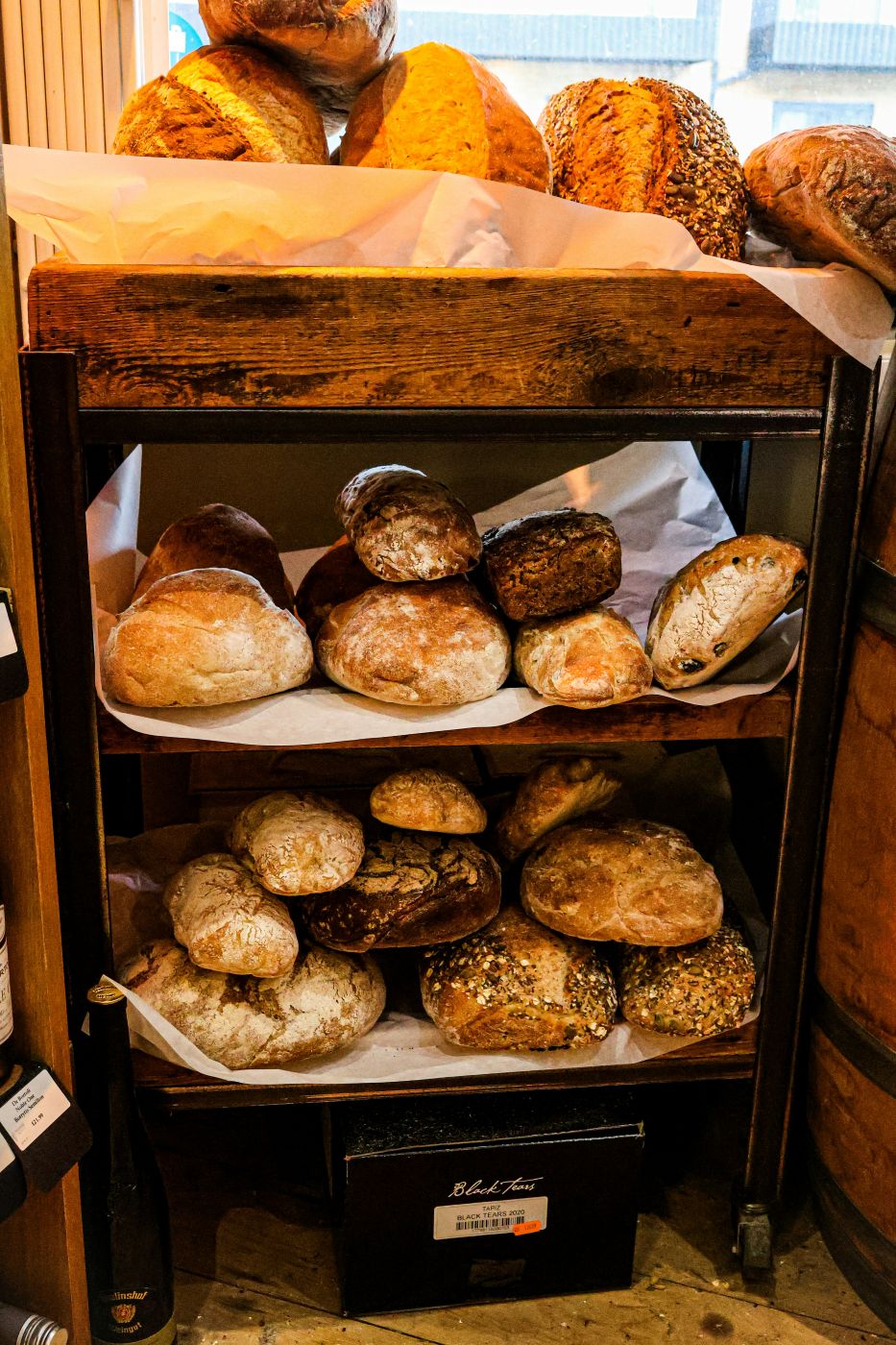
Branding isn’t what you say about yourself. It’s what people smell from down the street, and whether the bread is worth the wait.
A very foggy morning. Despite the fog, a line is forming in front of a little blue shop with large front windows. This is Pane d’Amore, a bakery. Along the bottom of each windowpane, neat scrolling letters read bread. Three big panes, three times the word bread. You really don’t need the words. If you’re within five hundred feet of the place, you can smell the bread. And that smell, well, there’s nothing quite like it. A smell that actually feels warm. A smell that calls to you, evokes memories, and quickens your step, because you know that if you’re smelling it, so is everyone else. Soon the line will be long, and the little dances people perform to keep warm in the cold fog will begin.
Nobody complains. Nobody announces that the line is too long or demands to know why the doors aren’t open yet. They know what’s waiting for them. Fresh bread from warm ovens. Pastries made by hand, each one a little different from the next. We use the word handcrafted to describe fine furniture and houses, but it belongs here, too. No machine is shooting out uniform little balls of sugar and dough. These pastries are delicate and fruity, shaped by hands that have learned the craft through years of repetition. I like to imagine an old baker working beside a young apprentice, showing her how to fold the dough, how to recognize when it’s ready, and eventually letting her add her own touch to the pastry case. There’s something wonderful about the idea that a craft can be passed from one pair of hands to another.
I’m not a baker. I didn’t grow up near a real bakery, either. My mom baked, and for whatever she couldn’t, we bought it in the bakery section of the local grocery store. Glossy goods entombed in clear plastic caskets, with sell-by dates stamped on the packaging. AtPane d’Amore, there are no sell-by dates. The question isn’t how long this bread will last. It’s how long I can last before I find a bench and eat the whole loaf.
Of course, the people waiting outside aren’t thinking about any of that. They’re thinking about an oval loaf about the length of a forearm and what they’ll serve with it. Homemade soup or stew, perhaps, or a sandwich piled with fresh meats and vegetables. Or maybe nothing more elaborate than a thick slice toasted golden brown and slathered with butter that melts, spreads, and becomes part of the bread itself. Nothing beats a slab of fresh bread, toasted and buttered. How is that possible? With the entire culinary world available to us, with more elaborate dishes than most of us could name, a piece of bread and a little butter can still make us ridiculously happy.
We could go almost anywhere and grab a breakfast burrito. Stop at the Penny Saver for a premade sausage-and-egg sandwich, take it home, pop it in the microwave, and eat it while answering emails. Even the words we use tell the story. Grab a sandwich. Pop it in the microwave. Eating has become another task to accomplish, something to squeeze between the shower and the morning meeting. But the people standing outside this little blue shop aren’t there to grab and pop. They’ve come to procure something, as though they’re waiting to collect a treasure. And perhaps they are.
There’s a difference between eating to live and living to eat. The eat-to-live crowd is sitting in the drive-thru with the seat warmers on high, waiting for something wrapped in paper that can be eaten with one hand while steering with the other. The live-to-eat crowd is standing in the fog, shifting from foot to foot, imagining a loaf of bread on the dinner table beside a bowl of soup, a butter knife resting nearby, and perhaps someone they love sitting across from them. The bread isn’t another task to accomplish. It’s a welcome guest at the table, and a moment that asks nothing of us except that we be present long enough to enjoy it.
Even the people new to the line seem to understand. No poster explains the rules, no instruction manual covers proper bakery etiquette, and no cheerful little sign reminds everyone that good things take time. Nobody needs to explain that the bread is worth waiting for, or that something made with this much care deserves a little patience in return. When I first stepped into that line, nobody approached me with a clipboard and a hard hat, demanded identification, and announced, “Okay, here are the rules.” Nope. I turned a corner, smelled the bread, saw the line, and stood in it. My only thought was, “Jesus, that bread smells so good, I have to have some.” The rules of the line are written in the smell, and the smell is universal.
Talk about a brand that speaks for itself.
The Brand Speaks Before the Business Does
Most businesses spend an enormous amount of time figuring out what to say about themselves. They hire agencies, assemble teams, hold meetings, and fill whiteboards with words meant to capture who they are and why anyone should care. Eventually, someone lands on a phrase everybody can live with, the designer puts it beneath a logo, and the company announces it has found its brand. Which is wonderful, except that the customer may have formed an opinion long before encountering any of it.
Pane d’Amore has three windows that say bread. That’s about as straightforward as a marketing message gets. Yet the smell drifting down the street says far more than those three words ever could. It suggests something fresh, made with care, and worth interrupting your morning for. And then there’s the line. People are standing in the cold before the doors open, willing to give up the warmth of their cars and the comfort of their beds for whatever is coming out of those ovens. Nobody has to explain what that means. We see others make a choice, and their willingness to wait becomes part of what we understand about the place.
This is where branding becomes far more interesting than choosing colors, designing logos, or inventing clever slogans. A brand forms in the customer’s mind through experiences and observations, often before the business has had a chance to introduce itself. The bakery’s smell creates anticipation. The line suggests that anticipation has been rewarded often enough to bring people back. Neither guarantees the bread will be good, of course. But together, they create an expectation, and expectations are powerful. They influence what we’re willing to try, how long we’re willing to wait, and what we’re prepared to believe about something we haven’t yet experienced.
At ThoughtLab, we talk about Depth-Before-Design because the most important questions about a brand have to be answered before anyone decides what it should look or sound like. What is genuinely different about the business? What does it deliver that matters to people? What would customers miss if it disappeared tomorrow? You can’t invent those answers in a conference room and paste them onto a website. They have to exist somewhere in the business itself: in what it makes, how it behaves, and the experience it creates for the people who choose it.
And that’s the remarkable thing about this little blue bakery. Its most persuasive message isn’t the one written on its windows. It’s the one floating down the street, finding its way through the fog, and convincing perfectly sensible adults to stand outside in the cold for a loaf of bread.
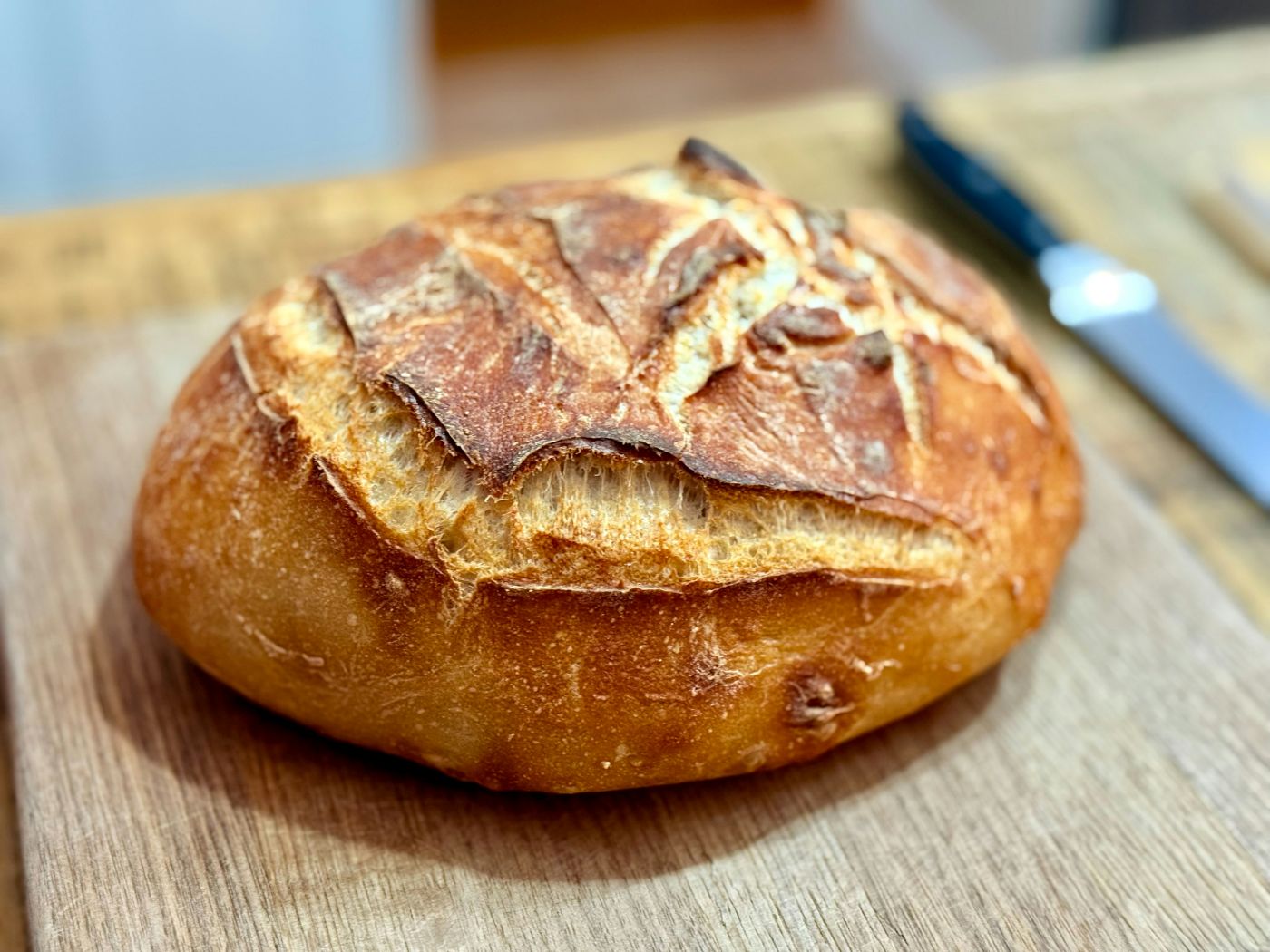
You Can’t Advertise Bread Into Being Good
Imagine standing outside Pane d’Amore on a cold morning, following that wonderful smell through the fog, waiting patiently as your toes begin to lose contact with the rest of your body. Finally, the doors open, you shuffle inside, and someone hands you a loaf of bread that tastes like the cardboard tube inside a roll of paper towels. You’d feel cheated. Not because the bakery lied to you in an advertisement, but because everything leading up to that first bite promised you something better.
That’s the difficulty with making promises, whether they’re written in an advertisement or communicated by the business itself. Sooner or later, someone finds out whether they’re true. You can create anticipation, attract attention, and persuade people to give you a chance, but none of that can make a disappointing product worth buying again. The first visit might be motivated by curiosity. The second requires a reason, and that reason had better survive the first bite.
Businesses sometimes become so concerned with how they’re perceived that they forget perception has to be attached to something real. A beautiful website can make an ordinary company look extraordinary, and a clever campaign can persuade people to reconsider a business they’ve overlooked. There’s nothing inherently wrong with either. But if the product is mediocre, the service is indifferent, or the company doesn’t deliver what it promises, the marketing has simply made the disappointment more efficient. More people arrive expecting something wonderful, and more people leave wondering what all the fuss was about.
The bakery reminds us that the most persuasive thing a business can do is give people a reason to return. The smell might bring someone around the corner, and the line might convince them to wait, but the bread has to justify both. Otherwise, the line disappears. And all that’s left is a little blue building with three windows that say bread.
You Can’t Fix the Bread with a Better Logo
Businesses have a temptation to treat every problem as a communication problem. Sales are slipping, customers aren’t returning, or the competition suddenly looks more attractive, and somebody decides it’s time for a new campaign. Perhaps the website needs updating, the messaging needs refreshing, or the company needs a new identity that better reflects its values. These things may genuinely need attention, but there’s a question worth asking before the first designer opens a file: What if the problem isn’t how we’re telling the story? What if it’s the story we’re giving people to tell?
Imagine Pane d’Amore noticing that its morning line has begun to shrink. The owner could hire an agency to develop a more contemporary look, introduce a clever slogan, and launch a campaign celebrating the artistry of traditional baking. The windows might get new lettering, the packaging could become far more sophisticated, and somebody might suggest replacing the word bread with something like An Elevated Artisanal Flour Experience. Just writing that sentence, I can picture the campaign. Then I picture losing my lunch all over the sidewalk. Meanwhile, the loaves are getting smaller, the crust has lost its character, and the people who used to stand in the fog have quietly started buying their bread somewhere else. Advertising might attract a few curious customers, but it won’t give them a reason to stay.
That’s the uncomfortable part of branding that doesn’t get nearly enough attention. Sometimes the most valuable work happens before anyone writes a headline or sketches a logo. It means looking closely at what customers actually receive and being willing to admit when it falls short. A business can spend a fortune explaining what makes it different, but if the difference isn’t apparent when someone buys the product, uses the service, or speaks with an employee, the explanation becomes harder and harder to believe. The solution may not be another campaign. It may be better bread.
The Takeaway
There’s nothing wrong with advertising. There’s nothing wrong with a beautiful website, a memorable logo, or a campaign that gets people talking. Those things matter, and when they’re built around a business that understands what it does well and why people value it, they can be enormously effective. But they can’t create substance where none exists. They can introduce people to a business, make promises on its behalf, and give customers a reason to look into it. At some point, though, the business has to take over the conversation, and what it delivers will matter far more than what it said.
That’s why, at ThoughtLab, Depth-Before-Design comes first in our work: the most important part of branding isn’t deciding what to tell people. It’s discovering what’s worth telling them in the first place. That means looking past the language a company uses to describe itself and examining what customers actually receive. Sometimes the most useful question isn’t how to make a business appear more remarkable, but what is genuinely remarkable about it, whether that’s something nobody has recognized yet or something that still needs to be built. And sometimes the answer is uncomfortable, because the work that needs doing has very little to do with marketing.
Tomorrow morning, the fog may roll in again, and people will gather outside that little blue bakery, shifting their weight from one cold foot to the other. They won’t be thinking about brand strategy, customer acquisition, or whether the lettering on the windows could use an update. They’ll be thinking about bread, warm from the oven, and whether they’ll make it home before tearing off a piece.
And somewhere inside, somebody will be making more.