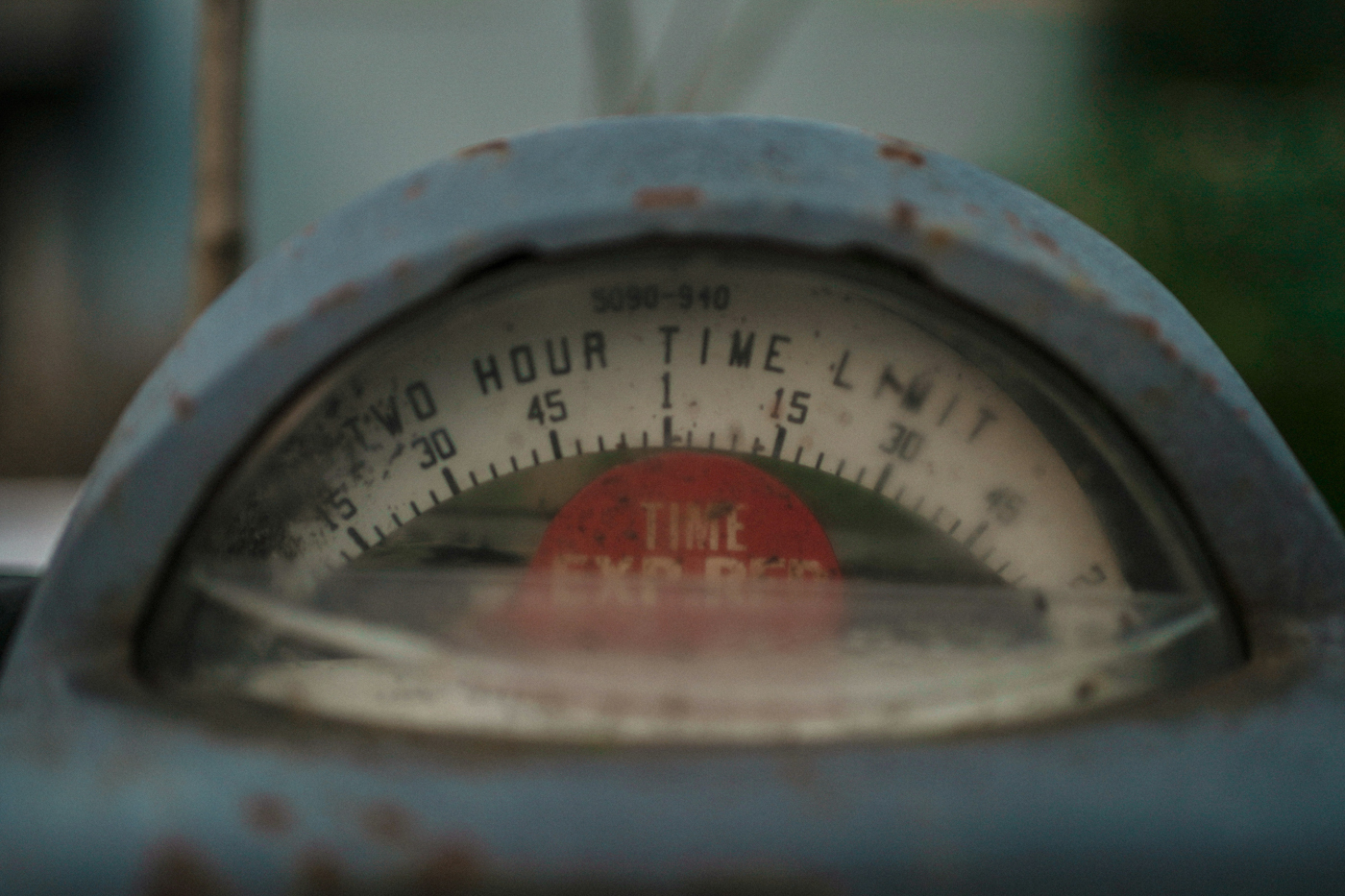
Brands swear that they will save you time, give you time, put time back in your pocket, like time is marbles or sand brains or coins. But are we really saving any time, and what are we doing with that time? Where does it go, and how do brands help us make better use of our time?
I have nine minutes before a meeting. I’m prepared, ready, willing, and perhaps, depending on how you define it, able. I have coffee, notes, a list of things I’ve accomplished during the week, and I’m ready. Problem is, I have nine minutes and nothing to fill that time with. AI has helped me save time in my work, but now I have this extra time, which isn’t enough to make breakfast or drive over to FogTown coffee for a cuppa joe and a breakfast sammich with sriracha mayo, good sausage, and the kind of morning that makes you briefly reconsider your entire routine. I don’t have time to watch a movie or a YouTube video, as my time is now down to six minutes.
There will be plenty of time post-meeting to do work, and there is work to be done; it’s just the interim period, four minutes with nothing to do because there’s not enough time to start anything. AI has helped me save so much time that I now have a brief moment in time where I have a surplus of time but not enough time to do anything meaningful, so I guess I didn’t save enough time this time. Two minutes.
Meeting.
But I’m still wondering about time-saving. What are we saving all this time for? Seriously, can I get a jar to sit on my desk that I can drop time into and pull out when I need it? Time to read, or pontificate on an otherworldly cheeseburger. I mean, everything we get sold promises to be a time saver. No more wasting time. Brands have built empires on the idea of time-saving. But are we saving time? And if so, how come most of us are putting that time directly back into working?
Brands swear that they will save you time, give you time, put time back in your pocket, like time is marbles or sand brains or coins. But are we really saving any time, and what are we doing with that time? Where does it go, and how do brands help us make better use of our time, not just promise to save us time when we all know time cannot be saved, nor can it be hoarded like acorns in a tree. Once you do something that is now taking up your time, does using a specific brand actually stop time so you can use that time for more appealing tasks?
Does a brand telling us it will save time actually lie to us?
The Time Didn’t Go Anywhere. It’s Right There. Waiting.
Here’s the thing about saved time. It doesn’t disappear into some kind of cosmic savings account where it earns interest and pays out when you need an extra hour on a Tuesday. Time isn’t a 401k. You can’t defer it, roll it over, or cash it out when the market looks good. When a brand saves you time, that time goes exactly one place: somewhere else in your day, looking for trouble. Like a gang member from the Jets or the Sharks. They have time to rumble in toe shoes, with jazz hands. That’s time well spent.
Wouldn’t it be something if we had time purses? Little cosmic clip-top purses we all carried around, dropping our saved minutes in throughout the day. Then, when you’re running late, or sitting across from a friend over a sandwich, or just enjoying a quiet moment with your own reflection, you could reach in, pull out a dollop of time, and apply it directly to your circumstances. We don’t have that. We have a calendar app and the vague sense that we should be further along by now.
Think about what actually happens. AI writes your first draft in four minutes instead of forty. Congratulations. You now have thirty-six minutes. What do you do with thirty-six minutes? If you’re like most people, you use them to do more work, answer more emails, take a meeting you’d previously had a reasonable excuse to decline, or stare at your screen, wondering why you feel busy when you just saved 36 minutes. The time didn’t get saved. It got reassigned. There’s a difference, and brands have been remarkably quiet about it.
This isn’t new, by the way. The dishwasher was supposed to liberate households from the tyranny of hand washing dishes. And it did. It also quietly introduced the expectation that the kitchen would now be cleaner more often, dinner parties could be larger, and somehow the time saved by not scrubbing a pot was immediately absorbed by everything the dishwasher made newly possible. Same with the washing machine, the microwave, the calendar app, and the project management software that was going to make everything more efficient, but instead gave everyone a new place to have meetings about meetings.
Brands don’t save time. They relocate it. And they’ve been getting away with this for decades because we’re very busy people who don’t have time to notice.

Saving Time Since, Actually, Never
Brands have been selling time like they own it. Save time. Reclaim your day. Get back to what matters. It’s the oldest pitch in the book, and it works because we want it to be true so badly that we’ll pay almost anything to believe it for another quarter. There’s an entire economy built on the promise of time returned, and if you look closely at the fine print, which nobody does because who has time, you’ll notice the promise is always future tense. You will save time. Your mornings will be easier. You’ll finally have room to breathe.
They never say when.
Every generation gets its own version of the pitch. The microwave was going to save dinner. The laptop was going to save the office. The smartphone was apparently going to save everything, but instead it just moved the office into your pocket and followed you to the beach, the dinner table and the bathroom. AI is the current champion of the time-saving promise, and it’s genuinely impressive technology, but let’s be honest about what’s actually happening. We’re not saving time. We’re getting faster at filling it back up again. We’re efficiency machines running on a treadmill that keeps pace with however efficient we become.
The brands aren’t lying exactly. That’s what makes it so good. The time does move. Something does get faster. The pitch is technically defensible. It’s just that nobody mentions that the time you saved on that task is going directly into three new tasks that the saved time made possible. You didn’t get your afternoon back. You got a more ambitious to-do list.
And somehow, every time, we’re surprised. Like local news anchors who marvel when a new month starts, “Can you believe it’s June???” Yes, yes, I can because it happens every single freakin’ year.
Nobody Saved You Time. They Just Moved Your Furniture.
Here’s the question nobody in the time-saving business wants to answer: saved for what, exactly? Because if the answer is “to do more work,” we’ve built an entire industrial complex of efficiency tools that have successfully helped us become more productive at being busy. That’s not salvation. That’s a faster hamster wheel with better branding.
We don’t have a time-saving problem. We have a time-purpose problem. The time was always there. It didn’t need saving. What it needed was a reason, and nobody’s selling that because reasons are personal and personal doesn’t scale, and scaling is what built the empires we’re talking about.
Think about the last time you genuinely had time to yourself. Not time between things. Not time you were supposed to be doing something else. Actual time, with no agenda and no guilt attached. Can you remember it? Because most people can’t, and that’s not because they haven’t saved enough time. It’s because every tool designed to give them time back came with an implicit instruction manual that said, “Now do more.”
The furniture got moved around beautifully. The room looks different. But you’re still living in the same house, working the same hours, wondering why the kitchen always feels cluttered.

What Would You Do With a Free Tuesday?
Seriously. Think about it. Not a holiday Tuesday, when errands and obligations are dressed up as leisure. A real Tuesday. No meetings, no deliverables, no inbox quietly filling up like a bathtub with a slow leak. Just a Tuesday that belongs entirely to you. What would you do with it?
Most people, when asked this question, go blank. Not because they’re incapable of imagination, but because the question feels vaguely dangerous. Like admitting you’d like a free Tuesday is admitting you’re not committed enough, not hungry enough, not sufficiently devoted to the grind that everyone around you seems very publicly devoted to. We’ve spent so long optimizing our time that we’ve forgotten to have any opinions about what it’s actually for.
On the old Mickey Mouse Club, Tuesday was Anything Can Happen Day. Which, as a concept, is genuinely radical when you think about it. A whole day with no predetermined outcome. No agenda. No optimized workflow. Just Tuesday, wide open, ready for whatever showed up. We were fine with that once. We thought it sounded fun.
And here’s where it gets interesting. The brands selling you time savings have absolutely no interest in you having a free Tuesday. A free Tuesday is a problem for their business model. What they want is for you to save time on the thing they’re selling so you can spend that time on the next thing someone else is selling. The economy of time savings only works if the saved time is reinvested immediately. A person sitting quietly on a porch on a Tuesday afternoon, doing nothing in particular, eating a sandwich, maybe a good one with sriracha mayo and proper sausage, is not a growth market.
The time purse is a beautiful idea. The problem is nobody wants you to fill it. They want you to spend it before you even know you have it.
Busy Is a Choice. So Is the Sandwich.
We’ve made busyness a personality. Not just a condition, a full identity with its own aesthetic, its own vocabulary, its own LinkedIn posts about grinding and hustle and sleeping when you’re dead. Busy means important. Busy means wanted. Busy means you matter in a way that a person sitting on a porch on a Tuesday afternoon apparently does not.
But here’s the thing about busyness. It’s the perfect hiding place. If you’re busy enough, you never have to answer the question of what you’d actually do with your time if you had it. You never have to find out whether you’d like the answer. The saved time never accumulates because you won’t let it. Every efficiency tool, every AI assistant, every app promising to give you your mornings back becomes a shovel you use to dig a bigger pile of things to do. Not because you have to. Because the alternative is a Tuesday with nothing in it, and that is apparently terrifying.
This isn’t a productivity problem. It’s an identity problem. We’ve confused the schedule with the self for so long that clearing the schedule feels like losing something. The brands know this, by the way. They’ve always known it. Busy people are the best customers. They’ll buy anything that promises relief without requiring them to actually stop.
So the next time a brand tells you it’s going to save you time, ask yourself what you’re planning to do with it. Not what you’ll probably do with it. What you actually want to do with it. There’s a difference, and that difference is where your actual life is hiding.
The Takeaway
At ThoughtLab, we spend a lot of time thinking about what brands promise versus what brands deliver. Not because we enjoy being difficult, although we do, but because the gap between those two things is usually where the most interesting work lives. And the time-saving promise is one of the oldest, most successful, most quietly dishonest gaps in the business.
Nobody is going to give you your time back. Not the app, not the AI, not the project management software with the friendly interface and the aggressive onboarding email sequence. What they can do, what the good ones actually do, is help you spend your time on things that matter instead of things that merely accumulate. That’s a different promise. It’s a harder promise to make and a harder one to keep, but it’s the one worth making.
Because here’s the question we’d leave you with. Not what tool is going to save you time, but what would you do if you actually had some? What’s the thing you keep not doing because you’re waiting for a window that never quite opens? What’s your Tuesday?
The time purse is yours. It’s always been yours. The question was never how to fill it. The question is whether you’re brave enough to spend it on something that doesn’t show up on a quarterly review.
FogTown opens at six. The sriracha mayo isn’t going to eat itself.