What 37 garden gnomes taught me about the difference between being recognized and being understood.
Sometimes, as an actor, I have to stay in company housing. If I’m on the road, the theater I’m working with is contractually obligated to provide housing for me. I need a bed and access to a kitchen, and that’s about it. Just the basics. I don’t pay rent, and the housing should be close enough to the theater that I can get there by car or public transportation. This is simply part of the life of an actor. I’ve stayed in some wonderful company housing, and I’ve stayed in some terrifying company housing. I recently did a show in Port Townsend, Washington, and they housed me in the officers’ quarters at Fort Worden. It’s a state park now, and it’s where they filmed An Officer and a Gentleman. Lovely ocean views, a coffee shop, and deer all over the grounds. Really nice until it gets dark and you’re alone in an enormous house, hearing howling in the woods. Suddenly, all those stories about the place being haunted come back to you as you climb the dark stairs to bed, and every little sound seems amplified. I didn’t relish going home every night. But I survived, got used to it, and came to love waking up early, taking my coffee across the road, and watching people play pétanque on the park courts. You learn to adjust, adapt, and find things to love about your home away from home.
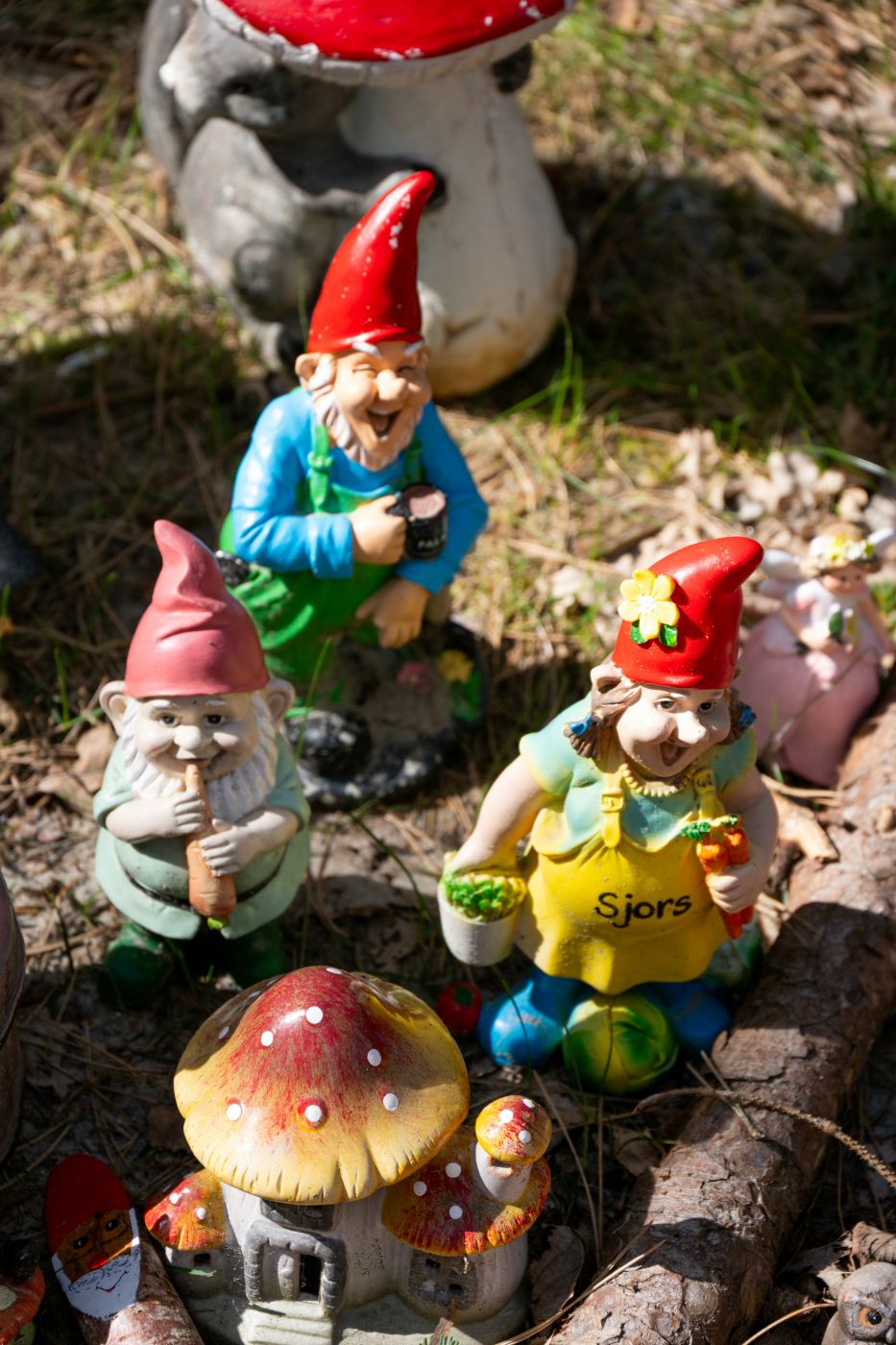
I recall doing a show on Cape Cod, and the housing I got was incredible. A small cottage right on the beach that I had all to myself. I arrived in the evening, company management let me in, and I settled in for the night. Since it was dark, I didn’t have much opportunity to check the place out. I didn’t even realize until the next morning that I was right on the beach. I was almost giddy as I made coffee and sat outside to watch the sunrise. When I turned from the beach toward the cottage, I saw something else I hadn’t noticed the night before. Gnomes. A lot of gnomes. A lot of brightly colored, oddly dressed, strangely posed garden gnomes. A pack, a herd, a cluster, a bouillabaisse of gnomes. Thirty-seven of them. I counted. Twice, because the first time I was fairly sure one of them had moved.
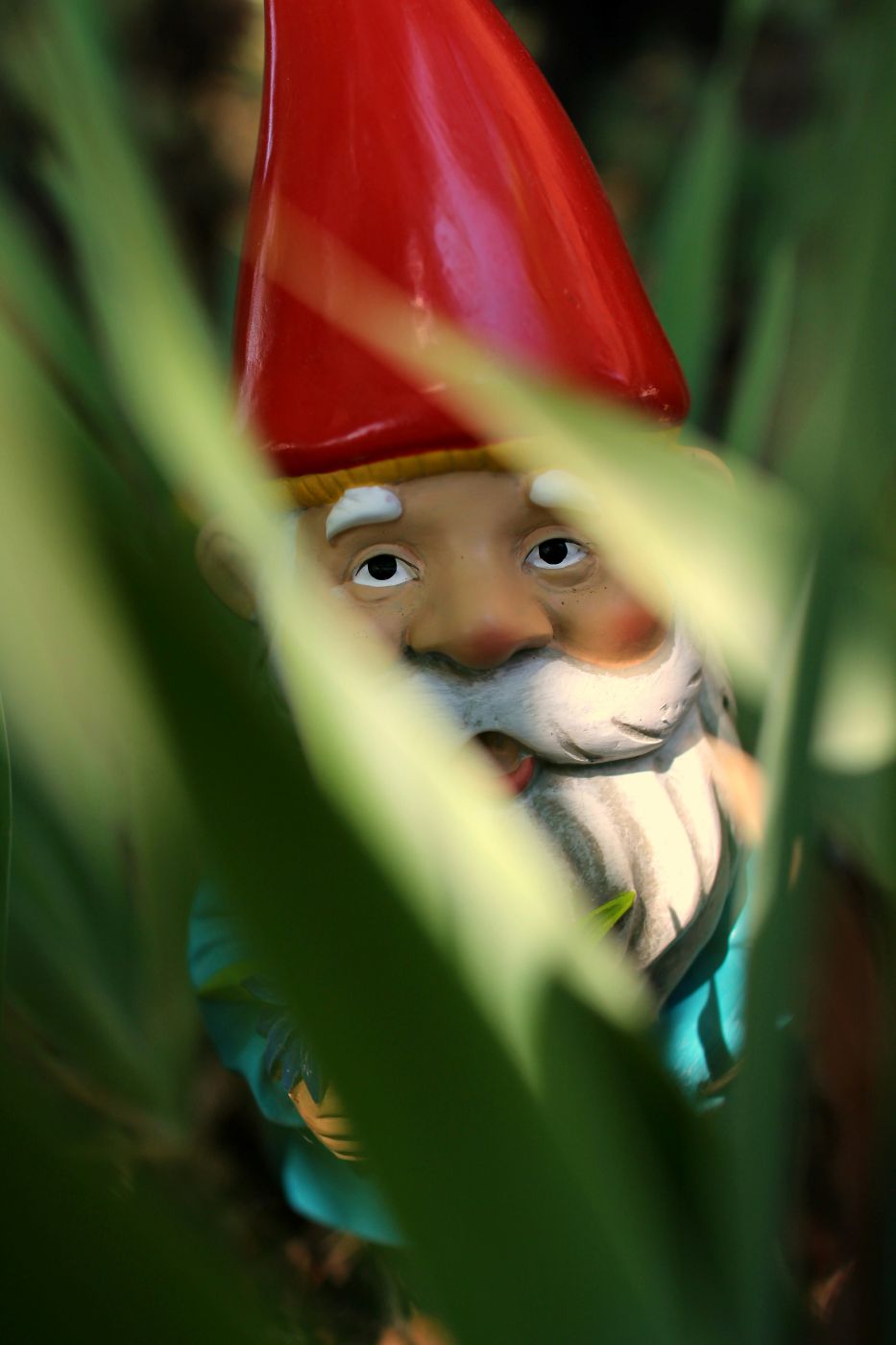
I’d never had any interaction with these beasts before. I had no garden, so I had no need for garden gnomes, and yet I knew exactly what they were. I turned from the tides, looked at the cottage, and said, out loud to no one, “That’s a lotta gnomes.” No confusion, no hmmm, what have we here? No need to examine one closely or consult The Sibley Guide to Ceramic Lawn Creatures. I simply recognized them. Gnomes.
How does that happen? How did these colorful, somewhat creepy, lederhosen-bedecked creatures become part of my lexicon? I’d never seen a television commercial for them. I hadn’t read an article about them in SkyMiles Magazine. Nobody had ever sat me down and explained the distinguishing characteristics of the North American Garden Gnome. Yet there they were, assembled on the lawn like some tiny, overdressed, liquor-swilling homeowners’ association, and I knew precisely what I was looking at.
What I didn’t know, and what I’ve been wondering about ever since, is why they were there.
Everybody Knows the Little Dudes
Think about what the garden gnome has accomplished. Here is a creature of questionable origin, questionable taste, and questionable employment status who has managed to establish one of the most recognizable identities in the world. He has no advertising budget that I’m aware of, no marketing department, and certainly no social media manager posting photographs of him standing thoughtfully beside a mushroom with the caption, “Another great day doing what I love.” Yet there he is, instantly identifiable to people who have never purchased one, never wanted one, and may actively dislike the little bastards.
And he has held onto that identity with astonishing consistency. The pointy hat, the beard, the cheerful expression that somehow manages to be both welcoming and vaguely threatening. There are variations, of course. Some carry fishing poles, others push wheelbarrows, and I’ve seen a few whose posture suggests they’ve been drinking steadily since the Carter administration. But the essential ingredients remain. You can dress him differently, give him a new occupation, or put him in a compromising position with a flamingo, and he’s still unmistakably a garden gnome. Even if he escaped, hitched a ride to the county fair, and spent the afternoon grousing about not being able to ride anything because he wasn’t this tall, people passing by would still point and say, “Look, a garden gnome.” He doesn’t need to carry the garden around with him. He could be standing at the buffet in a Golden Corral, trying to decide between the macaroni and cheese and the meatloaf, and he’d still be instantly recognizable. Meatloaf, in case you were wondering.
Now consider how much time and money companies spend trying to achieve that kind of recognition. They hire agencies, commission research, develop brand guidelines, and debate whether a particular shade of blue communicates trust or merely suggests a mild intestinal disorder. They worry about being memorable, distinctive, and immediately identifiable. Meanwhile, a small ceramic man who hasn’t changed his clothes since the nineteenth century has managed all three without attending a single strategy meeting.
There’s something worth noticing here. The gnome doesn’t have to tell me he’s a garden gnome. I don’t need to examine his credentials or read his origin story. His appearance does the work before I’ve had time to think about it.
But notice what his appearance actually told me that morning on Cape Cod. It told me what he was. It told me absolutely nothing about why thirty-seven of him were standing on that lawn. Recognition answers the first question beautifully and the second one not at all. And the second question turns out to be the one that matters.
Everybody Knows You. So What?
For all the garden gnome’s success at being recognizable, there’s one little problem. I don’t want one. I know what he is, I can identify him from across the street, and I might even enjoy his company for a few minutes, provided he doesn’t start talking to me. Honestly, every time I see one, I’m terrified he’ll know my name. But I have absolutely no desire to bring one home.
Somebody did, though. Somebody wanted thirty-seven. Somebody drove to a garden center, or several garden centers, or possibly a series of increasingly specialized estate sales, and came home with gnome after gnome after gnome. That person looked at the same pointy hat I was looking at and saw something I didn’t. Something worth paying for, hauling home, arranging, and keeping. Recognition got both of us to the same place, standing in front of a gnome. What happened next had nothing to do with recognition.
That’s an important distinction for brands. A company can spend enormous amounts of money making sure people know its name, recognize its logo, and remember its advertising. Wonderful. But recognition only tells people what you are. It doesn’t tell anyone why they should care, and, more dangerously, it doesn’t tell you why the people who do care actually care. You can be known by millions and still have no idea what the handful of people who love you are seeing.
Marketing sometimes treats awareness as the finish line. Get enough impressions, reach enough people, make the logo impossible to miss, and surely something wonderful will happen. Maybe it will. But awareness is information traveling in one direction. It’s the brand announcing itself. It doesn’t bring anything back. I can tell you what a garden gnome looks like in exhaustive detail, and I still couldn’t tell you the first thing about why someone would want thirty-seven of them.
The gnome has clearly found his people. They collect him, name him, and arrange him in elaborate garden communities with their own municipal governments. They invite him into their gardens and apparently don’t mind that he spends his entire life watching them through the shrubbery. For those people, he’s more than recognizable. He’s wanted. And the reason he’s wanted lives with them, not with him.
You don’t need everyone to love you. You need to know who does, and why. The rest can walk past your garden, shake their heads at the little man in the red hat, and get on with their lives.
The Hat Isn’t the Brand
I’ll admit I’ve spent more time than is healthy wondering about that cottage. I’ve developed theories. Maybe the owner inherited them from a grandmother who loved them, and getting rid of them felt like getting rid of her. Maybe it started as a joke, one gnome as a gag gift, and the joke got wildly out of hand. Maybe there was a gnome-related court order. Maybe the gnomes simply arrived one night and refused to leave.
All reasonable theories. All guesses. Because here’s the thing. I never asked.
I was living in that cottage. Company management had a phone number for the owner. The answer was right there, probably one short conversation away, and I spent the entire run of the show admiring the hats and making things up.
Why didn’t I ask? Partly it felt a little rude, like asking someone why they named their child Gerald. Partly I was busy. And partly, if I’m honest, I was afraid of the answer. What if the owner looked me in the eye and said, with complete sincerity, “They’re my family”? I still had six weeks left in that cottage. Guessing felt safer. Guessing always feels safer.
Companies do this all the time. They look at their own brand from the outside, the way I looked at those gnomes, and they guess. They guess why customers choose them. They guess what makes them different. They guess what people feel when they encounter the brand, and then they build an identity around those guesses. A memorable logo, distinctive colors, a clever voice, all designed to express a reason nobody actually went and confirmed. Sometimes the guesses are right. Often they’re close enough to be dangerous. And occasionally a company spends a fortune perfecting the hat when the people who love it never cared about the hat at all.
That’s why, at ThoughtLab, we work Depth-Before-Design. Before we talk about what a brand should look like, we want to understand what makes it matter to the people it serves, what it believes, and what it offers that people genuinely value. And we don’t get there by staring at the lawn. We get there by asking. We talk to the people who chose the brand, the people who stayed, and the people who walked away. We listen for the reasons that never show up in a brand guideline: the grandmother, the joke that got out of hand, the thing customers say when they stop being polite. Only then do we start figuring out how to express those reasons through design, language, and experience. Otherwise, we’re just making a prettier garden gnome and hoping somebody notices.
If we brought the gnome himself into ThoughtLab for a little brand work, and I sincerely hope someone would check him for spiders first, we wouldn’t start by discussing his hat. We might admire it, perhaps ask where he bought it, but then we’d go find the people who put him in their gardens and ask them why. Their answers would tell us more about the gnome than the gnome could ever tell us about himself.
That’s the difference between creating a brand and simply dressing one up. A pointy red hat might help people spot you from across the lawn, but it won’t tell you why anyone would want you standing outside their kitchen window. Peering in. Judging. Okay, I’m getting freaked out again. Moving on.
The Takeaway
I still don’t know who put all those gnomes outside that cottage on Cape Cod. I recognized them immediately, which is no small accomplishment for a collection of creatures whose greatest contribution to society appears to be standing around looking vaguely employed, and definitely stoned. But I left that job knowing exactly as much about why they were there as I did the morning I first saw them. The meaning was inside the cottage the whole time. I just never knocked.
That’s the part I’d do differently, and it’s the part we try never to skip at ThoughtLab. Recognition tells you what something is. Asking tells you why it matters. Make your brand distinctive, by all means. Give it a recognizable voice, a personality, and an identity people can spot from across the proverbial garden. But first, go find the people who already love it and ask them why. Then build something that expresses what they told you, clearly and consistently, so the next person who walks past your lawn sees what they see.
Otherwise, you may achieve the garden gnome’s level of visibility without ever learning why anyone took him home.
And if you do find yourself at Golden Corral standing behind a garden gnome, help him reach the meatloaf. Then ask him who sent him. He probably knows.