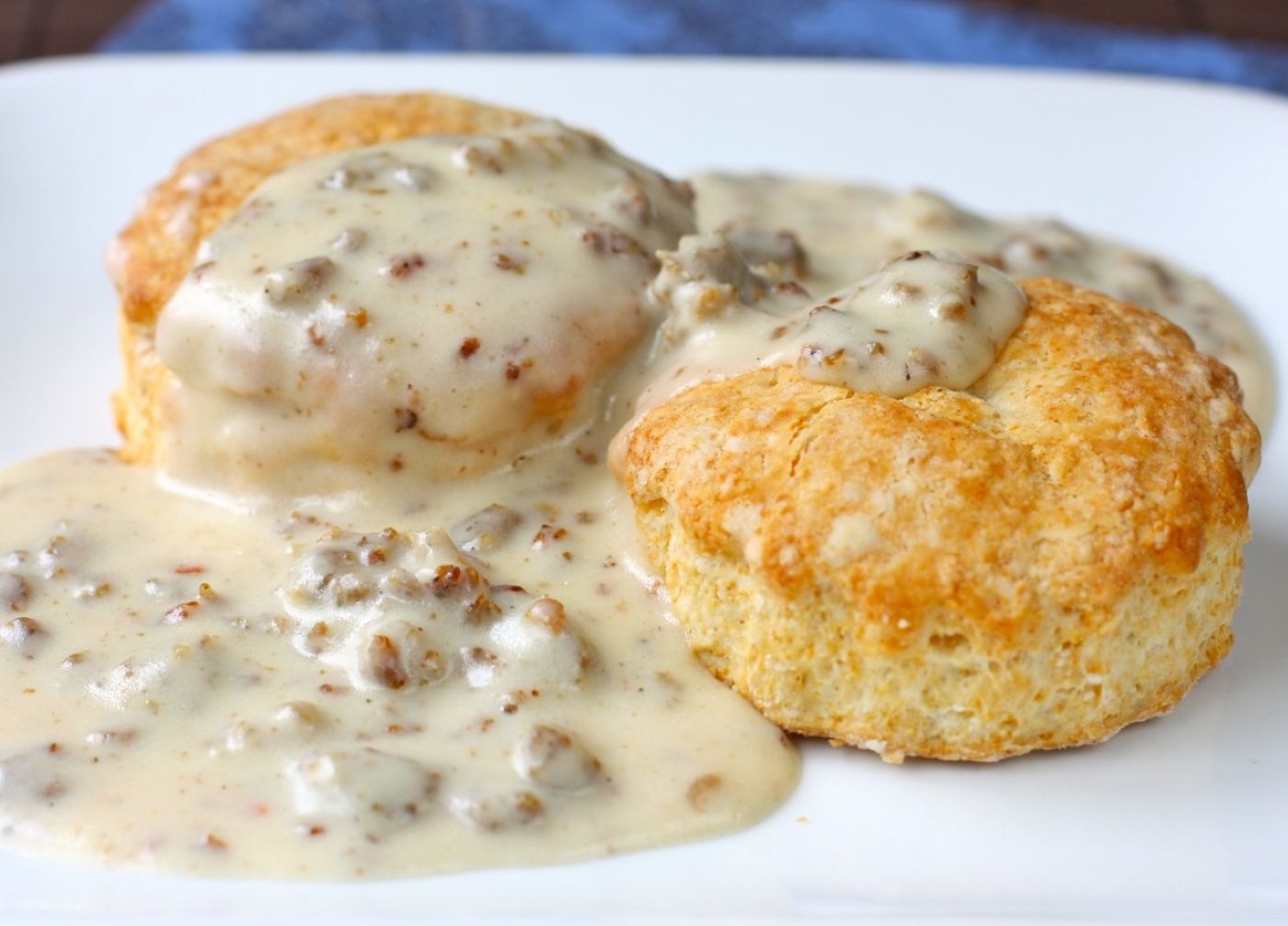
The owners told me they use their great-great-grandmother’s original recipe. Simple: pork fat, pan drippings, flour, milk, salt, and pepper. Over the years, someone in the family added small chunks of pork sausage. There was apparently a great debate about this addition because great-great-grandma, well, she couldn’t afford the pork, just the fat.
I love biscuits and gravy. Yes, that’s how this blog is starting, with biscuits and gravy. And I’m talking sausage gravy, that savory white delight that covers good, fluffy biscuits, the eggs, and anything else nearby. If you’ve ever spent any time in the Southern United States, you’ve encountered biscuits and gravy, and you’re thankful.
I was recently in San Francisco, and some folks I was meeting took me to breakfast. One of them knew about my love for biscuits and gravy, so they brought me to this place that had, as they assured me, the best biscuits and gravy in town.
Needless to say, I was thrilled. I didn’t even look at the menu. I ordered the biscuits and gravy with scrambled eggs. The folks I was with were excited, the way you get when you buy someone a really good present and cannot wait for them to open it. I was excited too, until one of them said, “I hear this chef’s take on the classic biscuits and gravy is mind-blowing.”
Panic set in. Mind-blowing biscuits and gravy? This is a simple dish, a poor farmer’s dish, a send-the-boys-to-the-sawmill loaded-with-calories-and-carbs-to-get-them-through-a-morning-of-hard-labor kind of dish. This is a dish that needs no… And just as that thought was forming, the plate was set down in front of me.
Everyone at the table watched me, waiting for my reaction. I looked at the plate, smiled, and said, “Oh boy, this looks good.” Everyone laughed and said things like, “We knew you’d love these,” and “They got great reviews in the Sunday food section of the paper.” I just smiled and nodded.
Here’s the thing: biscuits and gravy is not a high-end meal. Its history is rooted in necessity. Early American biscuits were nothing like the fluffy things we eat today. Some were beaten biscuits, dense little things that could require someone to pound the dough for the better part of an hour because commercial baking powder wasn’t yet commonplace. The gravy was equally practical: pork fat or pan drippings, flour, and milk. Nothing fancy, just hearty, calorie-rich food for people who were going to spend their day doing actual physical labor.
And a plate of biscuits and gravy is messy. There are the biscuits, often some eggs, and then gravy all over everything, soaking in, dripping off the sides, running wherever gravy decides to run. It is a glorious mess, and that’s what I like.
Before me sat a plate of what the menu called a modern take on the classic biscuits-and-gravy tradition. What I saw were two small, round, very tall biscuits with wild seeds and dried fruit in them. Circling each biscuit were drops of “gravy,” a very white, very liquidy sauce of some sort that the chef seemed determined not to allow to touch the biscuits.
The gravy contained no pork. It was flavored with fennel, sage, and a hint of chili. On top of each drop of gravy was a tiny mint leaf. The eggs had their own cup. They sat yellow and bright off to the side, judging the biscuits and mocking the gravy. Everyone watched as I took a bite, and I made yummy sounds and spent a few words praising the presentation and, oh, the flavor, like no other biscuits and gravy I had ever had. And that, my friends, was not a lie.
I finished my trip, returned to my little town the next morning, and immediately drove to the gas station on C Street, where I had a paper plate of biscuits and gravy and two scrambled eggs. Yes, from a gas station owned by the third generation of a family with a little kitchen grill in the back that makes the most incredible biscuits and gravy.
The owners told me they use their great-great-grandmother’s original recipe. Simple: pork fat, pan drippings, flour, milk, salt, and pepper. Over the years, someone in the family added small chunks of pork sausage. There was apparently a great debate about this addition because great-great-grandma, well, she couldn’t afford the pork, just the fat. So the family had to mull it over before accepting this new addition.
And that’s what they serve to this day. A paper plate overflowing with fluffy biscuits and a wave of savory gravy, with a cup of strong coffee and a counter to lean on as you eat the whole thing with a plastic spoon. San Francisco biscuits and gravy: $26.00. Gas station biscuits and gravy: $5.87. And that about says it all.
The San Francisco version was upscale, modern, and beautifully presented. The gas station version was traditional, messy, and served up on a paper plate. I’m not knocking the fancy version. That chef certainly did something, and the something he did, in my humble opinion, was forget the history of the dish. And that history is important.
Biscuits and gravy came from a need for simple, inexpensive food that could give working people a full belly and enough fuel to get through a morning of hard physical labor and land them ready for lunch. Even the dish itself evolved as circumstances changed. Biscuits got lighter, recipes changed, and sausage found its way into the gravy, but the people making those changes understood what the dish was supposed to be.
Sitting in that place in San Francisco, looking at the delicate plating of this traditionally messy meal, I couldn’t help thinking that the original consumers of biscuits and gravy might have looked at it and said, “What in God’s name is this?” Because it ain’t biscuits and gravy. It’s a vague simulacrum of a dish that someone once mentioned and the chef recreated. He knew the ingredients, the name, and what it looked like, but he seemed to have forgotten why it existed.
And the history is where all the flavor lives.
Know What You’re Changing
Brands have history too, although we don’t always treat them that way. We tend to meet them in the present and judge what we see. The logo feels old. The website needs work. The language is strange. Something about the company doesn’t fit neatly alongside everyone else in the category, and before long, someone is suggesting it needs to be modernized. Maybe it does. But before you change something, it helps to know why it’s there.
Every brand arrived at this moment for a reason. People made decisions in response to circumstances that may no longer exist. A founder chose a name for a reason. A company developed a particular way of talking to its customers. A product evolved around a problem someone was trying to solve. Some of those decisions were brilliant, others were practical, and a few were probably made because it was four-thirty on a Friday and everyone wanted to go home. History doesn’t automatically make a decision good, but it does give that decision context. Without that context, it’s easy to mistake unfamiliar for wrong.
That’s essentially what bothered me about my $26 biscuits and gravy. The chef knew what the dish contained, but apparently never stopped to ask why those things were together in the first place. Once you remove the reason something exists, you’re free to make it prettier, more sophisticated, more contemporary, or more impressive. You’re also free to remove the thing that gave it meaning.
Brands run exactly the same risk. You can polish away the oddness, update what looks old, and make everything fit comfortably within the expectations of the category. When you’re finished, you may have created something beautiful. You just need to make sure it’s still biscuits and gravy.
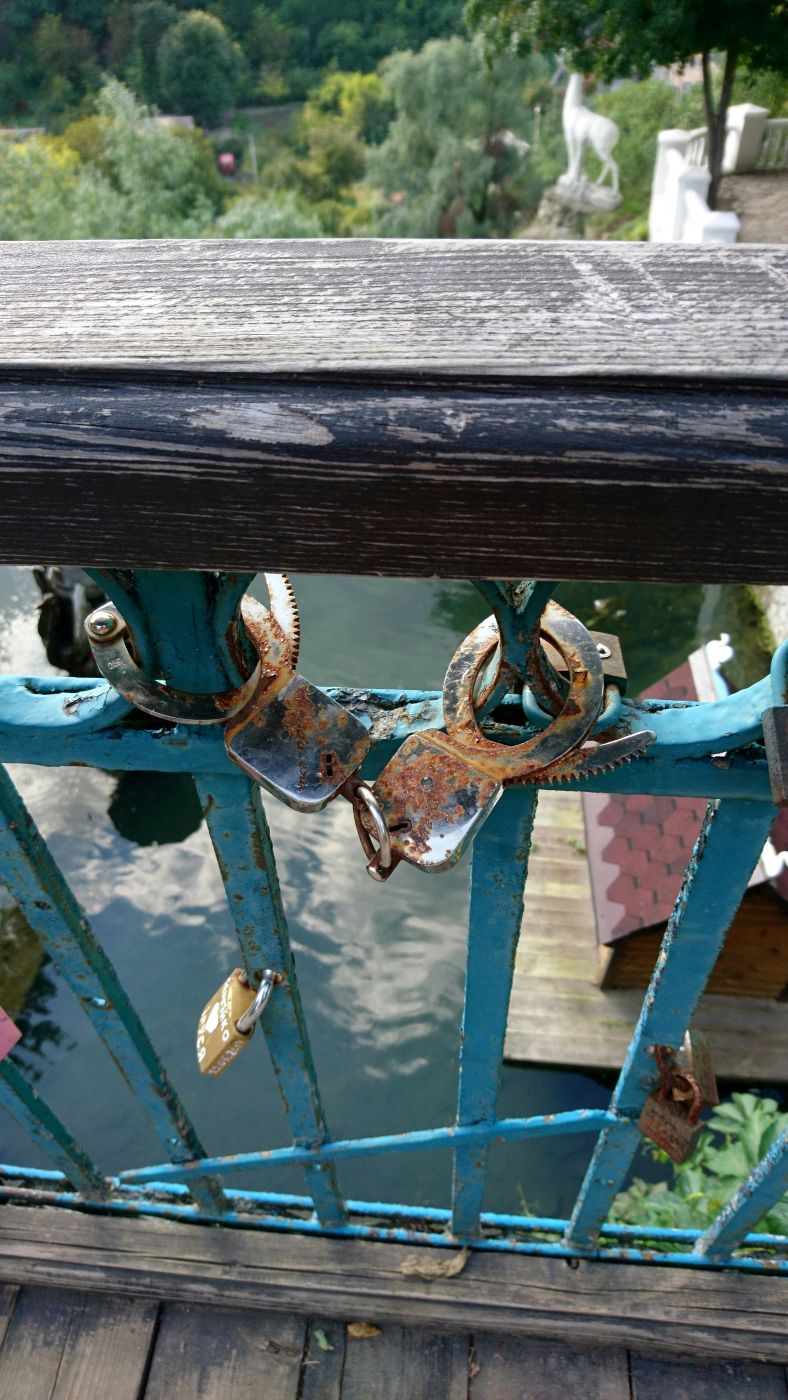
History Isn’t a Set of Handcuffs
There’s a danger in talking about history this way because it can start to sound like an argument for leaving everything alone: if something has always been done a certain way, keep doing it. Protect the recipe, preserve the past, and for God’s sake, nobody touch anything. Now we’ve gone from me praising gas station biscuits and gravy to me sitting on my porch yelling at the neighbor kids that things used to be fine the way they were. That’s not the point. In fact, the gas station biscuits and gravy prove almost the opposite.
Great-great-grandma didn’t put chunks of sausage in her gravy; she couldn’t afford the meat. Generations later, the family could, and somebody suggested adding it. They debated the change because they understood the recipe and where it came from. Eventually, sausage became part of it. They changed the dish without losing what the dish was.
Brands should be able to do the same thing.
Some things survive for years because they matter. Others survive because nobody remembers why they started doing them in the first place. History helps you tell the difference. It lets you look at something that has been part of a company for decades and ask whether it represents something fundamental or whether it was simply the best solution available at the time.
That distinction matters because change isn’t the enemy of history. Change without understanding is.
If you know why something exists, you can decide whether that reason still matters. You can keep what deserves to stay, change what no longer serves you, and allow the brand to become something new without pretending it was born yesterday. You can even add the sausage.
The Takeaway
At ThoughtLab, we talk a lot about Depth-Before-Design & Development. It’s a simple idea, but I think it’s one of the most important things we believe. Before we decide what a brand should look like, we need to understand what it is. And you cannot fully understand what something is without knowing something about how it got there. That means going backward before rushing forward.
When we start working with a company, we’re not beginning with a blank page, even if the client thinks that’s what they want. There’s already something there. Years of decisions, successes, mistakes, compromises, personalities, customers, employees, products, failures, peculiarities, and stories have shaped that company long before ThoughtLab showed up. All of it has left fingerprints. That history doesn’t dictate the design, but it should inform it.
By inform it, I don’t mean we dig through the archives, find the founder’s favorite color, and suddenly everything is blue. History gives us context. It helps us understand why people trusted the company in the first place, what it has consistently valued even when it didn’t have language for it, and which parts of its identity have earned the right to come forward with it. Design can then interpret those things rather than simply decorate them. The history doesn’t hand us the answer. It helps us ask better questions before we start drawing one.
Depth-Before-Design & Development means taking the time to understand those fingerprints before we start wiping them away. We want to know why the company exists beyond whatever sentence currently appears on the About page. We want to understand how it sees itself, how its customers see it, and where those two versions agree or collide. We want to know which parts of the brand were intentional and which simply evolved because people kept doing something that worked.
Somewhere in all of that is the truth of the brand. Not necessarily the brand it was twenty years ago, and certainly not a demand that it stay there, but something more fundamental. People chose it, stayed with it, worked for it, talked about it, and cared whether it succeeded, and they did it for reasons. If you skip the depth and jump directly to design, you may never discover those reasons. Worse, you may design them right out of the company. That’s why history matters.
The family at the gas station knew great-great-grandma’s recipe, but they also knew why she made it that way. Knowing both allowed them to add the sausage. They weren’t protecting every ingredient as though changing one would somehow insult their ancestors. They understood what they had inherited well enough to know what could evolve without losing the thing itself.
That’s what depth gives a brand. It doesn’t tell you that everything old is sacred. It gives you enough understanding to know what isn’t.
Design should absolutely move a company forward. It should challenge assumptions, discard what no longer belongs, and sometimes make changes that feel uncomfortable. But those decisions should come after understanding, not instead of it. Otherwise, you can end up with something contemporary, polished, beautifully presented, and completely disconnected from the reason anyone cared about the brand in the first place. You can put tiny mint leaves on the gravy. Just make damn sure you know why there was gravy in the first place.