Coming back to reality. Interesting. I wasn’t running from reality. My reality was going to be the same on that train or off. There are some things in my reality that even a change of scenery cannot change. I would still be me; I would still have the same fears, the same questions, the same doubts, etc. My reality would actually just be a change of zip code. But, if my plan had come to fruition, I would never have a different zip code. I would be in a shack on the beach, free from hands-on my time.
Hang on, sports fans, this is going to be some bad craziness.
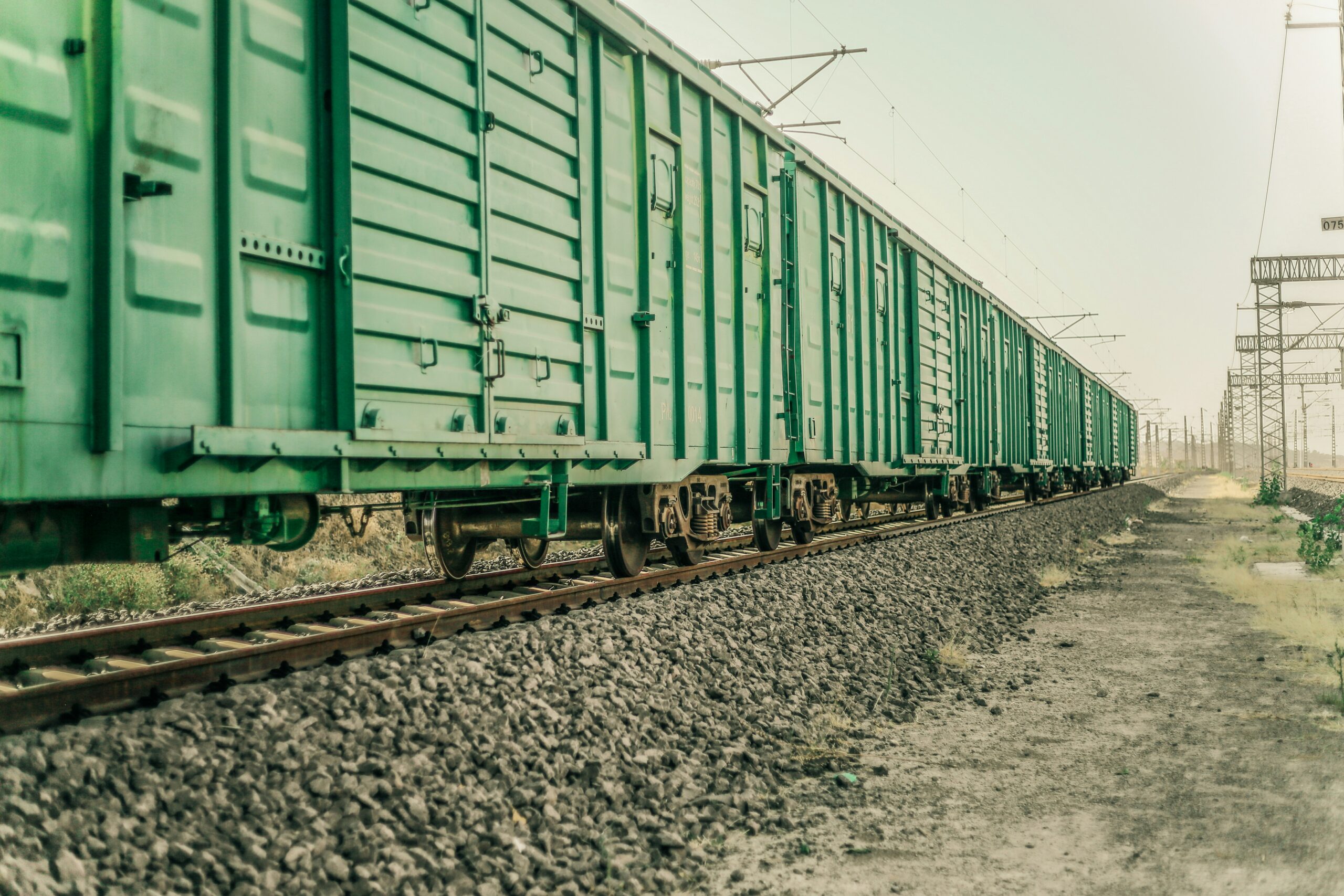
The sun peeked up over the horizon. I had a cup of coffee in my hand, a Brandeis sweatshirt to keep me warm in the morning chill, and my eyes were locked on a point far down the tracks. At my feet was my brown canvas Filson duffle bag. Today, I had told myself when I woke early and mechanically dressed, packed, and then got in the car. Coffee at Fogtown and then off to a small plot of land that is generously called a park that butts up against the train tracks. The pearl grey morning light as the sun shook off sleep and punched in for the day made me feel like anything was possible, and I needed that anything today. I needed every sign, symbol, message from the universe today, all at once and in giant portions. I needed the Gods to unite, the winds to shift, and every single bit of universal support, I needed to slip it into my pocket with my last stick of gum and my lucky Kennedy half-dollar. Today, after years of dreaming it, thinking about it, half heartedly planning for it, I decided I was gonna go ride the blinds and just leave it all behind.
This isn’t an opening to a short story or a blues song; this is reality. I was standing next to the tracks, trying to look as unsuspecting as possible so as not to draw the attention of the conductor. My plan was to throw my duffle into an open car, then pull myself in and let the rails dictate where I went and what I became. Leave this morning and go ride the blinds.
The train came into sight and began to slow down as it did on the turn coming into town. I judged the distance and speed and waited for the open box car to come closer. I looked around, and no one was near me. I did a quick scan of the train and saw no conductors or engineers looking at me or paying me any mind at all. I grabbed my Filson, started moving along with the train, saw the wide open box car, grabbed the railing with my left hand, heaved the bag with my right, released the bag, watched it bounce on the dirty wood floor of the car, and then I pulled myself into the car as well. I collapsed on the floor, my head resting on my bag, and I smiled. I was in, I was on the train, I was traveling, and I had no idea where I was traveling to. I had no idea what was around the next bend, but I did know I felt free and excited. All of it, the job, the economy, the pressures of writing, meetings, answers, ideas, all of that just drifted away, and I was no one, with nobody, and I was on a train going somewhere to start again. I had finally done it. It was going to be a good day.
Then Sequim. The next town over. The train slowed, stopped, and after a moment or two, a police officer peeked his head in the car, looked at me, and said, “Going somewhere?” This wasn’t in my plan, which I have to admit wasn’t much of a plan. I had no idea where this train was headed; hell, I didn’t even know it stopped in the town next to mine. I was unprepared because I was running away. I had some cash, my credit cards, and some clothes. That’s it. I figured it worked for folks during the depression; it worked in all the films I’ve seen; why wouldn’t it work for me?
“You hungry?” the cop asked as he led me to his car. He opened the passenger side door; he didn’t cuff me and throw me in back. I said I could eat, and he drove us to his favorite diner.
The waitress poured coffee. “Thank you, Marybeth,” the cop said, and we sipped our coffee in silence for a moment. I asked if he was going to arrest me; he just smiled and shook his head. Silence, then he asked the question: “You alright? You in trouble, danger, you sick? What’s making you run away at your age? Couldn’t you just go on vacation?” “Sure,” I said, “but when you go on vacation, eventually you have to come back.” He nodded; he got it. “That’s the kicker, isn’t it?” he said, “you have to come back; vacation life can’t go on forever, eventually, you’ve got to come back to reality.” “Guess so,” I admitted.
The officer and I had breakfast; we talked about work and life, and then he gave me a ride back to my place. Wished me well, told me to stay off trains for a while, and that was it. My great escape, capped with a mushroom and cheese omelet, was now over.
Escape
Coming back to reality. Interesting. I wasn’t running from reality. My reality was going to be the same on that train or off. There are some things in my reality that even a change of scenery cannot change. I would still be me; I would still have the same fears, the same questions, the same doubts, etc. My reality would actually just be a change of zip code. But, if my plan had come to fruition, I would never have a different zip code. I would be in a shack on the beach, free from hands-on my time. Free from headlines, deadlines, and phone lines. I would be at home with the sea, the sand, and all creatures therein. My escape would be complete, and I would be unreachable by phone, text, or hyperlink. I would have escaped.
But from what and to what? What is it that I need to escape from that a vacation wasn’t enough for me? That’s a good question and one that I unpacked. I liked my job; I think ThoughtLab is innovative, earnest, human, and, at times, deeply silly. I feel challenged, and I honestly learn something every single day. And the rest of my life is the rest of my life as it has been and will be now and forever, amen.
So, what is it? What is it that I needed a change from so badly that I was willing to hop a train and vanish down the tracks? Tell no one, leave no trail, and just vanish. Be a Sixty Minutes episode. Tonight’s story concerns a mildly sane copywriter who hops a train and is never heard from again. That is, until …
So, not dodging reality, not running from my life or the law or a hateful ex with a lot of high-grade weapons in her shoe closet. So, what was I running from? What did I need to change? And there it was: my escape was not for a change; my escape was from change. I was feeling overwhelmed by change. Seemingly constant, never-ending change. That’s why I had stood by the tracks, crack of dawn, coffee and Filson in hand, awaiting a slow-moving freight train; I was running from change.
Change
Fact of the matter is, I just went on a vacation. I took a cruise to Alaska, and I loved it. But when I got back, I discovered things had changed. If you were thinking I was upset because everything was the same, that’d be a good guess; most midlife crises happen when people feel stuck and unable to change their worlds. So, they buy a schmancy car, get a young girlfriend, or hop a train to nowhere. This, however, was not a midlife crisis, and I have no love for expensive cars, and as for young girlfriends, I have neither the looks nor the bank account to secure me one of those. So, the sameness of things wasn’t upsetting to me at all. I like routine, and having my personal routines is a great source of comfort for me, so no change is fine. What was troubling me was everything changes and changes and changes and changes and changes.
Constant change, especially in technology, is a given. Someone invents a thing that does some stuff, and it’s new, inventive, mind-blowing, and two days later someone comes out with a pocket version or a hyper version, and now we have this to deal with. I feel like someone just said AI, and now it runs our lives. Now, everything has an AI component. AI will write your term paper; AI will organize all your client meeting notes. How many licks does it take to gte to the center of a Tootsie Pop? Ask AI. And I did, by the way. I asked Claude, and the answer was three. At least that hasn’t changed.
But everything else has. Look, we’ve discussed this before; I’m not a Luddite. I think progress and technology are wonderful and have given us some pretty great things: new medicine, scientific accomplishments, technological miracles, chocolate and peanut butter together forever. Progress is good. But sometimes, it has me feeling like the Jack Russel who lives next door and starts his morning chasing seagulls until he literally lies down in the sand and cannot move any longer. I feel tired into my bones with all the changes, and thus, I stood trackside and decided to take change into my own hands.
But when the officer dropped me off and I sat in front of the screen, I realized that if I’m feeling storm-tossed by the change that I experience in my daily life, what does it feel like to be a brand in this world of change?
Too Much of a Good Thing
It turns out I wasn’t trying to escape change at all. I was trying to escape the pace of it. There’s a difference.
Change itself has always been part of life. People have always changed jobs, moved to different cities, fallen in and out of love, invented new things, and watched old ways of doing things disappear. We tend to romanticize the past as though our grandparents lived in some tranquil world where nothing much happened, but history tells a different story. Wars, industrial revolutions, economic upheaval, the automobile, television, the internet, the fish stick. Humanity has always been reinventing itself. Change isn’t the problem. It never has been.
The problem, at least for me, is that change no longer seems to arrive politely. It doesn’t knock on the front door, clutching a hostess gift, and wait to be invited in. It comes crashing through every window in the house at once. Before you’ve figured out one new technology, another one arrives promising to replace it. Before you’ve adjusted to one way of working, another expert is explaining why you’ve been doing it wrong all along. It sometimes feels like the world has confused acceleration with progress and has no intention of slowing down long enough for the rest of us to catch up.
None of this is an argument against progress. You know me better than that by now. I’m endlessly fascinated by what people can invent. I think AI is remarkable. I love scientific breakthroughs. I enjoy watching smart people solve problems that seemed impossible a decade ago. I also enjoy chocolate and peanut butter together, and if someone invents a better version of that, I’ll happily volunteer for the taste test. Progress has given us extraordinary things, and I wouldn’t trade most of them for the world. But even good things can become overwhelming when they never stop coming.
That’s what I was standing beside the train tracks trying to outrun. Not technology. Not my job. Not my life. Just the relentless feeling that the ground keeps shifting beneath my feet before I’ve had a chance to find my balance. I wasn’t longing for a different century. I was longing for a pause.
And that’s when it occurred to me that if one reasonably well-adjusted copywriter can find himself standing next to a freight train at sunrise, convinced that disappearing into the horizon sounds like a perfectly sensible Tuesday morning, what must this feel like for the people responsible for guiding an entire brand through it?

Brands & Change
If one person can become overwhelmed by the pace of change, imagine trying to steer an entire brand through it.
Every morning seems to bring another announcement that promises to change everything. Artificial intelligence has become the obvious example, but it isn’t the only one. New platforms emerge. Consumer behaviors shift. Search changes. Social media changes. Marketing changes. Expectations change. The tools we rely on today often weren’t around a year ago, and the ones we mastered last year are already being replaced by something shinier, faster, or allegedly smarter.
For brands, this creates an almost impossible tension. Standing still isn’t an option, but neither is chasing every new idea that comes along. Every new technology arrives with a chorus of voices insisting that anyone who doesn’t adopt it immediately will be left behind. There is an urgency to modern business that can make thoughtful decision-making feel almost irresponsible. Move faster. Pivot sooner. Be first. Be everywhere. Do everything. Somewhere along the way, activity began masquerading as progress, and for many organizations, keeping up became more important than asking whether they should.
That’s where the distinction between reacting and adapting becomes important. They sound like the same thing, but they couldn’t be more different. Reaction is driven by fear. It sees every headline as an emergency and every innovation as something that demands an immediate response. Adaptation, on the other hand, begins with confidence. It understands that not every change deserves the same attention and that not every new tool aligns with every business. Instead of asking, “How quickly can we adopt this?” the better question is, “Should we?” Will it genuinely help our customers? Will it reinforce what they already value about us? Or are we reacting simply because everyone else seems to be? Those aren’t the questions that generate flashy headlines, but they’re the ones that keep brands from drifting away from the very identity that made people successful in the first place.
Here’s the irony: the brands that seem to navigate change most gracefully are often the ones that change the least where it matters most. Their tools evolve. Their tactics evolve. Their technology evolves. But the values that define them, the promises they make, and the trust they’ve earned remain remarkably consistent. Markets may shift beneath their feet, but they never lose sight of who they are or why people chose them in the first place.
That, it seems to me, is the real challenge. Surviving change has never been about predicting what’s coming next. It’s about knowing what should never change in the first place.
The Things That Shouldn’t Change
It’s easy to believe that everything is changing because so much of what we see every day is different. Every week there’s a new technology, a new platform, a new way of working, or a bold prediction about where the world is headed next. Spend enough time paying attention to all of that, and it begins to feel as though the only way to survive is to reinvent yourself every six months. The funny thing is, that’s never really been true. Technology changes. Markets change. The tools we use change. Human nature, though, is surprisingly stubborn. It doesn’t change nearly as quickly as the headlines would have us believe.
People still want to trust the companies they do business with. They still want to feel understood instead of analyzed. They still appreciate honesty over hype, clarity over confusion, and products or services that genuinely solve a problem instead of creating another notification to swipe away. AI hasn’t changed that. Neither did social media. Whatever comes next probably won’t either. The tools evolve, but the people using them remain remarkably familiar.
That’s where I think some brands lose their footing. In the understandable rush to embrace every new opportunity, they slowly begin letting go of the very things that made them worth noticing in the first place. Their messaging changes because everyone else’s messaging is changing. Their personality shifts because the latest trend says it should. Their strategy becomes increasingly reactive until, one day, they no longer sound like themselves at all. They’re current. They’re modern. They’re everywhere. But they’ve also become strangely forgettable because they traded their identity for relevance, not realizing the two aren’t the same thing.
The brands that navigate change best don’t cling to the past, and they don’t sprint blindly toward every new horizon either. They understand the difference between principles and tactics. Tactics should evolve. Principles shouldn’t. The ways we reach people will continue to change, sometimes dramatically, but the reasons people choose one company over another have remained remarkably consistent for a very long time. We trust competence. We appreciate honesty. We remember experiences that make us feel something. We return to businesses that keep their promises, respect our time, and understand what matters to us.
Thinking back on that morning by the train tracks, I realize my plan was never going to solve anything. There isn’t a corner of the world where change has agreed to stop for a while. Even my imaginary shack on the beach would eventually get Wi-Fi, a new cell tower, and an app that promised to optimize my hammock time. Change has a funny way of finding us. The trick isn’t escaping it. The trick is remembering that beneath all the noise, there are still things sturdy enough to stand on, and for brands, those things have always mattered far more than whatever happens to be making headlines this week.
The Takeaway
I never made it farther than Sequim.
My grand adventure lasted about as long as a cup of diner coffee and a mushroom-and-cheese omelet, and looking back, I’m grateful for that. The train wasn’t taking me somewhere change didn’t exist because there isn’t such a place. Whether I’d ended up in a beach shack on the coast, a mountain cabin, or halfway across the country, change would have found me eventually. It always does.
What I was really looking for that morning wasn’t an escape from my life. It wasn’t even an escape from change. It was a place where things felt steady for a while, where I could catch my breath and remember what mattered before the next wave of change rolled in. That’s a feeling I suspect a lot of people share, and it’s one I imagine many organizations are wrestling with every day.
Brands don’t have the luxury of hopping a freight train and disappearing for a while. They have to keep moving. They have to make decisions while the ground shifts beneath them. They have to embrace new technologies, adapt to changing customer expectations, and prepare for a future that seems to rewrite itself every few months. That’s no small task, but it also doesn’t require abandoning the very things that made people trust them in the first place.
At ThoughtLab, we believe the challenge isn’t keeping up with every change. It’s understanding which changes deserve your attention and which ones are simply noise. Technology will continue to evolve, markets will continue to shift, and tomorrow will almost certainly introduce something none of us saw coming. The brands that thrive won’t be the ones that chase every headline. They’ll be the ones that remain unmistakably themselves while intelligently adapting to the world around them.
That, I think, is the lesson the train was trying to teach me, although I probably could have learned it without involving the Sequim Police Department. Change isn’t something we conquer, and it isn’t something we escape. It’s the price of moving forward. The trick is remembering that while the world around us may never stop changing, the principles that earn trust, build relationships, and create remarkable brands have a way of standing the test of time.
And for that, I’m happy to keep both feet on the platform.