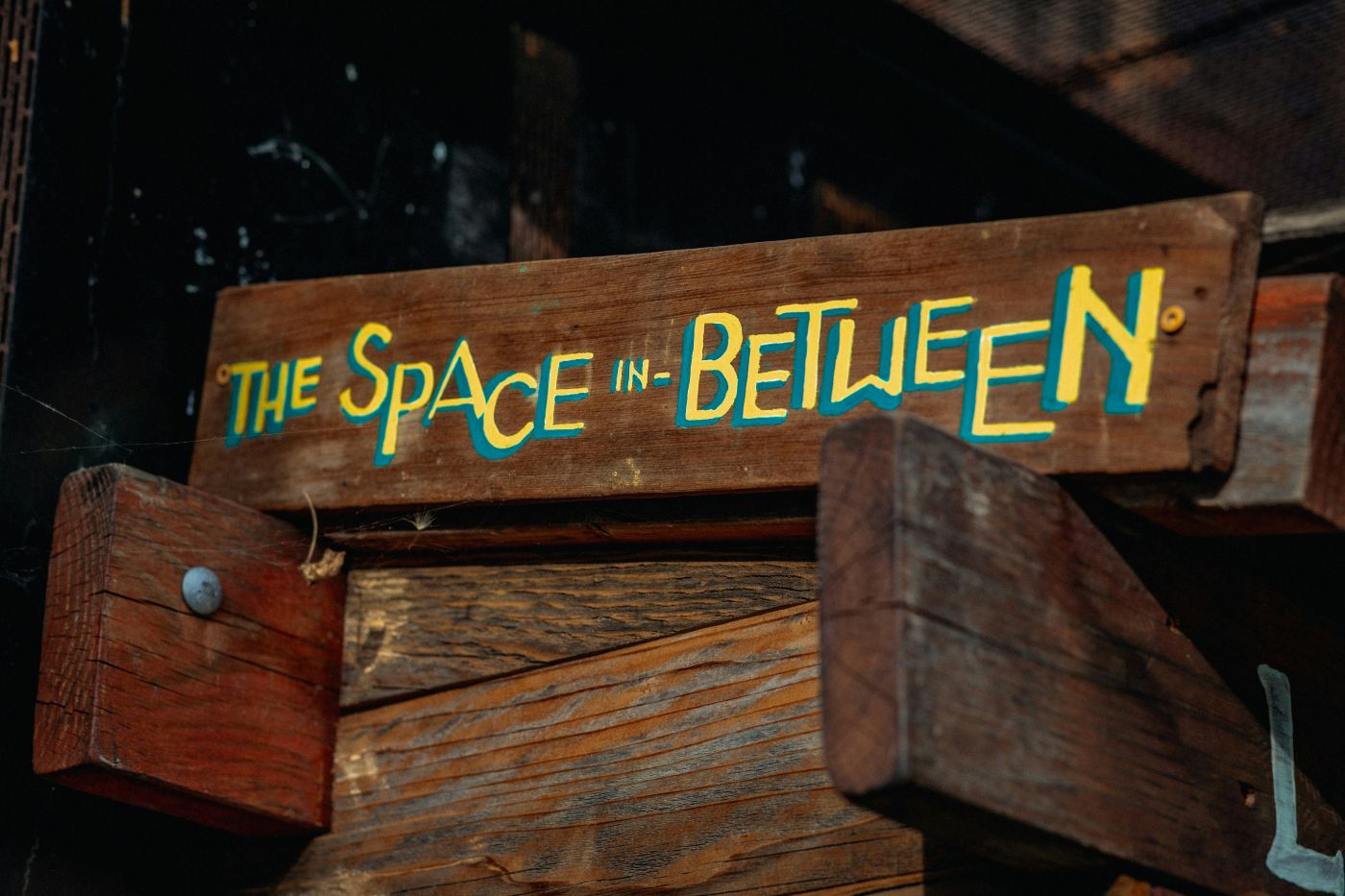
One of the best features of my town, for me at least, is the fact that Raymond Carver, the great short story writer, lived and died here. He is buried here, and this past weekend, I spent time sitting on a stone bench, looking down over the Strait and talking to Mr.Carver. I did this because I’m a bit stuck as a writer lately. I am having trouble forcing words onto the screen for work, and I have been completely unable to write a sentence for myself for months.
I live in Port Angeles, Washington; it’s a small port town a stone’s throw, if you’re a professional stone thrower, from Canada. I wake up every morning looking across the Strait of Juan de Fuca, and I can clearly see Canada. On very clear days, Canada seems somehow closer, and I can make out buildings and features of Vancouver, B. C. I like to joke with my friend that in the night, Canada has moved closer; they’re finally fed up with all the fifty-first state bullshit, and they’re slowly creeping over to invade. That’s not true, of course. In fact, during tourist season, many Canadians hop the ferry and come on over to the US for a day, a week, or more of fun. Well, that used to be the case; however, recently the ferry has been pretty empty on its return trips. Not many Canadians interested in coming here anymore. Anyway, that was all off track; the point is, I live in Port Angeles, on the Olympic Peninsula, and it is a lovely little town.
One of the best features of my town, for me at least, is the fact that Raymond Carver, the great short story writer, lived and died here. He is buried here, and this past weekend, I spent time sitting on a stone bench, looking down over the Strait and talking to Mr.Carver. I did this because I’m a bit stuck as a writer lately. I am having trouble forcing words onto the screen for work, and I have been completely unable to write a sentence for myself for months. With work, I can rely a bit on AI. Claude and ChatGPT help me with topics and opening lines, simple stuff. But in my personal writing, I cannot and do not rely on AI. Not sure why work and life are different; we should have a good work/life balance, should we not? I don’t know, and that’s the problem. I don’t know. And no matter what age you reach or what your position is in the company, the firm, the shop, “I don’t know” is never an answer people accept.
Many years ago, back when I was with Disney, I was on a date with a girl who worked in one of the shops on Main Street USA. Her experience with the Disney thing was very different from mine. As an entertainer, I didn’t have to follow the Disney dress code; well, I couldn’t have facial hair, but I wore a costume and didn’t have to worry about earring size or sideburn size, and my job was to entertain, not do customer service. She, on the other hand, was basically in customer service. She had to have the right haircut, follow the makeup guidelines, the jewelry guidelines, all that made sense to me, and I was aware of it. What I wasn’t aware of, and this is something she informed me, is that if you’re a shop worker or have any kind of customer service part of your job, you’re not allowed to say, I don’t know. You’re forbidden to say the phrase “I don’t know”; you must always say, “I will find out for you.” Now, for a place like Disney, that makes sense. Nothing is worse than stepping up to someone who works at a place, asking a question, and hearing, I don’t know. That leaves people at a loss, and Disney is not about leaving people at a loss. So, never say I don’t know. That makes perfect sense, and I admire that about Disney.
But here’s my question: is I don’t know ever a good answer? I ask because it doesn’t seem to be. It seems like you’re better off tap dancing to Tulsa than admitting you don’t know the answer at that moment. Or for many moments following, for that matter. Fake it, lie, spin a yarn, but never say I don’t know. That’s weak and sketchy, and clients will run away if you don’t know all the answers, all the time, in every situation. You may not know, but never say that out loud.
I Don’t Know
I don’t. I really, truly, honestly don’t know.
All of this started because I am in the midst of the worst case of writer’s block I have ever experienced. It’s plaguing my life. I cannot work; I cannot focus on things after work. I used to love to finish work, make a cup of tea, and then just write, for myself, work on my own projects til supper time. I could write for hours, days even, without a hitch. But lately writing seems like an anchor and a reminder that I’ve got nothing going on for me. Why am I experiencing this? I don’t know.
Recently, my Boss has been talking to all of us about manifesting, and about how the words we say matter. What you say to yourself, he contends, matters. So, just me writing that I am incapable of writing matters because, according to my boss, I’m manifesting the wrong things, and that’s why I’m stuck. On some level, I agree with that. It’s not a new concept, and I have heard it before. I have also had writer’s block before. Why? I don’t know. And that’s my answer: I don’t know. I have some ideas, some general guesses, but as for a concrete why am I not writing, answer, I really don’t know.
And that’s a problem, because you’re not supposed to say that. Saying I don’t know is seen by some as negative. Don’t say it; then your mind will know, and it will stop you from doing what you need to do. Someone I used to respect greatly said that to me. Don’t say that, or your mind will know. But it’s my mind, and it’s a part of the decision process. I’m not trying to go behind my mind’s back or have a meeting with the rest of me after hours so my mind doesn’t show up. My mind knows. My mind is with me right now. My mind is aware of the words I’m slapping on this screen, probably better than I do, so how can I trick or deceive my mind? I don’t know, and yet, I do. I trick my mind all the time. I use tricks to get out of a slump, or to smash through my writer’s block. I do that all the time. My mind is fully aware of what I’m doing, and yet sometimes I can trick it with a little tool or game and reset things so I can start again. Not working this time.
My current problem is that I’m unsure why I’m stuck, why I can’t write, and I’m spending all my time looking for the source, trying to figure out the why that’s getting in my way and making me fall deeper into the well. It would be perfect if I could just say to myself, I don’t know, and move on, but I can’t because I’ve been trained, like a strawberry blonde shop girl, never to say those words. Certainly not together in a short sentence. So, my mind is telling me never say “I don’t know,” and yet I don’t know, and trying to figure out why I don’t know without saying “I don’t know” is making me insane.
If you look it up, say you Google, is I don’t know an answer? What you’ll discover is, yes, it is a good, solid, legitimate answer. In fact, you’ll be told that saying “I don’t know” is a fine answer and helps you avoid being embarrassed or having to spin the story someone wants to hear. So, I don’t know is just fine. Except these articles then go on to say that saying I don’t know can sound weak, so you need to couch it. So, to avoid saying I don’t know, tell them all the ways you’ll find out. So, avoid it and make a list of things you’ll do to sound active, like you care, and like this person’s question matters. So, don’t lie, but, you know, lie. Another useful answer that avoids “I don’t know” would be to say, “I don’t have that fact right now; however, I will look it up and tell you later.” You get to decide when later is. You can also decide where and how you’re going to look things up. And when you do, then you’ll know, but until such time, do not say I don’t know.

But …
Now, all of this started because I am struggling to put words together into sentences, and it has been exacerbated by the Zoom talk about manifesting wealth and the idea that the words we say matter. But to me, there seem to be a lot of mixed messages and counterintuitive thinking.
I have written blogs about writer’s block, how to deal with it, how to overcome it, etc. I’ve also written blogs about creativity and the struggles that come with being a creative. And I know, I know, physicians heal thyself, thanks, Luke. I should have dealt with this before I started writing blogs telling strangers how to deal with it. But I didn’t. I also know that, like the day into night, this too shall pass. One day, I hope, I will be sitting here, and the words will flow, and my fingers will be fighting to keep up with my thoughts. I hope for that someday, but right now, I struggle.
Looking at the tricks and tools I’ve used in the past, I wonder about the words I’m using. Should I not say to myself, I’m struggling with writer’s block? I heard advice from a Navy SEAL: when someone asks you how you are, you say “outstanding.” And you say things to yourself like, “I never quit,” and “I never get tired.” he claims, as many others do, that by saying those phrases or similar phrases, you can do anything. You can run one hundred miles, chanting to yourself, I never quit. But isn’t your mind in on that conversation? Doesn’t it know you’re saying these things to get over an obstacle? Do you really trick your mind into believing that you never get tired or that you won’t quit? It works for some, so I’ve been told, and it’s given different names like will, willpower, guts, or grit. If you have the willpower, the words will spur you on.
But I still have to ask, doesn’t your mind know you’re just feeding it some self-help phrases? I am seriously asking that question because I don’t know.
Still
So I went back to the bench. Not because I expected an answer. Carver never gave anyone an answer; that was sort of his whole thing. His people don’t triumph, they don’t manifest a better outcome, they sit at kitchen tables with a drink they shouldn’t be having, and they don’t know either. That’s why people still drive up here forty years later to stand where he’s buried. Nobody in a Carver story ever says “I will find out for you.” They just sit there, in it, not knowing, and somehow that’s the truest thing on the page.
I don’t think the words are the problem. I don’t think saying “I don’t know” plants some manifesting curse. I think I’ve spent so long being trained to always have an answer, on the phone, in a meeting, on a date at Disney at twenty-three, that I forgot not knowing is allowed to just sit there, unresolved, without a follow-up line to soften it. The shop girl never got to say it. The SEAL isn’t allowed to say it. My boss doesn’t want to hear it on a Zoom call. But Carver said it, in one form or another, for an entire career, and it’s the only body of work from this town anyone still makes a pilgrimage for.
I still don’t know why I stopped being able to write. I sat on that bench for close to an hour and Carver did not tell me. But I wrote this. All of it, Canada, the shop girl, the Zoom call, the SEAL, without knowing where it was going or why it needed saying, and somewhere in there the block let go a little. Not because I found the answer. Because I stopped pretending I had one.
Maybe that’s the trick, if there is one. Not “I never quit.” Not “outstanding.” Not a line you repeat until your body believes it. Just the plain, unimproved sentence, the one nobody wants to hear across a counter or in a performance review. I don’t know. Said out loud, without a follow-up, without fixing it. Turns out it isn’t weak. It’s just true, and true was apparently all I needed to get back to the desk.
The ferry came back into the harbor early this morning, empty again. I used to think that meant something was wrong. Now I think it just means nobody owes an explanation for where they’ve been.
The Takeaway
Here’s what I keep landing on. The rule everyone hands you, don’t say I don’t know, isn’t really about information. It’s about ownership. A shop clerk who says “I will find out for you” is promising an answer that will still be true no matter who fetches it. A guy chanting “I never quit” at mile eighty is borrowing a sentence that isn’t his yet, hoping his body catches up to it before it matters. My boss’s manifesting talk works the same way: say the words enough times, and eventually they’ll belong to you. All of it is a shortcut around the one thing that actually takes time, which is earning the answer yourself.
Writing doesn’t let you borrow it. You can prop yourself up with a trick, a mantra, or, I’ll admit it, a very patient AI, but at some point the sentence has to actually be yours, or it isn’t finished; it’s just borrowed until you can afford to trade it in for the real one. I still don’t know why I got stuck for months. And despite this dish of words, I’m still stuck on some level. Not exactly. But I know pretending I had an answer, performing confidence at my own desk the way Disney trained a shop clerk to perform it at a counter, was never going to get me unstuck. Only sitting with the not knowing long enough to write my own way through it did that.
Maybe it’s about permission, giving ourselves permission to not know. We can’t get permission in the meeting, the kick-off, the rebrand; we have to know in those situations, or do we? Can we not know? Can we listen, think, form, and then speak? Sure, we absolutely can, but we don’t. Why? Because not knowing is not knowing, and we must always know. I mean, look at the tools we have at our fingertips: Google, a million different AI agents, the old set of Encyclopedia Britannica you got in college; we have chunks and screens of knowledge all around us, so we should always know, right? Should? Maybe I’m just waiting for permission not to finish this, not post it, not know.
I don’t know.
So if you’re waiting for permission to say I don’t know, here it is. Say it plainly, without the follow-up line that’s supposed to soften it. Then do the slower thing nobody wants to hear about, staying with the question until the answer is actually yours, and not just something you said to make the moment easier. Don’t make it easier; sit with the discomfort, allow the not-knowing to be, and see where it leads you, because now you have permission not to know.