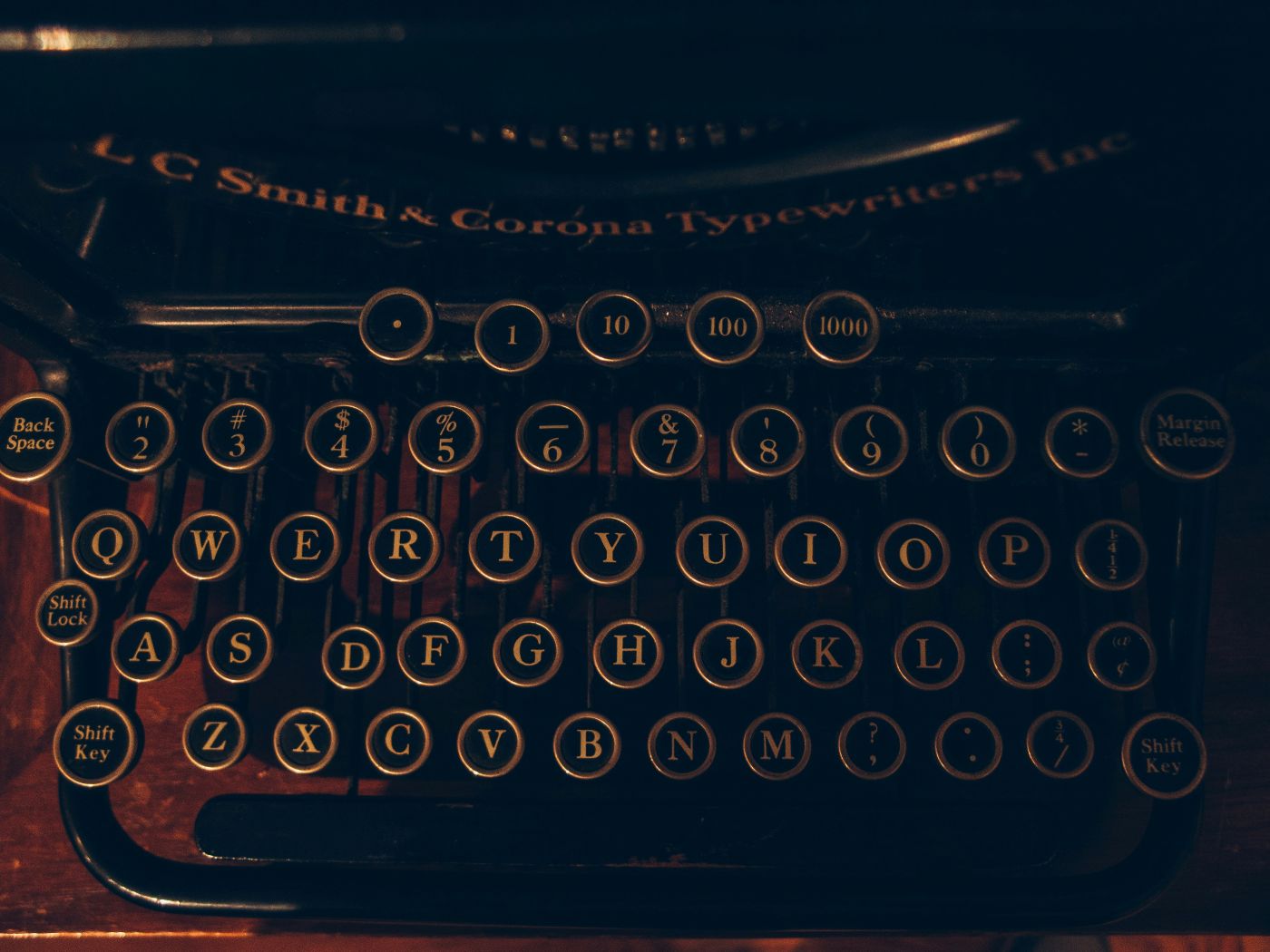
Stories make the impossible seem possible. A good story takes you out of your own life for a moment and fills your mind with what-ifs. For those few moments when someone sits on your desk and says, “You’re not going to believe what just happened,” your mind says, “I will believe; I want to believe; tell me the story.”
“Let me tell you a story.”
Even now, at the ripe age of 283, if someone starts a sentence with those six words, I’m there. I’m locked in. I won’t even pay for the full seat because I’ll only use the edge. I love a story. It doesn’t have to be good or bad. I love what people choose to put in and what they choose to leave out. I love how details dip in and turn black-and-white into vivid color. I love a story.
In my early days, when I was a wee lad in second grade, there was a teaching assistant. Sadly, I forgot her name. What I’ll always remember, though, as this retelling will testify, is the way she read The Mouse and the Motorcycle to us. Once a day for a few weeks, this gorgeous angel of the celestial bibliotecha would sit in a chair in front of us, her willing and greedy audience circling her feet, and read pages from that book. It was more than words. She used different voices, and when the mouse rode his motorcycle, she made the sound, the pub pub pub of the engine racing to get an aspirin to help the young boy who had become his best friend. Her voice, the voices she gave the characters, the sounds of the motorcycle, the ambulance, the toy car, they held me and filled my wee, dim head with ideas and adventures.
It started me on a lifelong journey into stories. Even now, no matter what I’m doing, if someone comes in and says, “Have I got a story for you,” or “You won’t believe what I just saw,” or any other announcement that a story is on the way, I’m gone. I could be doing surgery, and I have no idea why I would be; I’ve no business doing that kind of thing, but I’d drop the scalpel and pull up a chair. A story gives you the chance to be transported to another time and place. Even if it happened fifteen minutes ago in a 7-11 parking lot, you still get carried somewhere else, and the usual dim, grubby sidewalk and trash-littered parking lot suddenly seems magical, a place that could house an epic battle or the blush of true love. When a story starts, anything and everything is possible.
And that’s the kicker, isn’t it? Anything is possible. I could win the lottery today. I could meet an undercover rich man, think he’s down on his luck, buy him a cup of coffee, and have him drop a billion dollars on me because he was seeking a moment of pure kindness. I could meet the love of my life as we reach for the same dinner roll or tire iron. Anything is possible on any given day. But what we usually get is traffic jam, office boondoggle, drive-thru burger nightmare, home again, dinner again, a TV show again, off to bed to rise and shine and do it again tomorrow. Anything is possible may be true, but the impossible always seems to happen in the lives of others, in the pockets of the people across the street, never yours.
Stories make the impossible seem possible. A good story takes you out of your own life for a moment and fills your mind with what-ifs. For those few moments when someone sits on your desk and says, “You’re not going to believe what just happened,” your mind says, “I will believe; I want to believe; tell me the story.” The keyboard goes unnoticed, the phone blinks, your coffee gets cold, and it doesn’t matter because there is a story on offer.
We use stories all the time in our work. We tell the client’s story, the brand story, the journey story. We use the term "story" constantly, and deep in our lizard brains, we know that story is good. Story sells the thing. Story grabs the eyes and commands the heart. We say story so often it’s a reflex, like the hand snapping out to catch a falling cup, or marker, or liver. We don’t stop to think much about the story or why the story. We just say we need the brand story. Well, I want to ask here and now, do you know what a story is? Do you know where it came from? Do you know why it matters so much to humans to tell stories? Maybe yes, maybe no. Either way, let’s talk stories.

Before Story Was Strategy, It Was Something People Needed
Long before story became a workshop word or a thing written in bold at the top of a slide, it was how people passed things along. What happened. What it meant. Where the danger was. What to avoid. What to remember. It wasn’t some lovely extra or a decorative flourish. It was one of the ways people carried life from one person to another.
A list of facts can do the job, sort of. Fire burns. Don’t eat those berries. Don’t wander too far after dark. Don't wake your father after he’s been on a binge. Fine. Useful. But story does something else. It gives facts a pulse. It lets them travel. Those berries made your uncle see visions and fall into a ditch. The river looked calm until it took somebody. The people over that hill smiled before they stabbed Gary in the head. Suddenly, the lesson has a body. You remember it because something happened.
That matters because human beings are not, in my experience, very good at holding on to bare information. We forget. We drift. We hear advice and let it slide off the side of the brain like a sock off a dryer. But tell us that someone wanted something, got in trouble, made a mess of it, survived it, didn’t survive it, learned something, failed to learn anything at all, and now we’re listening. Now we want to know what happened next. Now the mind has something to grip.
And maybe that is part of the point. Story doesn’t just deliver information. It organizes it. It takes the loose, chaotic, glittering nonsense of life and gives it a path you can follow. This happened, then this happened, and because this happened, here came the trouble. Story says: pay attention; this matters; this leads to something. It helps us feel the consequences, notice the motive, and understand not just what happened but why anybody should care.
That was true long before marketing teams started talking about narrative architecture, brand journeys, and all the other phrases that sound slightly made up, because, of course, they are. Human beings were telling stories before there were businesses, before there were strategies, before there were clever frameworks with triangles in them. Story was already there, doing what it has always done, helping people hold on to meaning.
Which is worth remembering because, when we say "story" now in branding, we can make it sound soft, trendy, or like a nice finishing touch you apply once the real work is done. But story is older than all of that. Stranger than all of that, too. It is one of the oldest tools we have for getting something from one human mind into another and having it stay there.
That’s probably why the word still has such a grip on us, even after years of overuse, after being dragged into conference rooms and smoothed into templates and asked to wear business casual. Somewhere under all that, we still know what story is for.
Story Changes What We Notice
One of the strangest things about a story is how quickly it changes the lighting.
Nothing in the world itself has really changed. The parking lot is still a parking lot. The office is still the office. The man standing in line at the gas station is still just a man buying something salty and regrettable. But the second a story enters, the whole scene starts to glow a little differently. Things that would normally slide past without so much as a nod suddenly feel chosen. The cracked sidewalk matters, as does the woman in the red coat, the half-heard sentence, and the tire iron. God help us, even the 7-11 starts to feel like a place where fate might be loitering by the ice machine.
That is part of the magic of it, if I may use a word that makes business people itch. Story tells us not just to look, but where to look. It points. It says this part matters. This detail isn’t random. This person isn’t just passing through. This odd little moment with the dropped coffee, the slammed door, or the silence after someone says “fine” is carrying more than it appears to. Story takes the loose change of life and turns it into currency.
Without story, a lot of life just sits there. It happens, and then it goes away. A hundred little scenes, a thousand forgettable details, one long blur of errands and emails and mildly disappointing lunches. But story has a way of reaching into that blur and saying, "No, this one." This is the moment. This is where the turn happened. This is where the thing beneath the thing showed itself for half a second before ducking back down.
I think that is one reason people naturally lean toward stories. We’re all drowning a little in information, in noise, in things coming at us all day long with their elbows out. Story cuts a path. It gives shape to the mess and says here’s the thread, follow it. Here’s the detail that unlocks the rest, the moment the ordinary stopped being ordinary, even if only for a minute.
And that matters in brand work more than people sometimes admit. Because brands don’t struggle only because they lack information. Most of the time, there’s plenty of information. There are facts everywhere. Claims everywhere. Benefits, features, promises, proof points, statistics, percentages, declarations, little piles of earnest marketing pellets scattered across the floor. The problem isn’t that there is nothing to say; it's that nothing is being noticed or felt as meaningful. Nothing is being arranged in a way that tells a human being where to look and why.
Story helps with that. Not because it sprinkles fairy dust on the message or gives the homepage a nicer haircut. It helps because it creates emphasis and a sense of sequence. It tells us what matters first, what matters next, and what all these details are doing together in the same room. It makes a person stop floating past and actually see.
And seeing is no small thing. A person can look at something all day and never really see it. Then somebody tells the right story, and suddenly there it is, plain as day, charged with meaning it seemed to be hiding five minutes earlier. The product isn’t just a product, the founder isn’t just a founder, and the customer is not just a target. The problem isn’t just a market opportunity. Everything sharpens. Everything steps forward a little.
That’s what story does. It changes what we notice, and by changing what we notice, it changes what we care about. That’s power.

Why Humans Trust Story More Than Information Alone
Facts are fine. Facts are useful. Facts have their place. If I need to know how long to bake a potato or whether a bridge is likely to collapse under the weight of my poor decisions, facts are wonderful. Bless them. But facts, on their own, do not always get very far into us. They arrive. They tap politely at the door. Sometimes we let them in. Sometimes we don’t.
Story gets in another way.
A fact says this happened. A story says this happened to someone, and because it happened, something changed. Now we’re not just receiving information, we’re following movement. We’re looking for motive, consequence, tension, regret, and relief. We’re not just being told. We’re being led. And human beings, for reasons both noble and deeply nosy, are much more likely to stay with something when there is movement involved.
That may be because information by itself can feel cold, flat, sealed up. A fact can be perfectly true and still fail to matter to the person hearing it. We’ve all had that experience. We hear a number, a statistic, a claim, and it floats past like a leaf in dirty water. But put that same truth inside a story and suddenly it has weight. Suddenly, it can bruise you a little. Suddenly, it can stay.https://www.thoughtlab.com/
Because story does something facts alone often don’t. It lets us feel the meaning of the information as we take it in. It gives the brain a path and the heart something to do, and invites us to imagine. It asks us to picture the person, the moment, the choice, the mistake, the cost. It gives us sequence, and sequence is a beautiful little trap. Once the mind enters it, it wants to keep going.
And that is no small thing. Attention is hard to get. Memory is slippery. Care is even harder. You can hand somebody the truth all day long and still never get through to them if the truth arrives in a form they cannot feel, follow, or place inside the machinery of their own life. Story helps with that. It gives truth a frame people can carry. It gives information somewhere to live.
This is probably why people remember the story about the person who almost lost everything more than they remember the chart showing a thirty-seven percent increase in risk. The chart may matter. The chart may even be more comprehensive, more responsible, more grown-up in every possible way. But the story has a face, weather, a human being in it, and human beings are still the thing we understand best, even when we are making a complete hash of understanding each other.
And none of this means facts don’t matter. They do. A story without truth underneath it is just manipulation in a nice jacket. But facts without story often sit there like furniture. Story is what gets them to move, what helps somebody see the shape of what is being said, why it matters, and what might happen if they ignore it.
Which is why, in branding, the instinct to lean on story is not foolish, or the soft stuff you bring in when the serious people have finished with the numbers. It is an attempt, however clumsy it sometimes becomes, to put meaning into a form a person can actually hold on to.
The trouble comes when people use the word story as though that alone solves the problem. It doesn’t. But the reason we keep reaching for it isn’t silly. We keep reaching for it because somewhere in the bones we know this much is true: people do not live by information alone. They live by meaning. And story is one of the oldest ways we have of making meaning stick.
The Problem With How Branding Uses the Word
And this is where things start to go a little wonky in our world.
Because once a word becomes popular in business, once people realize it has warmth, depth, and maybe a little glamour, the word gets used for everything until it barely knows who it is anymore. Story has suffered this fate. We say brand story, founder story, customer story, journey story, campaign story, and on and on until the word starts to feel less like a real thing and more like a scented candle people keep moving from room to room.
What do we mean by "story" in branding? Sometimes we mean origin, messaging, and positioning with a softer face. Sometimes we mean a case study, a timeline, a campaign line, a customer testimonial, a manifesto, a vibe, a sequence of slides with nice typography, or just the vague but powerful feeling that what we have right now is too dry and somebody should moisten it with narrative. We use one word for a dozen different jobs, then act surprised when the work comes out muddy.
That is part of the problem. Story becomes a catchall, a lovely, glowing, respectable catchall, but a catchall just the same. And once that happens, nobody is quite sure what they’re asking for. Someone says, “We need a stronger story,” and half the room nods while privately thinking of completely different things. One person wants clearer positioning. One wants more emotion. One wants a cleaner founder narrative. One wants a campaign platform, while another wants the deck to stop sounding like it was written by a cautious committee of very tired badgers.
And because the word feels smart, human, and important, it often escapes interrogation. People do not stop and ask what kind of story we mean. What is its job? What is it supposed to change in the mind of the person hearing it? They just keep using the word as though saying story is the same as doing story. It isn’t.
A story is not any collection of facts arranged in a tidy order, or a list of claims wearing a scarf. It isn’t a paragraph about how the founder saw a gap in the market and decided to disrupt the category while remaining deeply committed to excellence, innovation, and whatever else was lying around the office that day. A real story has movement, stakes, and a reason for being told. It changes how the listener understands what happened and why it matters.
And this matters because branding can go a little dead in the hands when story is used lazily. The work starts to sound noble but vague, human but generic, emotional in theory and untouched in practice. Everyone says the customer is the hero, the journey matters, the mission is bigger than the product, and after a while, the whole thing starts to feel like it was assembled from pre-approved narrative pellets in a softly lit room.
Which is a shame, because story deserves better than that, and frankly so do brands.
When people talk about story as though it’s a finishing touch, a warm glaze to pour over strategy once the real work is done, they miss the point. The problem isn’t that branding talks too much about story. The problem is that it often talks about story without enough precision, respect, or understanding of what the thing actually is.
So yes, we should keep using the word. I’m not here to ban it, slap it out of your hand, or lock it in a cupboard until it learns some manners. But I am saying this: if we’re going to keep leaning on story, we ought to know what we mean by it. Otherwise, we’re not using a powerful human tool. We’re just waving around a very popular word and hoping nobody notices it is mostly smoke.

What a Real Brand Story Actually Does
So if story is not a catchall, a warm fog machine, a way of making plain old messaging feel more cultured than it is, then what does a real brand story actually do?
For one thing, it helps people understand what kind of thing they are looking at.
That sounds simple, almost insultingly so, but it matters. Because most brands aren’t suffering from total silence. They’re suffering from a flood of disconnected signals. They’re saying plenty. Product here, mission there, founder quote over there, customer promise in one corner, feature stack in another, and somewhere in the middle a poor overworked headline trying to hold the whole mess together with dental floss and prayer. A real story helps pull those pieces into a relationship. It tells you what belongs together and why. It also gives the brand a center of gravity.
Not a slogan. Not a tagline. Not a string of approved adjectives in a deck. A center. A reason this company exists in the form it does, sees the world the way it does, solves the problem the way it does, and matters to the people it wants to matter to. Without that, you can still do marketing, make content, and fling emails into the void and hope one lands on a forehead with enough force to produce a conversion. But the work will feel loose. It will feel assembled instead of grown. A real brand story also helps people understand what is at stake.
To me, that's where a lot of brand work goes limp. It says what the company does, what the company cares about. It says the future is changing, and customers need a partner and now is the time and excellence remains at the heart of everything, and all of that may even be true. But nothing is at stake, feels urgent, or feels like it matters in a human way. Story changes that. It gives shape to the tension. Here’s the problem in the world, why it matters, and what this brand sees that others miss. Here is the change it is trying to make real.
And no, that doesn’t mean every brand needs to act like it is storming the beaches at dawn. Some products are useful in quieter ways. Some companies solve ordinary problems. Some businesses should calm down a little, frankly. But even then, story helps clarify the before-and-after. What is frustrating now. What becomes easier, better, safer, clearer, less annoying, more possible because this thing exists. That movement matters. That is where people begin to care. A real brand story also tells people where they fit.
This is maybe the big one. Because people don’t want to stand outside your brand admiring it like a statue in a park. They want to know where they come in. What role they play. What changes for them. What they get to become, avoid, solve, enjoy, protect, escape, build, or finally stop dealing with. Story creates that entry point. It lets a person locate themselves inside the meaning.
And when that happens, the brand stops feeling like a company speaking at them and starts feeling like something that understands the shape of their world.
That’s the job.
Not to sound poetic, impress the room, or drape the product in language until everybody gets a little misty and nobody can explain what is being sold. The job of a real brand story is to create meaning people can enter, remember, and repeat. It should help someone understand what this brand is, why it matters, and why they should give even one precious sliver of attention to it in a world that is already shouting itself hoarse. That’s a real job. More than enough of one.
And when a brand story is doing it well, you can feel the difference. The work stops sounding like pieces. It starts sounding like a point of view.
Story Is Not Decoration
This is where I think brand work gets itself into trouble.
Too often, story gets treated like the finish, the glaze, the nice layer you apply once the serious work is done by the serious people with the serious expressions and the slides full of arrows. First comes strategy, then comes positioning, then comes messaging, and then, if everyone is still conscious, somebody says, right, now let’s make it a story.
But story is not the ribbon on the box, the flourish, the soft, lovely thing you lay over the hard business thinking so people can swallow it more easily. Story is one way people understand what hard business thinking means. That is a different job entirely.
Because strategy can be brilliant and still fail to live in the mind. Positioning can be sharp and still sit there like an expensive lamp nobody remembers buying. Messaging can be clear and still pass through a person without leaving so much as a smudge. Story is what gives those things motion. It gives them a human shape and helps somebody feel the difference between information that is technically correct and meaning that actually lands.
And that matters because people don’t move through the world as logic machines. Much as certain corners of business would love that to be true, it’s not. People respond to significance, tension, consequence, the feeling that something is headed somewhere, and that they have some stake in where it lands. Story works because it meets us there. It doesn’t replace strategy. It carries it.
That’s why I wince a little when story gets treated like the soft stuff, the optional stuff, the almost embarrassing stuff you add at the end once the adults have finished talking. Story is not less intelligent than strategy; it’s one of the ways intelligence becomes felt. It is one of the ways an idea becomes memorable enough to survive contact with an actual human life.
And yes, of course, story can be overdone. It can get syrupy, manipulative, or dressed up in swelling language and earnest music, and ask you to feel twelve things before it earns even one. We’ve all seen that. We’ve all sat through it with the expression people wear when trapped in a rideshare with a man explaining cryptocurrency. But bad story isn’t proof that story doesn’t matter. It is proof that mishandling a powerful thing makes a bigger mess.
When story is treated as decoration, brands end up with work that sounds polished but hollow. The strategy may be there, somewhere, but it never quite becomes human. It never quite crosses over. It stays on the company side of the glass, tapping politely while the customer keeps walking.
But when story is built into the thinking and allowed to do its real job, something changes. The work starts to breathe. The message no longer sounds like it was assembled from approved parts. You can feel what matters. You can see what’s at stake. You understand why this company sees the world the way it does and why you, a person with your own problems, hopes, and annoyances, might care.
That’s not decoration, that’s delivery. That’s the difference between having something to say and getting it to live.
And if brand people took that a little more seriously, I think we might all stop using story as a magic word and start using it as the tool it has always been.
The Takeaway
We use the word "story" so often in brand work that it can start to lose its edge. It becomes one of those words everybody agrees with before anybody stops to ask what it actually means. We want the brand story. We want the founder story. We want the customer story. We want more story, better story, stronger story, and somewhere in all that saying and nodding, it gets easy to forget that story isn’t a trendy business wrapper. It’s one of the oldest ways human beings have of making meaning.
That’s why it still works, why people still lean in when a story begins. Not because story is soft, charming, or easier to swallow than facts. Because story gives shape to what matters. It helps people notice, helps them care, and remember. It takes information and turns it into something a human being can carry. Which is exactly why brands should treat it with more care than they often do.
A real brand story isn’t there to make the work sound nicer. It’s there to help people understand what this thing is, why it matters, what is at stake, and where they fit inside it. That’s serious, human work, old work. And when it’s done well, it doesn’t feel like decoration. It feels like meaning arriving intact. That, to me, is the standard.
And if ThoughtLab is going to keep helping brands find language that lands, then story cannot just be the word we reach for when the deck feels dry. It has to be understood for what it is: one of the oldest and most powerful tools we have for getting meaning from one mind into another and keeping it there.