How could I possibly do this, you may be wondering. How could I challenge someone to a duel and go so far as to shoot this person over a fast-food order? How could anyone be so casual and cruel? All good questions, and I hope my answer gives you some satisfaction and understanding. So, my answer is, of course, I didn’t do that. Of course I didn’t challenge a fast food manager to a duel, slapping him in the face with a glove.
I had an early-morning gig this past weekend that took me three hours to get to, and then the long drive home. On the way back, I found myself a little peckish, so I stopped at a fast-food joint for a quick bite and then got back on the road. I could have opted for the drive-thru; however, I had been in the car for a while, so I decided to stretch my legs and eat at a table, not in the car, one hand juggling a burger, the other operating heavy machinery.
A few things you should know: the gig hadn’t gone well, and I was cranky. I am not a huge fan of driving, and I had spent a lot of time in the car, so I was cranky. When I stepped out of my car to go inside, I stepped right into a very deep puddle that soaked my shoe, and it made me cranky. For those following along, you may notice that I was cranky. That was my general demeanor when I stepped into this Burger King. I was cranky. This crankiness permeated my being and tinted all of my actions.
I placed my order, and the woman taking orders read it back to me wrong twice. At this point, I took my hackles out of my fanny pack and put them on. I tried one more time, and she read it back wrong again. This time, I shouted, yes, I admit, I shouted my order at this woman. It was wrong, I know, but I was triggered, and I lost control, so I shouted. At this point, the manager, a tall man with glasses, stepped forward and told me not to shout at his employee, and I said, well then, tell her to get my order right. He said, “Maybe you should be more respectful of other people.” I froze. I was stung. I felt his words were a slap in my face, so I did what any normal person would. I pulled a glove from my belt, stepped behind the counter, and slapped the manager across the cheek with the glove. “You, sir, have offended me in public, and so for that, I demand satisfaction.”
We decided on seconds and picked the spot. The next morning, as the sun was shaking off sleep and peeking over the horizon, the manager and I stood on a strip of land near a copse of trees by a river, pistols in hand, seconds at the ready. We counted out ten paces as is the usual distance; at a word we turned to face each other. The manager, uneasy already, took his shot first, and it missed me by a mile, grazing some leaves on a nearby tree. I, on the other hand, took my time, monitored my breath, and I shot him. He dropped to the ground, clutching his left arm. The doctor stepped in, proclaimed that the manager would live, we all shook hands, and I felt satisfied.
Looking back now, I was pleased that I hadn’t killed the manager — at the last second I aimed left, deciding only to wing him. Seeing his offense was minimal, I had no desire to kill him. I just wanted satisfaction for his disrespecting me. And he did; make no mistake about it, this fast-food manager had dissed me, and now he knew the consequences. The bullet I put in his arm would be a constant reminder not to dis me.
A Measured Response
How could I possibly do this, you may be wondering. How could I challenge someone to a duel and go so far as to shoot this person over a fast-food order? How could anyone be so casual and cruel? All good questions, and I hope my answer gives you some satisfaction and understanding. So, my answer is, of course, I didn’t do that. Of course I didn’t challenge a fast food manager to a duel, slapping him in the face with a glove. First off, I rarely travel with my dueling gloves, so I wouldn’t be able to slap him with one. Secondly, I didn’t challenge him to a duel because we’re not in America in 1859. Duels just don’t happen any longer. They are barbaric and silly. We are much more cultured and caring about human life now, and no one would think it’s okay to shoot another person over something as trivial as a fast-food order. Who would do that? No one.
So, dueling is not an acceptable or measured response to having your fast-food order messed up. The question now is: if your fast-food order does get messed up, is trashing the establishment okay?
One of my jobs as a copywriter is to understand what content is fresh and trending, and I spend time on YouTube watching trending videos. Along with absolutely adorable puppies doing puppy things, I have noticed a ton of videos of people throwing fits in fast-food joints and convenience stores. Video after video of someone screaming about not being respected and trashing the restaurant or pulling everything off the shelves in a convenience store, often pulling display racks down and then just walking out. Not, I think, examples of measured responses.
How does someone get that angry? “I opened my son’s bag, and he had nine chicken McNuggets, not ten. I will not be disrespected like that, and you will not deprive my child of his dinner, you will not!” One woman screamed in a video, and then she proceeded to break computers, throw bags of food that were not hers at the cashier, go behind the counter and take food, all the time screaming things like, “Don’t play with me,” and, “You picked the wrong one.”
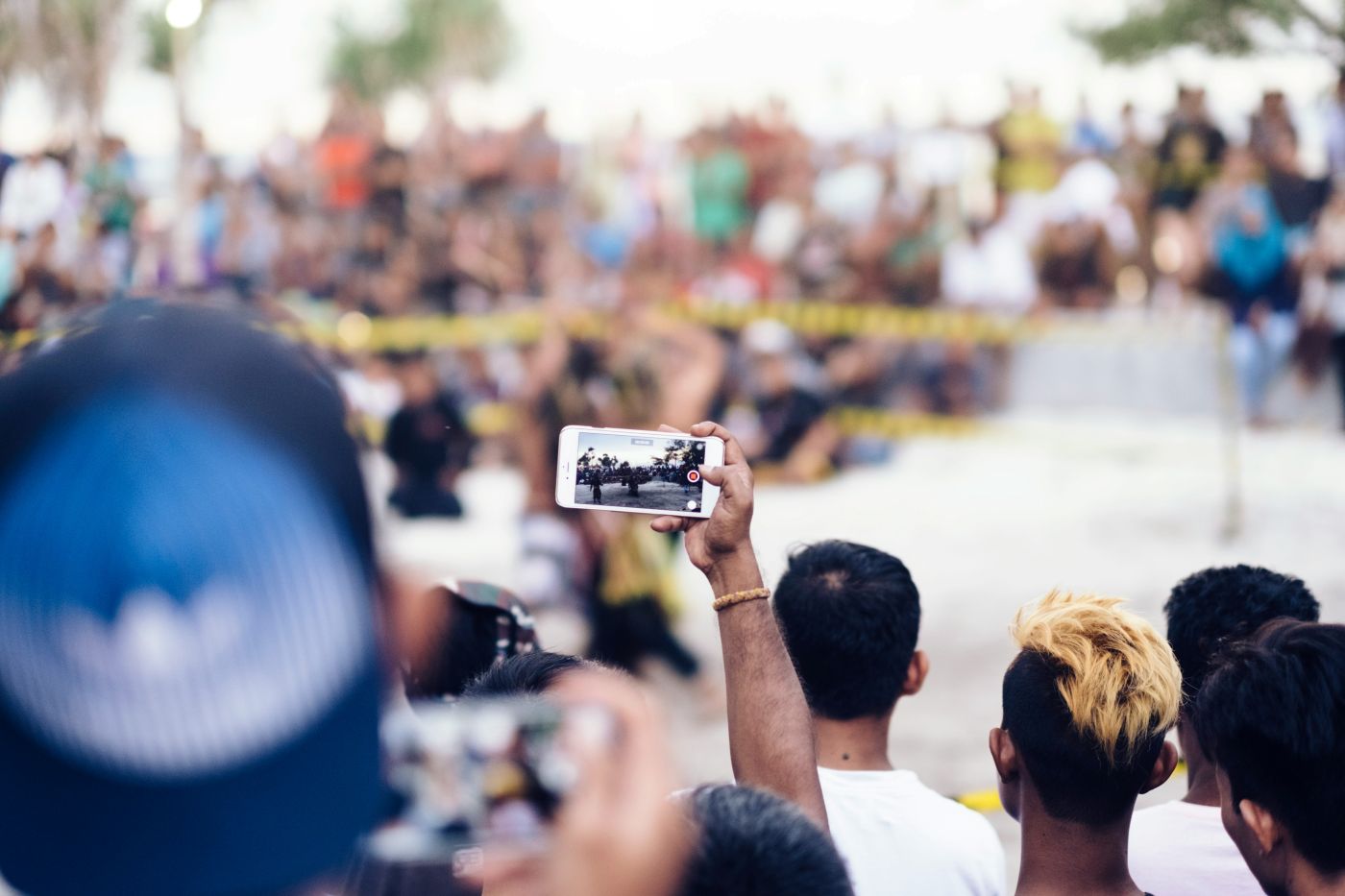
One video I watched several times showed a woman in a convenience store; when it starts, she steps back from the counter and says, “You think this is funny?” That question becomes her mantra as she pulls down display racks, throws bottles of soda on the floor, and destroys the entire shop, all the time yelling, “You think this is funny?” No, actually, I don’t. But the people around her in the shop seem to, as they are all standing by, watching the destruction, phones out and laughing. When the woman is finally stopped by the police, a few of the people who watched the entire incident complain to the workers that they couldn’t get their snacks and their cigarettes because of the destruction. Didn’t seem to be a problem for them when they were filming the destruction, but now, well, now they were inconvenienced.
What Happened
My father was a quiet man, a very shy man, and he was one who never got involved in someone else’s business or forced his opinion on another person. A gentle man when he was not drinking. And yet, several times when I was a kid, going along with him to run errands, I witnessed him stepping into confrontations in stores where someone was yelling at a clerk, the clerk usually a female, close to tears, and my father, the shy guy, stepping up and saying to the yeller, “She’s just doing her job the best she can, you’re not really mad at her, so let’s take a breath and relax.”
I witnessed him do and say that about ten times, and each time, he soothed the battered egos, rescued the weeping clerk, and all was fine. He never had to throw a punch; no one ever barked in his face to back off or piss off or fuck off; they listened, and they understood. A different time, I suppose.
The point is, I was raised to be socially aware and to help people whenever I could. So, when I see a confrontation in action, my instinct is to calm the situation and get people talking calmly and like adults. Now, the instinct is to pull out the phone and start filming.
We didn’t stop caring. We just found a cheaper way to look like we do. Filming costs nothing: no risk, no awkward eye contact, no chance of being told to mind your own business. Helping costs something every time. Somewhere along the way, we quietly decided the costless version counts as the same thing.
The One Job Left
I’ve written about this before, and I imagine I’ll write about it again, because I don’t think it’s going away: AI is coming for the content, and it’s going to be very good at exactly the kind of content this piece has been describing. It will write faster than any of us, edit faster, and it won’t be long before it can manufacture the McNugget meltdown or the “you think this is funny” rampage more convincingly than either woman managed on her own: no actual bad day, smashed display rack, or actual human being required. It can already fake the auditor getting pepper-sprayed, complete with the reaction shots and the outraged comments underneath. The math that turns a security guard’s temper into a paycheck is about to get an unlimited, free supply of security guards losing their temper, generated on demand, with nobody on either side of the camera actually suffering for it.
That should be good news. If the content can get made without a real person having a real bad day, maybe fewer real people have real bad days in public. But I don’t think that’s how it plays out, because the appetite was never really for the meltdown. It was for the reaction, the sense of having witnessed something, stood for something, caught something on tape. AI can manufacture the meltdown. It can’t manufacture the one thing that used to sit on the other side of it: a person deciding to do something about it.
That’s the part it can’t do. It can’t put a hand on someone’s shoulder. It can’t stand behind a counter and absorb the heat meant for someone else, the way my father used to, for free, expecting nothing back. It can’t be tired, inconvenienced, or a little afraid, and step in anyway. That’s not a content problem. That’s a human problem, and it’s the one job nobody’s going to automate out from under us unless we keep handing it over ourselves, one phone-out moment at a time. Some of us make a living making content for a job. That doesn’t buy us out of asking, every so often, what it’s actually for.
So maybe that’s the actual measured response. Not a duel. Not a rampage. Not a manufactured mace-in-the-face for the algorithm. Just a hand, offered before the camera.
The Takeaway
Maybe the problem isn’t that we’ve become worse people. I don’t really believe that. I think we’ve slowly become accustomed to being spectators. Something happens, and before we’ve even decided what we think about it, we’re reaching for the phone. We film it, post it, comment on it, share it, condemn it, defend it, and somehow all of those things have begun to feel remarkably similar to actually doing something.
They’re not.
My father didn’t have a camera in his pocket when he stepped between an angry customer and a frightened clerk. Maybe that’s part of it. There was nothing else for him to do with the moment except be in it. He couldn’t turn it into content. He couldn’t collect likes for being the reasonable guy in the store. He couldn’t post about what happened afterward and wait for strangers to tell him what a good person he was. He saw someone who needed a little help, decided he could provide it, and stepped forward. Nobody watched it later. Nobody shared it. It disappeared almost as soon as it happened, except that I was there, and apparently I’ve been carrying it around ever since.
We’re about to enter a world with more content than any human being could consume in a thousand lifetimes. AI will make sure of that. There will always be another outrage, another confrontation, another unbelievable video demanding that we watch it and decide whose side we’re on. For those of us at ThoughtLab, and anyone else who makes things for people to watch, read, click, or share, that’s worth remembering. Making more things won’t be the difficult part. Deciding what deserves people’s attention, and what we hope they’ll do with it once we have it, might be.
So maybe the question isn’t whether you should pull out your phone the next time something starts going sideways. Maybe the question comes a second earlier.
Are you here to watch this happen, or are you actually here?
Because those aren’t the same thing. And in a world increasingly capable of manufacturing everything worth watching, being genuinely present may turn out to be one of the few things still entirely up to us.