
And that’s what we get: videos of normal everyday people wondering what the guys with cameras are doing. Way back in time, when I was young, and dinosaurs roamed the land, and no one had a cell phone, whenever I saw cameras, I was curious because that usually meant a news story was underway.
It was a small gathering, men with beards and bellies standing about, with all their gear videoing people coming in and out of the Post Office. There was nothing to video and no scandal to follow up on; these were a bunch of First Amendment dudes. You know the type, you’ve seen the type, and you’ve heard the hype, right?
Here’s the skinny. Folks who have video gear like to go to public places and start videoing, doing their work, as they say. They video people and cars, and they wait. They’re not waiting for some great wrong to be righted; they’re waiting for content. Simple as that, they want content. When someone approaches them who seems even mildly curious, they instinctively go for their pepper spray, ready to do battle with haters of their rights. And that’s it. That’s the game right there. They wait for someone to ask them what they’re doing, why they’re filming, so they can respond with “none of your business, move on.” If the passer by stays and asks more, they become belligerent; they show the pepper spray. They heighten the tension and hope for more.
The content they seek is anger. They know exactly what to say to trigger people, and then they film it and put it up on social media. I recently watched a few of these videos on YouTube, and one in particular fascinated me. The situation was as above: a public space with heavy foot and vehicle traffic; the guys set up in a very prominent place, waiting for conflict. As the video progresses, we see an older gent walk up to one of the men and ask what they’re doing. One man says, “None of your business, move along.” That gets no response; the gent just looks at him. No real reaction. That’s not enough for them. A beat, and then another filmer says, “We’re just here filming people, cars, license plates, getting information.” The older gent takes this information in and shrugs; he starts to walk away. The same speaker repeats what he just said, only a little louder, “We’re just filming people, cars, license plates, gathering information.” This time, the elder gent stops, looks at the speaker, and says, “Why?” And there it is, the magic word; the door has been opened, and the real stuff can begin. Without hesitation, the speaker, the man behind the camera, launches into what sounds like a fairly well-rehearsed screed. “You don’t have to know; it’s none of your business. We have the right, the right, to be here and to film whatever we want. This is a public space, and our First Amendment rights allow us to be here and to watch and record. So, you don’t know, and it’s none of your business. So …” At this point the older gent shrugs and starts to ask another question; as he does, he takes a small step forward. At this, the filer starts yelling, “Don’t walk up on me, do not walk up on me, I know my rights and I will defend my rights, so don’t walk up on me, man, or you’re going to get sprayed.” And then we can see his arm extend and a can of pepper spray in his hand.
I stopped watching; it was performative, and the performers were tired and lazy. Just guys with cameras rage-baiting the general population, trolling for rage, nudging strangers toward reacting so the filmmakers could pepper spray them and say, see that’s what you get, that’s what you get.
And that’s what we get: videos of normal everyday people wondering what the guys with cameras are doing. Way back in time, when I was young, and dinosaurs roamed the land, and no one had a cell phone, whenever I saw cameras, I was curious because it usually meant a news story was underway. One time, in my small hometown, cameras were there on the side of the road, along with all kinds of what I now know as production gear, because there was a movie being shot in my town. That was exciting. Then everyone got a cell phone with a camera, and now it’s not as exciting. Because everyone does it, it’s no longer unique.
Not a Luddite
I feel like I need to keep reminding people that I’m not a Luddite; I don’t have a problem with cameras and people making videos. I’m not a hater of technology, although these types of videos, the rage-baiting ones, I find those kind of silly and sometimes just mean. The reality is that most people see a camera and get curious. Also, a lot of people, don’t want to be on camera for various reasons; they don’t like the way they look, they don’t want to end up in a ridiculous YouTube video, or they’re just trying live their little lives and they reality don’t have the time or in the interest in having someone shove a camera in their face or be beside their car when they pull in to the post office to run an errand, get some stamps. Most people are in their own heads, dealing with daily life crap and the hassles of just trying to get by, and they aren’t prepared for cameras and clots of people wielding them. They are surprised, curious, maybe even scared; that’s their reality.
I’m getting way off track; I’m not writing about people being intrusive just for the sake of content. There’s something else that caught my eye recently, and that is the subject I want to focus on. I have written about being filmed on the street, and the idea is that just because it’s legal, does that mean you have to do it? I have bemoaned the fact that we’ve sacrificed human caring for content and all that. Blah, blah, blah. If you started reading this thinking it was some kind of anti-social-media diatribe, sorry to disappoint; this is about something else entirely. This is about grace. Read on.
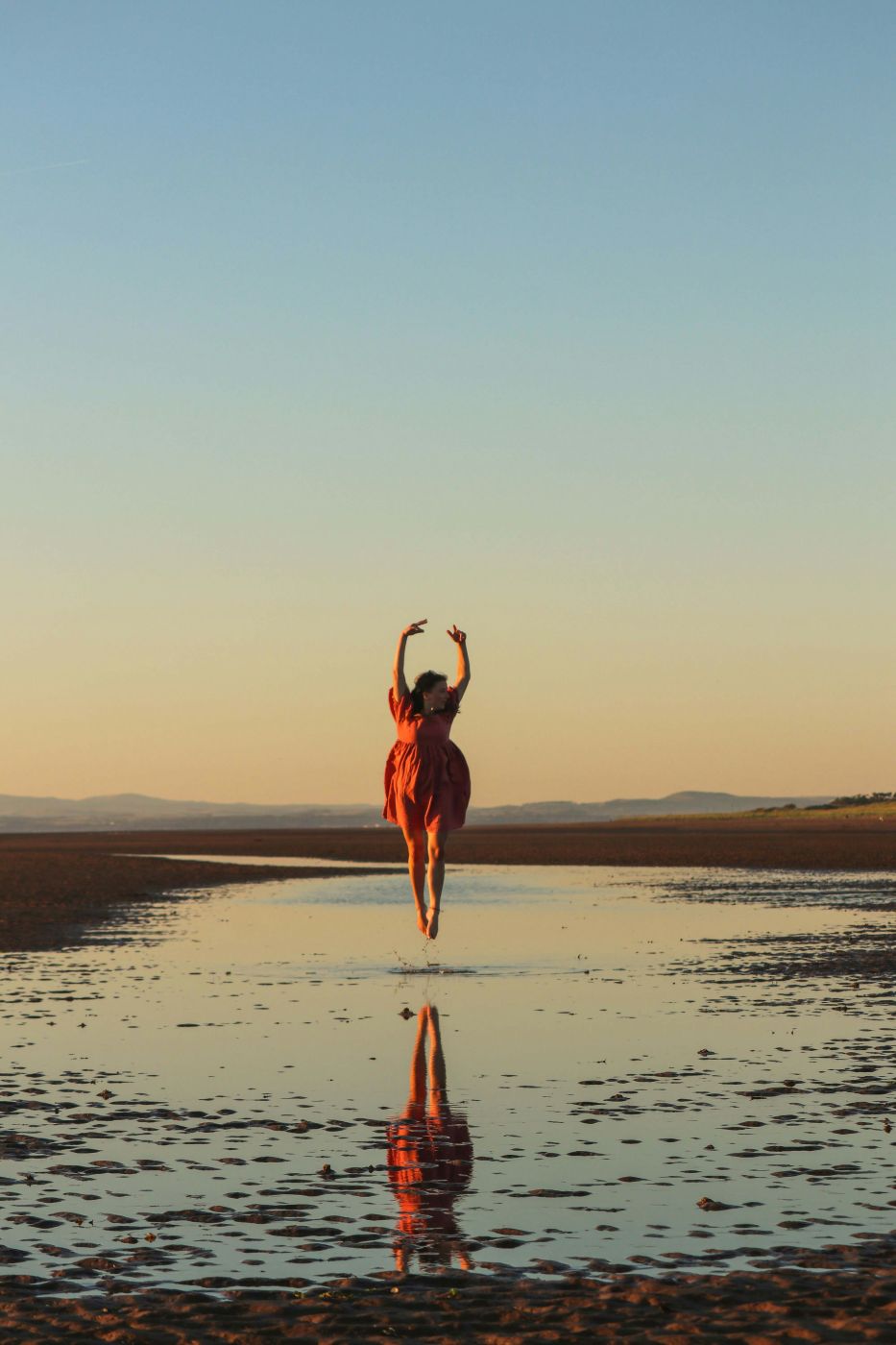
Grace
For those who are unaware: The true meaning of grace is unmerited favor. It is the free, unearned love, kindness, and goodwill of God given to people who do not deserve it. Rather than getting what we rightly owe or earn, grace gives us good gifts, forgiveness, and new life simply because of who God is.
But God doesn’t always have to be a direct factor; we, as humans, possess grace, and it’s all around us. Or it used to be. Not so sure any longer; I fear we have all lost a sense of grace and have substituted it for a sense of media. Get seen, make content, get clicks, get up and do it again. No kindness, no smooth, easy movement, just camera, pepper spray, words that incite and, viola, content.
It was with that thought in my head, the lack of grace in the world, when I stepped out of my car at the post office where I had come to buy some stamps, as I am still a fan of letter writing and snail mail. My head was full of things I needed to do, places I needed to go, and the usual litany of failures and why can’t yous and maybe you should justs, when I saw a small crowd gathered at the doors to the post office. As I got closer, I saw it was a group consisting of regular folks doing errands and three or four men with cameras. When I reached the crowd, I heard a woman in mid-sentence, “But why, is all we’re asking why are you filming us???” She sounded like someone who was having their first encounter with the DMV. The response was, of course, “None of your business; it’s our right, just move on,” and mumble, mumble, mumble. The back-and-forth started: the “why are you” and the “you don’t need to” volleys of names being thrown, retorts of “loser,” and there I was, caught between wanting stamps and wanting to see what would happen when the post office doors opened, and a woman stepped out. She was tall, impeccably dressed, and she had an air about her that made her seem unflappable. The crowd didn’t stop their back and forth, but they did take note of her.
One of the filmmakers broke from the bunch and approached her; he seemed drawn to her. Another woman, who was in the crowd and daring to ask why, yelled at the camera guy, “leave her alone, just leave us all alone.” The woman stopped and looked at the guy with the camera, then at the crowd, and she knew; I could see it in her eyes. She knew what was going on instantly. She suddenly became the focus of the gathering. The guys with cameras moved toward her, and the crowd called for them to leave her alone. She smiled at the closest cameraman and asked, “What are you doing?” The cameraman started to speak; he started to give breath to thought, the thought being none of your business or it’s my right. He was just putting enough air through his vocal cords to make the sounds that would be the words, you don’t need to know, when the woman put up her hand, stopping the words and stopping the action around her.
“Forgive me,” she began, “I have no right and actually, no need to question you. You’re obviously here to make sure our First Amendment rights aren’t violated. You’re showing us all the freedoms we have and the freedoms we cherish. You are, I suppose, guardians of our rights. Well, thank you for that. I wish you all the luck in the world.” With that, she smiled and went on her way. The argument stopped, and the crowd either went about their business or, as I did, watched this woman walk to her car, get in, and drive away. In my mind, one word came into view, cutting through the to-do lists, the self-depreciation, and the desire for chicken wings. All the preceding arguments and near violence dropped away, and this one word filled the space: grace.
She had stopped the arguments and given the camera people what they needed, what they craved: validation, and it cost her nothing. She bestowed on the content demons the title of Protectors of Our Rights, and she changed everything. She did it simply, quietly, concisely, and she did it with grace.
Be Graceful
If you were to see me in all my flesh, you’d probably be surprised, shocked, or maybe even sickened that someone in my shape would preach grace, but it’s true. I am not full of grace, nor am I graceful. But I can recognize it, appreciate it, and long for the return of its heyday. I do. I love when people move with grace, speak with it, and bestow it, as this woman did on the group of bearded men with cameras. It seems so simple, and yet the impact of a graceful moment can be felt for weeks on end.
When you think of the word grace, you either think of the short prayer before a meal or you think of some gift from the heavens, carefully bestowed on us by an all-powerful and loving God. Sure, that’s part of it, but we humans, we mere mortals stalking about on terra firma, we too have the ability to be filled with grace, share it, bestow it, and choose grace above rage, ego, and content, if we so desire.
I don’t know if we can all reach the level of grace this woman possessed; she seemed practiced, as if it were part of her daily routine or even her DNA. But we can all attempt to meet her level. We can choose to raise a smile rather than a camera. We can choose to see our fellow man and try to understand their daily struggles, the little nitpicky things that ruin days, spiral lives, and send us to doctors, therapists, and bars. We can choose to say “please” and “thank you”. We can choose to see a situation where we have been wronged, gracefully point that out, and move on with our lives rather than throwing racks of Butter Fingers on the floor and tossing the contents of a freezer all over the aisle. We can choose grace.
Now, it’s not easy, I know. Grace doesn’t make for that juicy content. Moments of grace hardly ever end with someone being pepper sprayed or getting triggered enough to throw punches. Grace is ease and smoothness. Grace is simple, clean, and uniquely styled. The fact is, if you don’t know what it is, grace can slip in, put your wallet back in your pocket, reassuringly pat your shoulder, wish you a good life, and be gone before you know what didn’t hit you. That’s not great content, I know, but sometimes content isn’t the aim, and it doesn’t have to be. We can choose grace over content and get the same feeling. Sure, it won’t go viral in the usual way with a million or so views, but think about how allowing a moment of grace to happen can make you feel. And that feeling allows you to be graceful to someone else. And then they feel it, and they show grace and so on and so on … and so, maybe it does go viral. In the best way.
The Takeaway
There’s a lesson here for brands, and I don’t think it’s that complicated. We live in a culture that increasingly rewards the loudest voice in the room. Say something provocative. Pick a fight. Find an enemy. Manufacture a little outrage. Get people arguing in the comments and call it engagement. It works, too. Anger gets clicks. Conflict gets attention. Rage, as those guys outside the post office understood perfectly well, is content.
But attention and affection aren’t the same thing. Neither are engagement and trust. A brand can spend all day figuring out how to provoke a reaction and never once give people a reason to actually like it, believe it, remember it fondly, or invite it back into their lives. Sometimes the more interesting choice is the quieter one. Listen instead of shouting. Understand instead of provoking. Give people a little more credit than the algorithm does. Treat the person on the other side of the screen like a person rather than a potential impression.
At ThoughtLab, we spend a lot of time thinking about what makes people stop, pay attention, and care. Sometimes that means being bold. Sometimes it means being funny, unexpected, strange, beautiful, or even a little provocative. But it should always mean being human. Because there’s enough noise already. There are plenty of people standing outside the post office waiting for someone to take the bait.
Maybe the brands we remember will be the ones that didn’t.
Maybe, every once in a while, the most disruptive thing you can do is show a little grace.